
Volvo Photo Locations Part 213

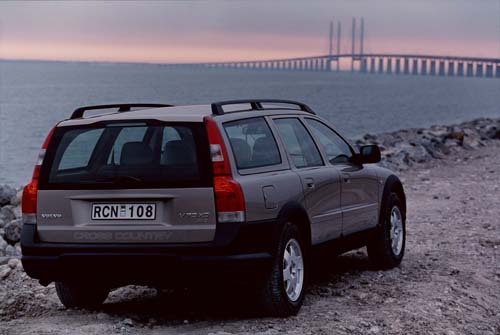
2000 – Volvo V70 XC at Lernacken under Öresundsbron in near Malmö, Sweden 🇸🇪.

2017 – Volvo V40 Cross Country at Lernacken under Öresundsbron in near Malmö, Sweden 🇸🇪.

2017 – Volvo S90 at Lernacken under Öresundsbron in near Malmö, Sweden 🇸🇪.

2017 – Volvo S90 at Lernacken under Öresundsbron in near Malmö, Sweden 🇸🇪.

2016 Volvo S90 at Lernacken under Öresundsbron in near Malmö, Sweden 🇸🇪.

2016 – Volvo S90 and V90 at Lernacken under Öresundsbron in near Malmö, Sweden 🇸🇪.
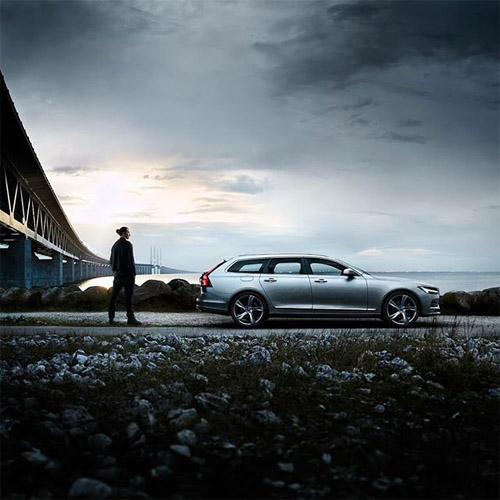
2016 – Volvo V90 at Lernacken under Öresundsbron in near Malmö, Sweden 🇸🇪.

2016 – Volvo V90 with Zlatan at Lernacken under Öresundsbron in near Malmö, Sweden 🇸🇪.

2016 – Volvo V90 at Lernacken under Öresundsbron in near Malmö, Sweden 🇸🇪.
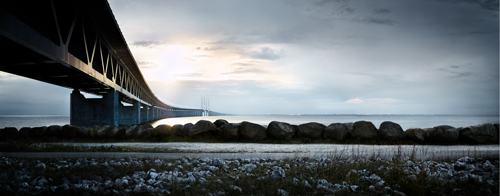
2016 – Volvo Made-By-Sweden Oresund Backplate landscape
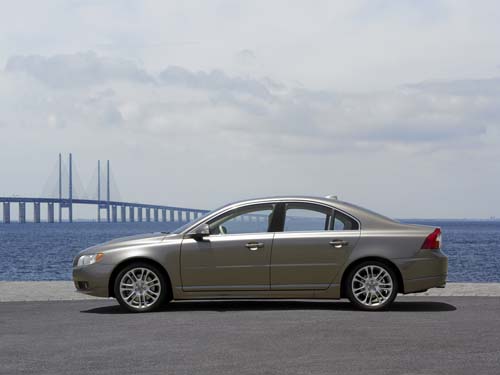
2006 – Volvo S80 at Lernacken under Öresundsbron in near Malmö, Sweden 🇸🇪.
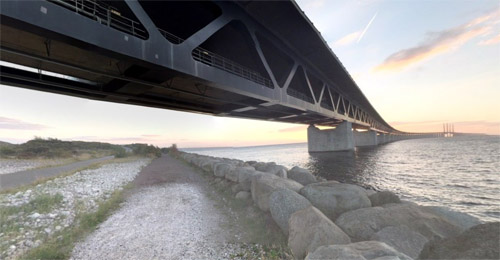
2016 – Lernacken under Ø̈resundsbron near Malmö (Google Streetview)
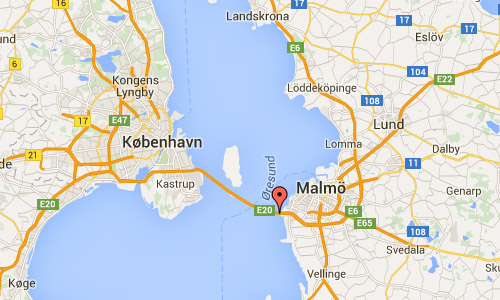
The Øresund/Öresund Bridge (Danish: Øresundsbroen [ˈøːɐsɔnˀsˈb̥ɔn̩], Swedish: Öresundsbron [œːrəˈsɵnːdsˈbruːn], hybrid name: Ø̈resundsbron) is a combined railway and motorway bridge across the Øresund strait between Sweden and Denmark. The bridge runs nearly 8 kilometres (5 miles) from the Swedish coast to the artificial island of Peberholm in the middle of the strait. The crossing is completed by the 4 km (2.5-mile) Drogden Tunnel from Peberholm to the Danish island of Amager.
The Øresund Bridge is the longest combined road and rail bridge in Europe and connects two major metropolitan areas: Copenhagen, the Danish capital city, and the Swedish city of Malmö. It connects the road and rail networks of the Scandinavian Peninsula with those of Central and Western Europe. A data cable also makes the bridge the backbone of internet data transmission between central Europe and Sweden/Finland.
The international European route E20 crosses via road, the Oresund Line via railway. The construction of the Great Belt Fixed Link, connecting Zealand to Funen and thence to the Jutland Peninsula, and the Øresund Bridge have connected Central and Western Europe to Scandinavia by road and rail. The Øresund Bridge was designed by the Danish engineering firm COWI. The justification for the additional expenditure and complexity related to digging a tunnel for part of the way, rather than raising that section of the bridge, was to avoid interfering with air traffic from the nearby Copenhagen Airport, to provide a clear channel for ships in good weather or bad, and to prevent ice floes from blocking the strait. The Øresund Bridge crosses the border between Denmark and Sweden, but in accordance with the Schengen Agreement and the Nordic Passport Union, there are usually no passport inspections. There are random customs checks at the entrance toll booths entering Sweden, but not when entering Denmark. Since January 2016, checks have become significantly more stringent due to the European migrant crisis.
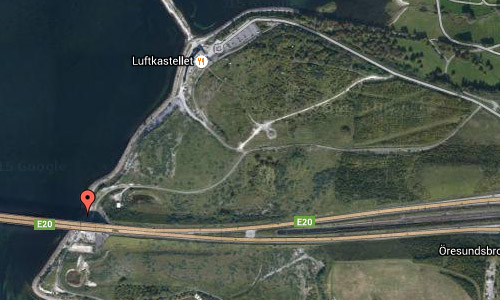
Lernacken is a mostly artificial cape in the Öresund, the sound between Denmark and Sweden. Lernacken is located in the southwest of Malmö (Skåne) between the suburbs Bunkeflostrand and Limhamn. The area lacks mostly of vegetation, the sparse vegetation consists mostly from shrubs and small trees.
Since the early 20th century overburden materials from the nearby limestone quarry Limhamn were deposited. The material consists mostly from siltstone and flint, which contains fossils. Typical fossils are belemnites, crinoids and several kinds of flint nodules.
The overburden was transported with two narrow-gauge railways, which were built for this purpose. Later in the 20th century were also industrial wastes deposited.
Very important for the international traffic is the toll-station on Lernacken, where fees for the use of the Öresund Bridge must be paid, whether the traffic comes from Denmark or Sweden.
Because of the construction of the bridge environmental movements demonstrated on Lernacken, the “Stoppa bron” (Stop the bridge) movement was well known.
In 1952, a lighthouse was built on Lernacken; this operated until the inauguration of the Öresund Bridge in 2000. Today, prominent on Lernacken is the sculpture Movement meter for Lernacken which was built in 2000.
The area of Lernacken suffered from a severe anthropogenic modification, nevertheless it’s now part of the Bunkeflo Strandängar nature reserve. Within this area are living around 450 species of birds, amphibian and insects. Most prominent bird in this area is the Northern lapwing.
More information at en.wikipedia.org and uk.oresundsbron.com.


 Posts
Posts