home

[ Content | Sidebar ]

Sanderson Hotel in Berners St in London – UK

March 22nd, 2014

International Volvo Photo Locations Part 148

Historic Volvo Photography Locations Overview

1961 - Volvo P1800

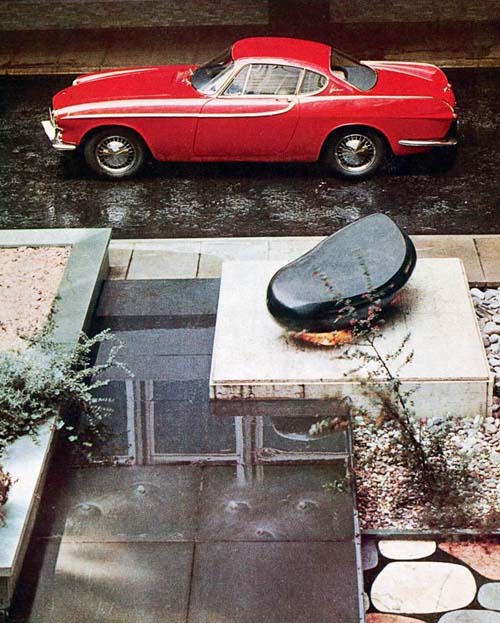
1961 – Volvo P1800 at Sanderson Hotel in Berners St in London – UK
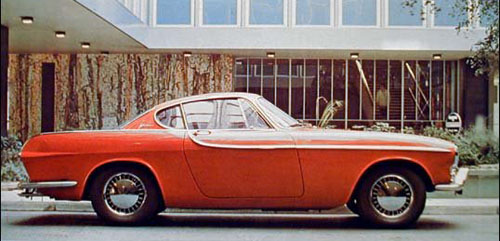
1961 - Volvo P1800

1961 – Volvo P1800 at Sanderson Hotel in Berners St in London – UK
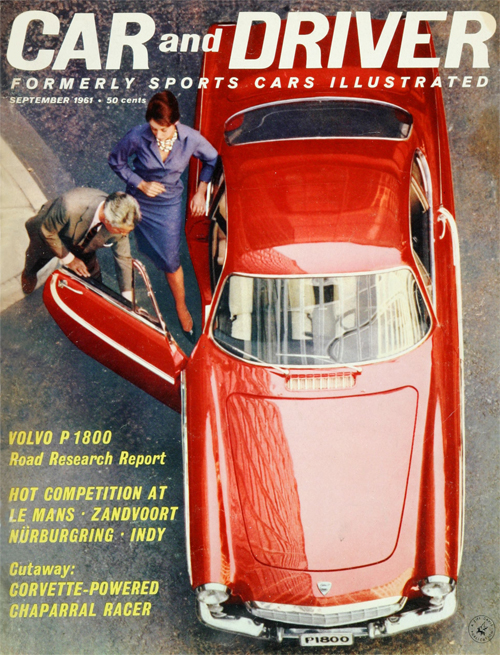
1961 – Volvo P1800 on cover of Car & Driver Magazine from September 1961
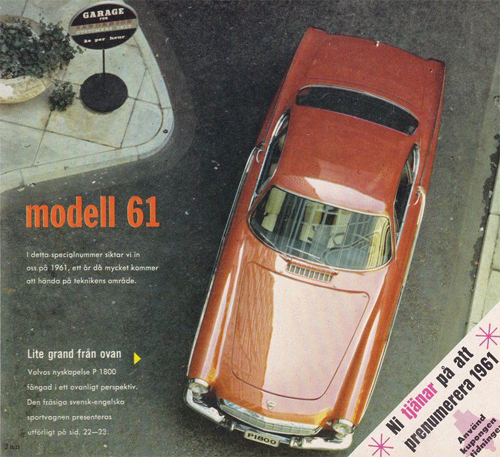
1960 – Volvo P1800 on Cover of Teknikens Värld Magazine of 1960 #26
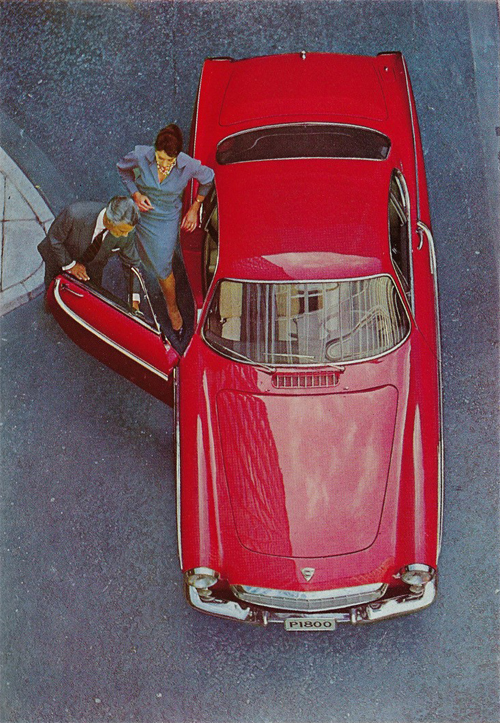
1961 – Volvo P1800 at Sanderson Hotel Car Park on Wells Mews in London UK
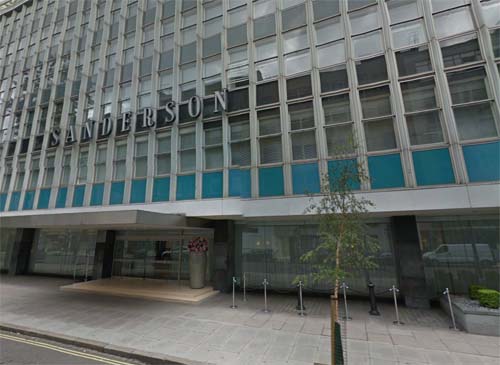
2014 - Sanderson Hotal at 50 Bernerstreet in London, UK (Google Streetview)
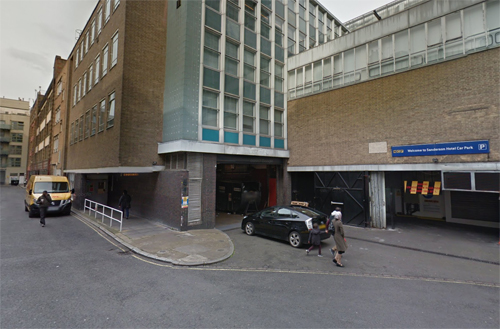
2014 – Sanderson Hotel at 50 Bernerstreet in London, UK (Google Streetview)

2019 – Sanderson Hotel Car Park on Wells Mews in London (Google Streetview)
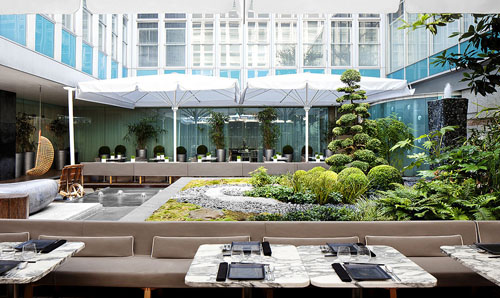
2014 - Sanderson Hotal at 50 Bernerstreet in London, UK (Inside garden)

2014 – Sanderson Hotel at 50 Bernerstreet in London, UK (Inside garden)

Berners Street is a street in London, where today on number 50 is the Sanderson Hotel.

About the hotel: The Sanderson Hotel was constructed on Berners Street, London during 1958 as the new headquarters and showroom for Arthur Sanderson and Sons, manufacturers of wallpaper, fabrics and paint for its centennial.

It was designed by architect Jeff Holroyd, of the architectural firm, Slater and Uren. The original design allowed for dynamic room configurations. The building plan was fabricated around an open-to-the-sky inner courtyard with a Japanese garden designed by Philip Hicks. In 1991, the Sanderson building was listed Grade II* by the government’s English Heritage Commission. It was reopened on April 25, 2000 by Morgans Hotel Group after refurbishment by Philippe Starck and Denton Corker Marshall.

The original building was constructed with a steel and glass frontage reflecting architecture of the 1960s that is seen in the opening footage of the ‘Danger Man’ television series. Its Courtyard garden was situated on top of an underground car park and fronted the wholesale trade sales area to the right. The retail areas were to the left and centre. The courtyard was designed by landscape architect Philip Hicks in the late 1950s. The private courtyard garden was classified as a landmark “Heritage Garden.”

Originally the main entrance featured both lifts/elevators and a grand staircase which ascended against a huge stained glass mural masking the lift shafts. The first floor was devoted to wallpaper displays and its lengthy retail counter allowed for conversion to a long bar. The second floor was reserved for fabric displays, while the third floor held management offices and an interior design studio.

In each room, above the bed, there’s a painting bolted to the ceiling. The painting is a reproduction of “The Cloud” by Swedish painter, Prince Eugen. The original dates back to 1895.
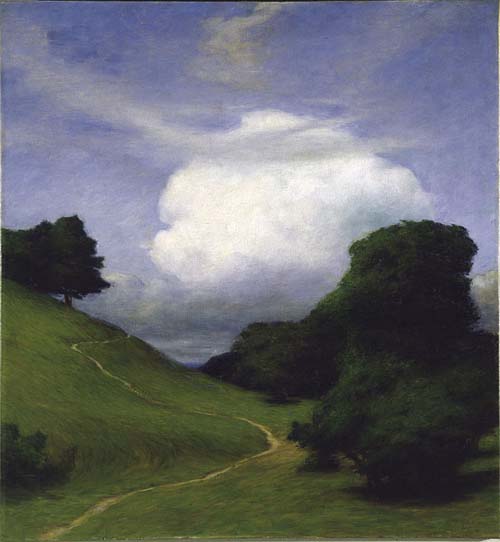
1895 - The Cloud from Prince Eugen (Göteborgs Konstmuseum)

1895 – The Cloud from Prince Eugen (Göteborgs Konstmuseum)

Today, the hotel is famous for its afternoon tea parties. In keeping with the surreal atmosphere, Sanderson have created a Mad Hatter’s Afternoon Tea, and guests are invited to “tumble down the rabbit hole” and enjoy the wonderful world of tea in the beautiful Courtyard Garden.

Upon being seated, guests will receive a menu, hidden inside a vintage book, and linen napkins wrapped with a riddle, thereby beginning the theatrical afternoon. Each tea blend is presented at the table so guests can sample the aroma of every variety from miniature glass caddies. Tea can be sweetened from a magical music box containing a ballerina dancing on top of the sugar, which will serenade guests to the tune of “Somewhere Over The Rainbow” once opened.
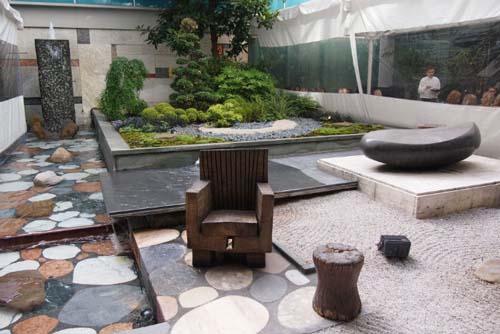
sanderson

The hotel occupies the site of 54 Berners Street, known for the Berners Street Hoax of 1809.

The Berners Street Hoax was perpetrated by Theodore Hook in the City of Westminster, London, in 1810.
Hook had made a bet with his friend, Samuel Beazley, that he could transform any house in London into the most talked-about address in a week, which he achieved by sending out thousands of letters in the name of Mrs Tottenham, who lived at 54 Berners Street, requesting deliveries, visitors, and assistance.

On 27 November, at five o’clock in the morning, a sweep arrived to sweep the chimneys of Mrs Tottenham’s house. The maid who answered the door informed him that no sweep had been requested, and that his services were not required. A few moments later another sweep presented himself, then another, and another, 12 in all. After the last of the sweeps had been sent away, a fleet of carts carrying large deliveries of coal began to arrive, followed by a series of cakemakers delivering large wedding cakes, then doctors, lawyers, vicars and priests summoned to minister to someone in the house they had been told was dying. Fishmongers, shoemakers, and over a dozen pianos were among the next to appear, along with “six stout men bearing an organ”. Dignitaries, including the Governor of the Bank of England, the Duke of York, the Archbishop of Canterbury and the Lord Mayor of the City of London also arrived. The narrow streets soon became severely congested with tradesmen and onlookers. Deliveries and visits continued until the early evening, bringing a large part of London to a standstill.
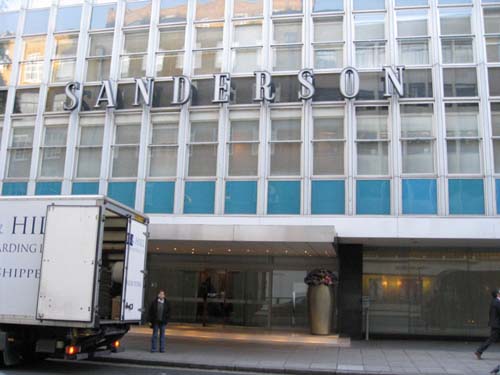
The Sanderson Hotel, located at the former site of No. 54 Berners Street. (Note truck making deliveries)

The Sanderson Hotel, located at the former site of No. 54 Berners Street. (Note truck making deliveries)

Hook stationed himself in the house directly opposite 54 Berners Street, from where he and his friend spent the day watching the chaos unfold.[4]
Despite a “fervent hue and cry” to find the perpetrator, Hook managed to evade detection, although many of those who knew him suspected him of being responsible. It was reported that he felt it prudent to be “laid up for a week or two” before embarking on a tour of the country, supposedly to convalesce.

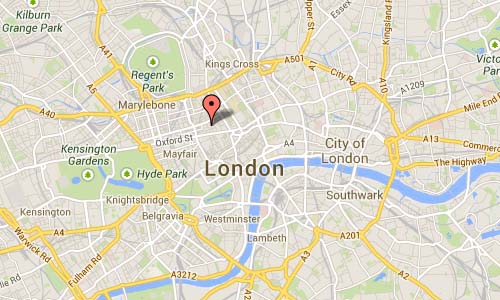
The address of the Sanderson Hotel: 50 Berners St, London W1T 3NG, UK.
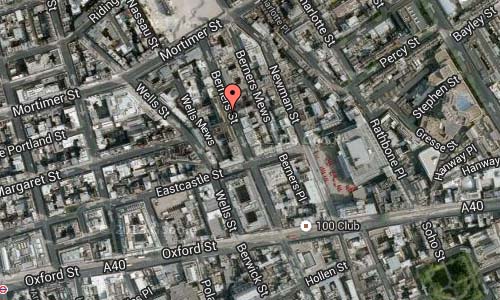
Berners St in London Maps2

Berners St in London Maps

More information on sandersonlondon.com, www.museumofhoaxes.com, www.bookatable.com and en.wikipedia.org.
Historic Volvo Photography Locations Overview

Lindstedtsvägen in Stockholm 🇸🇪

March 16th, 2014

Volvo Photo Locations Part 142
Historic Volvo Photography Locations Overview

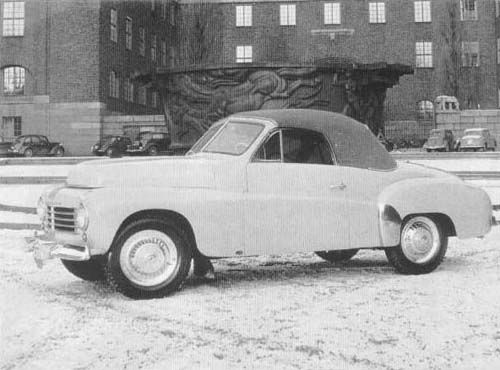
1950 – Volvo P445 Cabriolet by Gustaf Nordbergs Vagnfabrik

1950 – Volvo P445 Cabriolet by Gustaf Nordbergs Vagnfabrik

1950 - Volvo P445 Cabriolet by Norbergs

1950 – Volvo P445 Cabriolet by Norbergs

1950 - Volvo P445 Cabriolet by Norbergs

1950 – Volvo P445 Cabriolet by Norbergs

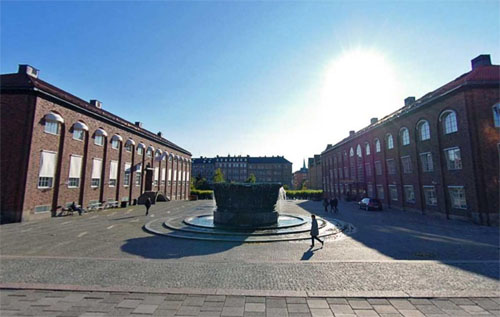
2014 - Lindstedtsvägen in Stockholm (Hitta.se Gatubild)

2014 – Lindstedtsvägen in Stockholm (Hitta.se Gatubild)

2014 - Lindstedtsvägen in Stockholm (Hitta.se Gatubild)

2014 – Lindstedtsvägen in Stockholm (Hitta.se Gatubild)

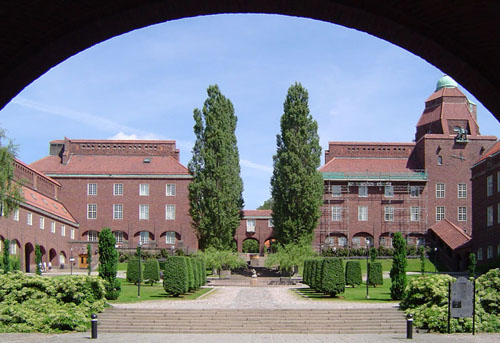
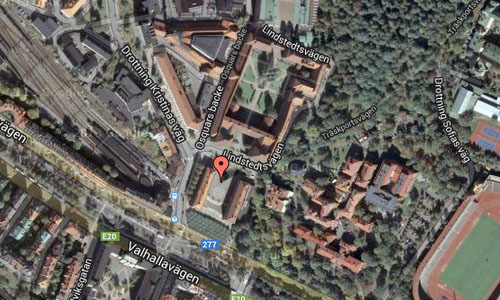
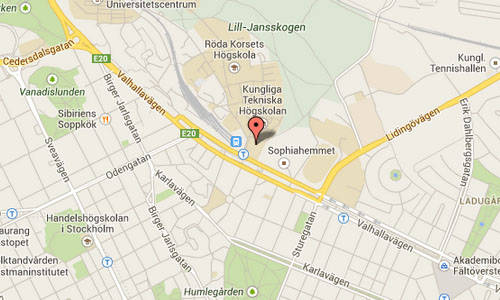
Lindstedtsvägen in Stockholm is a street at the Kungliga Tekniska högskolan (KTH) campus in Stockholm.

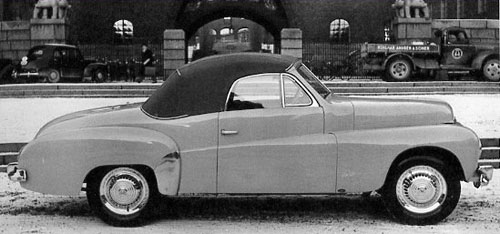
The Volvo in the photo is the famous ‘Nordbergscabben’, a one off convertible on a 445-chassis built by Gustaf Nordbergs Vagnfabrik in Stockholm. The convertible was built on one of the first 500 445-chassis according to the dashboard. The dashboard is the same found in the PV 444 A with the speedometer in the middle. The colouring though was not the green/yellow. Instead it got the grey one also found in the PV 444 S introduced in 1950. The hood got a higher profile than the original hood. The convertible has probarly gone to the scrapyard, but nobody knows for sure. As long as it isn’t verified you can hope that it is put to rest in some barn somewhere. (Source: )

The Kungliga Tekniska högskolan, abbreviated KTH (or Royal Institute of Technology in English) is a university in Stockholm, Sweden. KTH was founded in 1827 as Sweden’s first polytechnic and is one of Scandinavia’s largest (the largest by certain definitions) institutions of higher education in technology.

KTH accounts for one-third of Sweden’s technical research and engineering education capacity at university level. KTH offers programmes leading to a Master of Architecture, Master of Science in Engineering, Bachelor of Science in Engineering, Bachelor of Science, Master of Science, licentiate or doctoral degree.

There are a total of just over 14 000 full-year equivalent undergraduate students, more than 1700 active postgraduate students and 4600 full-time-equivalent employees. KTH is one of the leading technical universities in Europe and highly respected worldwide, especially in the domains of technology and natural sciences.

KTH-43-3-Huvudbyggnaden-6

The main campus buildings at Valhallavägen in Östermalm, by architect Erik Lallerstedt, were completed in 1917. The buildings and surroundings were decorated by prominent early 20th-century Swedish artists such as Carl Milles, Axel Törneman, Georg Pauli, Tore Strindberg and Ivar Johnsson. The older buildings on the campus went through a complete renovation in 1994. While the original campus was large for its time, KTH very soon outgrew it and the campus was expanded with new buildings. Today KTH institutions and faculties are distributed across several campuses in Stockholm County, located in Flemingsberg, Haninge, Kista and Södertälje in addition to the ones in Östermalm.

KTH_Kerberos

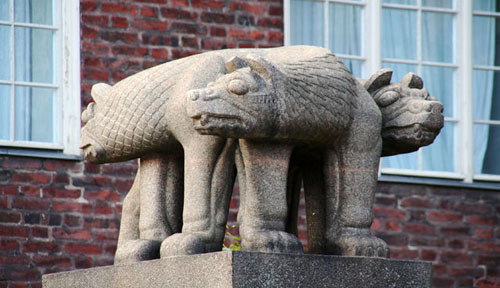
Cerberus outside the entrance to the Royal Institute of Technology in Stockholm.

Cerberus or Kerberos, in Greek and Roman mythology, is a bronze multi-headed (usually three-headed) dog, or “hellhound” with a serpent’s tail, a mane of snakes, and a lion’s claws. It guards the entrance of Hades to prevent those who entered from ever escaping.

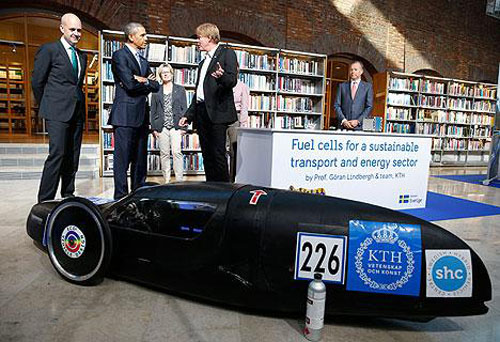
2013 - Obama at KTH Stockholm

U.S. President Barack Obama and Prime Minister Fredrik Reinfeldt speaks with Professor Göran Lindberg on fuel cell technology during his visit to KTH in September 2013. Concept car Sleipner is capable of running 1500 km on one liter of petrol.

2014 - Lindstedtsvägen Stockholm Maps2

2014 - Lindstedtsvägen Stockholm Maps

More information at www.kth.se and www.pvchassi.com.

Historic Volvo Photography Locations Overview

Swedish Formula 1 Drivers

March 15th, 2014

Sweden has had many succesfull Formula One drivers in the past. Marcus Ericsson was the last Swedish Formula One driver. He was active as a driver from 2014 until 2018. In 2019 Marcus was only reserve (or 3rd driver) and never raced that year in F1. Marcus was the first since 23 years after Stefan Johansson took part in a Grand Prix Formula One.

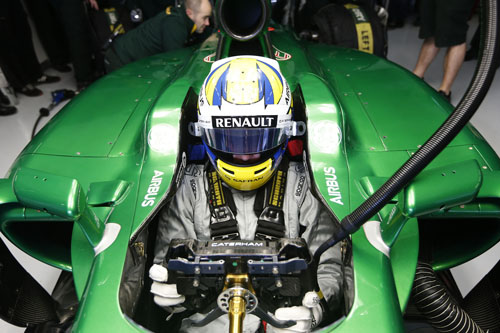
Marcus-Ericsson-Caterham-F1-Team-Jerez-01

Who were those Swedish Formula One drivers?

Jo Bonnier (1956 – 1971)
Ronnie Peterson (1970 – 1978)
Reine Wisell (1970 – 1974)
Bertil Roos (1974)
Torsten Palm (1975)
Gunnar Nilsson (1976 – 1977)
Conny Andersson (1976 – 1977)
Slim Borgudd (1981 – 1982)
Stefan Johansson (1980 – 1991)
Marcus Ericsson (2014 – 2018)

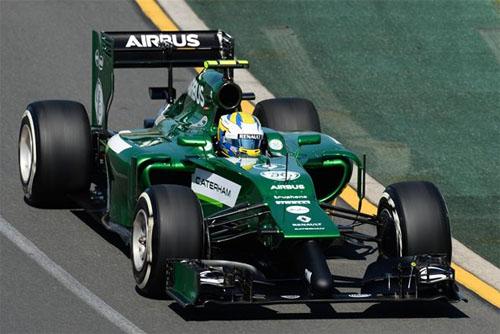
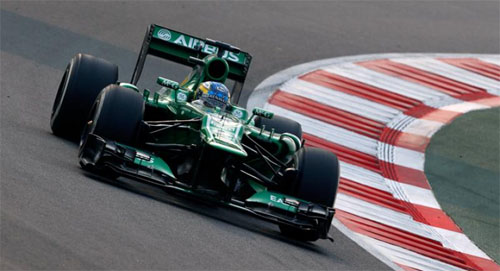
2014 - Marcus Ericsson - Caterham CT05 - Australian GP

2014 – Marcus Ericsson – Caterham CT05 – Australian GP

How about the Swedish Grand Prix Formula One?

Buoyed by the success and popularity of their drivers (and in particular Ronnie Peterson), Sweden hosted six rounds of the world championship in the Seventies, all of them at Anderstorp.

The Scandinavian Raceway, as it was also known, was built on reclaimed marshland in the late Sixties and featured an extremely long straight (named ‘Flight Straight’ because it also served as a runway) and several banked corners. Peterson very nearly recorded a fairy-tale win in the first race in 1973, but sadly a deflating tyre robbed him of victory.

In the years that followed, the popular racer never quite managed to secure the victory the home fans craved, but at least Swedish supporters got to witness the only wins for two of F1 racing’s most controversial cars.

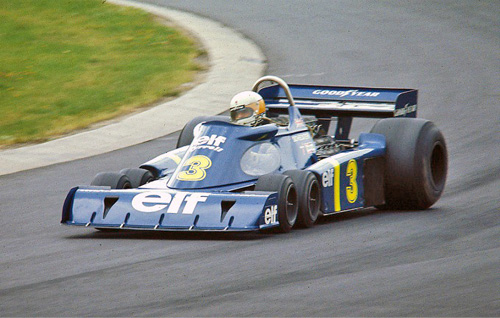
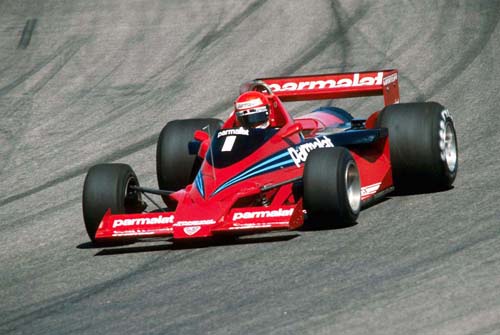
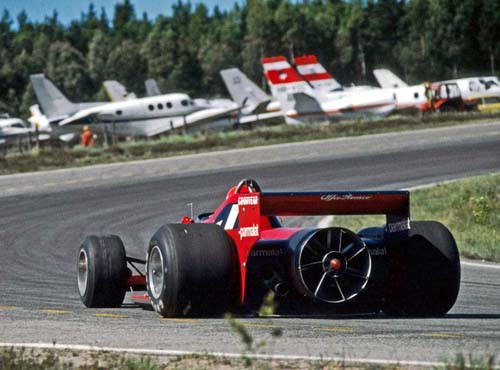
In 1976, Jody Scheckter drove Tyrrell’s six-wheeled P34 to victory, and in the final race in 1978 Niki Lauda took P1 in Brabham’s notorious BT46B ‘fan car’.

1976 - Jody Scheckter - Tyrrell P34 - Anderstorp Victory

1976 – Jody Scheckter – Tyrrell P34 – Anderstorp Victory

1978 - Niki Lauda - Brabham BT46 - Anderstorp Victory

1978 – Niki Lauda – Brabham BT46 – Anderstorp Victory

1978 - Niki Lauda - Brabham BT46 - Anderstorp Victory

1978 – Niki Lauda – Brabham BT46 – Anderstorp Victory

F1 – Marcus Ericsson

March 14th, 2014

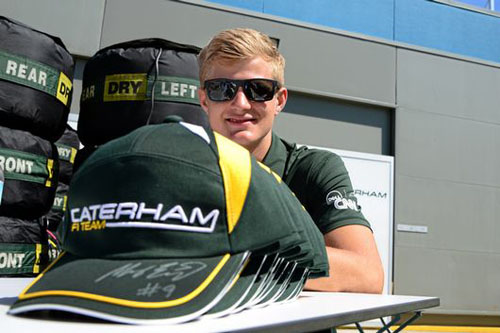
Marcus Ericsson (born 2 September 1990) is an active Formula One driver, participating in Formula One in 2015 for Sauber F1 after his debute in 2014 for Caterham F1.

After a successful début in car racing in 2007 which saw him take the British Formula BMW title with Fortec Motorsport, he moved up into the British team’s British Formula Three squad. After finishing as one of the top rookies in the category, Ericsson turned his attentions to the All-Japan Formula Three Championship where he won the championship in his debut year. In 2010, he moved up to the GP2 Series where he secured one victory during his maiden campaign for Super Nova Racing. Between 2011 and 2012, Ericsson drove for iSport. Ericsson completed the 2013 GP2 season with DAMS, and debuted in Formula One in 2014 with Caterham F1.

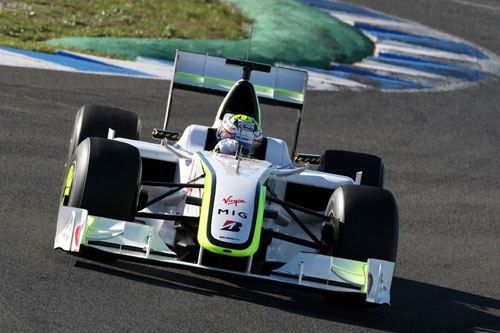
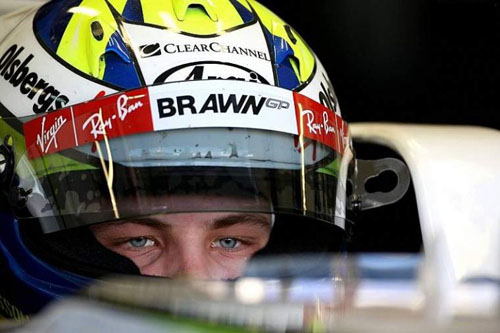
Ericsson drove for Brawn GP at the young driver test at Circuito de Jerez over three days, on 1–3 December 2009. He tested alongside IndyCar Series driver Mike Conway. Conway had the edge by three tenths of a second, however team principal Ross Brawn commended Ericsson for his performance, saying that he had “performed very well showing exceptional maturity in his approach and feedback”.

2009 - Marcus Ericsson testing for BrawnGP

2009 – Marcus Ericsson testing for BrawnGP

2009 - Marcus Ericsson testing for BrawnGP

2009 – Marcus Ericsson testing for BrawnGP

It was announced on 21 November 2013 that Ericsson was a candidate to drive for the Caterham F1 Team in 2014 with Kamui Kobayashi as teammates. On 21 January 2014, the team announced that Ericsson and Kobayashi would be their race driver line up for the forthcoming season, with Robin Frijns as reserve.

2014 - Marcus Ericsson - Caterham CT05

2014 – Marcus Ericsson – Caterham CT05

Marcus-Ericsson-Caterham-F1-Team-Jerez-01

Ericsson qualified 20th in his debut race – the 2014 Australian Grand Prix and made a very good beginning to the race, running 11th before he fell back with oil pressure problems. In Malaysia, he qualified last, but improved in the race, finishing 14th in front of main rival Max Chilton. In Spain, he outqualified Kobayashi for the first time of his career, but he was behind both Marussia cars. He finished the race in 20th position, the last classified finisher. In the next race, the Monaco Grand Prix, he was involved in a collision with Williams driver Felipe Massa during qualifying, which resulted in Massa not advancing to the second part of the qualifying session. Ericsson was penalised with two penalty points and had to start from the pit lane. He drove a good race and took advantage of bad luck for other drivers to finish in 11th place, just missing out on his and Caterham’s first points.

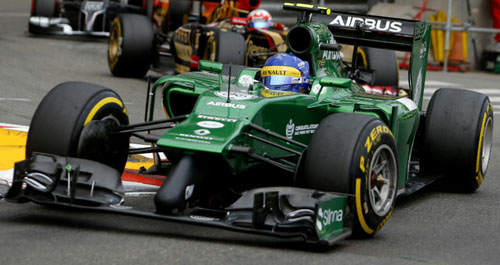
2014 - Marcus Ericsson at Monaco GP

2014 – Marcus Ericsson at Monaco GP

After this, Ericsson had some tough races in the slow Caterham, and it took until the Belgian Grand Prix where he could match the Marussias again, losing 16th place to Chilton on the very last lap. In Singapore, he did a good job saving his tyres and was able to keep both Marussias behind him to finish in 15th place and in Japan, he out-qualified both Marussias and Kobayashi for 19th position. He started 17th, but spun behind the safety car in heavy rain, and had to fight back from last place. He finished 17th after some really fast laps, in front of both Marussias and Kobayashi, but his great performance was overshadowed by the crash of Bianchi. At the inaugural Russian Grand Prix, he qualified in a career-best 17th position and this time, he was only 0.15 seconds from making it into Q2. During the race, he started 16th but fell back as expected, finishing 19th overall but in front of his main rivals – the other Caterham and the sole Marussia of Chilton, who eventually retired from the race.

Due to Caterham F1 falling into administration on 21 October 2014, neither team driver was able to compete at the United States Grand Prix. Despite this, Ericsson flew to Texas to commentate the race for Swedish television and, as it transpired, to secure a new drive for 2015. Ericsson terminated his contract with Caterham on 12 November. He eventually finished the season in 19th position, highest of the Caterham drivers that took part in 2014.

2014 - Marcus Ericsson

2014 – Marcus Ericsson

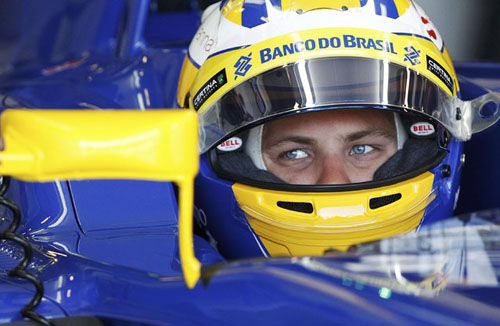
At the 2014 United States Grand Prix, Sauber announced that it had signed Ericsson for 2015, due in part to his substantial financial backing, but also for his strong last races of the 2014 season and the fact that he stayed cool despite 2014 being a frustrating season for him. In his first race with the team in Australia, Ericsson finished in eighth position, recording the first points-scoring finish by a Swedish driver since Stefan Johansson finished third at the 1989 Portuguese Grand Prix.

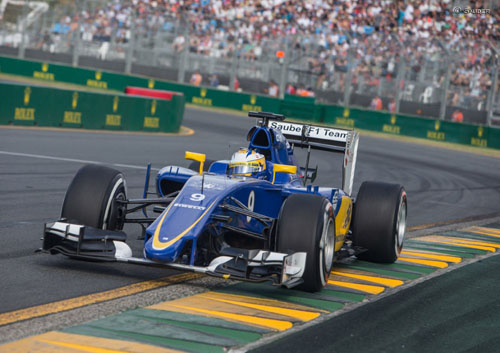
2015 - Marcus Ericsson racing for Sauber F1

2015 – Marcus Ericsson racing for Sauber F1

2015 - Marcus Ericsson at the Australian Grand Prix in Melbourne

2015 – Marcus Ericsson at the Australian Grand Prix in Melbourne

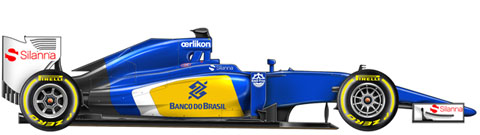
2015 Sauber Ferrari C34 - Marcus Ericsson2015 Sauber Ferrari C34 – Marcus Ericsson
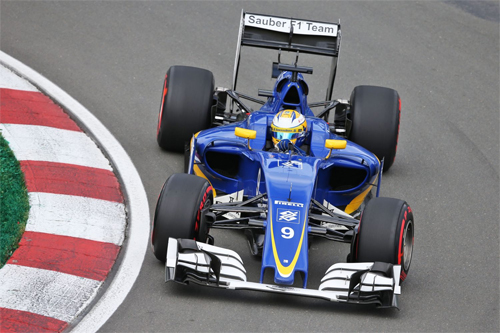
At the 2014 United States Grand Prix, Sauber announced that it had signed Ericsson for 2015. In his first race with the team in Australia, Ericsson finished in eighth position, recording the first points-scoring finish by a Swedish driver since Stefan Johansson finished third at the 1989 Portuguese Grand Prix.

Malaysia was the first time that Ericsson made it into Q3, qualifying 10th but was ultimately promoted to 9th. He spun on the fourth lap after an unsuccessful overtaking attempt on Force India’s Nico Hülkenberg which resulted in retirement. In China, Ericsson again made it into Q3 in qualifying, again qualifying 10th. He finished the race in the same position, scoring one point after Max Verstappen’s engine blew up with only a few laps remaining. In Bahrain he qualified outside the top 10, and held 8th position when a pit stop failure caused him to fall down the field, and he ultimately finished the race in 14th position. In the first European leg of the season he finished 14th in Spain and 13th in Monaco.

In the 2015 British Grand Prix he finished 11th – just outside the points. He scored one more point before the summer break, with a 10th-place finish in Hungary, followed by another 10th position in Belgium. At the Italian Grand Prix Ericsson qualified for Q3, where he ended up 10th, before he was given a grid penalty for blocking Hülkenberg in Q1. Ericsson eventually finished 9th – taking his fifth points position for the year and again being in front of teammate Felipe Nasr.

During the summer break Sauber announced that Ericsson along with Nasr had both extended their deals with the team for the 2016 season.

2016 – Marcus Ericsson with the Sauber C35
In 2016, Sauber missed pre-season testing due to financial concerns hurting their car development for 2016.

Ericsson was running in 15th before a power issue in Australia and he drove a good race to take twelfth in Bahrain in the next round. He ran just outside the points in China but steadily dropped to sixteenth, still four places ahead of Nasr.

In Russia he recovered from first lap contact to beat Nasr once again and take fourteenth. In Spain he was fantastic again as he was twelfth, but in Monaco he crashed into his teammate clumsily which ruined his next race in Canada as he started at the back due to a grid penalty. He went on a slump in the following races, with 17th in Baku and 15th in Austria, with qualifying crashes in Silverstone and Hungary forcing him to start from the pit lane. Another bad couple of races followed in Hockenheim and Spa, but after that he got back on track.

In Monza, he maximised the car finishing sixteenth whilst in Singapore he made Q2 and was close to scoring his first point until a strategic blunder from the team. He ran close to points in Malaysia and Suzuka, thrashing his teammate in qualifying and the race. In Austin, he ran eleventh for part of the race but ended up fourteenth and in Mexico he put in one of the drives of the season as he recovered from a first lap crash to eleventh, just outside the points. He crashed out of the race in Brazil but finished fifteenth in Abu Dhabi.

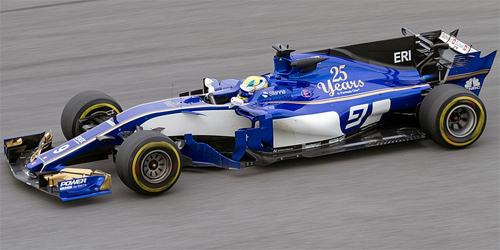
2017 – Marcus Ericsson with the Sauber C36
Ericsson’s 2017 campaign did not start well as he had to retire due to a hydraulic issue in Australia. He qualified 14th and finished 15th in China. He struggled to match his teammate Wehrlein in Bahrain with his race ending in another disappointing retirement due to the gearbox. He finished 15th in Russia beating his teammate for the first time in the season. Ericsson got his best result of the season in 11th in Azerbaijan where he fought wildly for points in Azerbaijan with his teammate. Sauber started to struggle in Monaco with Ericsson crashing into the barrier while overtaking the safety car to get on the lead lap. He finished 13th in Canada and would fail to score points for the rest of the season.

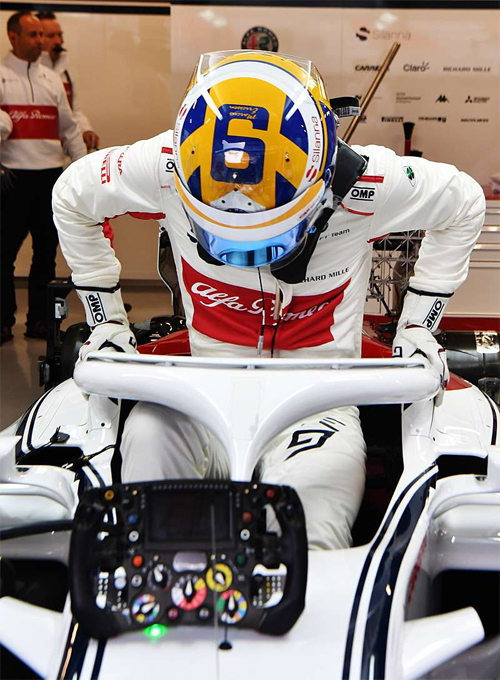
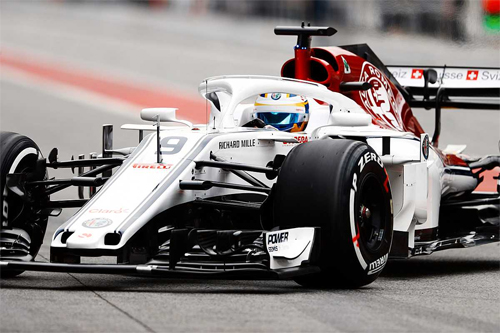
2018 – Marcus Ericsson with the Alfa Romeo Sauber C37 in Barcelona
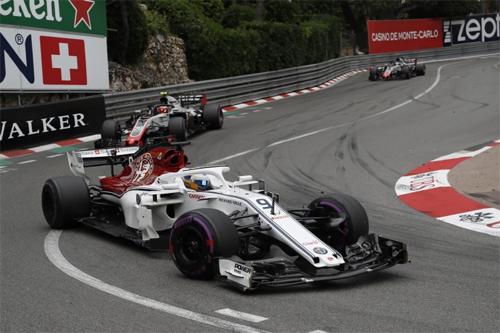
2018 – Marcus Ericsson with the Alfa Romeo Sauber C37 at Monaco
2018 – Marcus Ericsson with the Alfa Romeo Sauber C37 at Monza
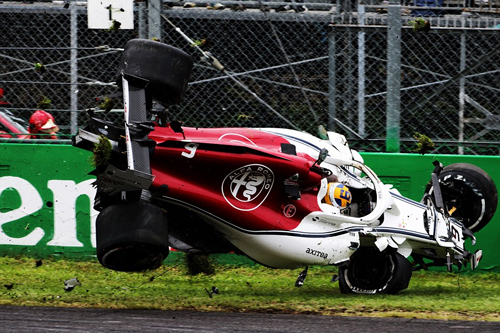
Ericsson retained his seat at Sauber for 2018, alongside new teammate Charles Leclerc. At the Bahrain Grand Prix, Ericsson finished in ninth position, scoring his first points since the 2015 Italian Grand Prix, after a total of 49 races without scoring a point. He then scored further points at the Austrian, German, Belgian, USA and Mexican Grands Prix. At the Italian Grand Prix, Ericsson had a high speed accident in second practice at Turn 1, with a DRS issue causing the car to lose control and slam the wall where the runoff is. Ericsson hit the wall heavily, and flipped 3 times before coming to rest on all wheels but was uninjured.

2019 – Marcus Ericsson testing the Alfa Romeo Sauber C38 in Barcelona
Just before the 2018 Russian Grand Prix it was announced that he was to be replaced at Sauber by Antonio Giovinazzi, but would remain with the team as their third driver and brand ambassador.
In September, Ericsson was requested to be stand-in for an injured Kimi Räikkönen at the Belgian Grand Prix; Räikkönen would ultimately run the race.

More information at marcusericsson.com and www.sauberf1team.com

All Swedish Formula One drivers:

Jo Bonnier (1956 – 1971)
Ronnie Peterson (1970 – 1978)
Reine Wisell (1970 – 1974)
Bertil Roos (1974)
Torsten Palm (1975)
Gunnar Nilsson (1976 – 1977)
Conny Andersson (1976 – 1977)
Slim Borgudd (1981 – 1982)
Stefan Johansson (1980 – 1991)
Marcus Ericsson (2014 – 2018)
F1 – Stefan Johansson

March 14th, 2014

Stefan (Nils Edwin) Johansson (born 8 September 1956 in Växjö) participated in Formula One between 1980 and 1991. He drove in Formula One for Shadow, Spirit, Tyrrell, Toleman, Ferrari, McLaren, Onyx, AGS and Footwork.

1980 - Stefan Johansson - Shadow Cars - Shadow DN11

1980 – Stefan Johansson – Shadow Cars – Shadow DN11

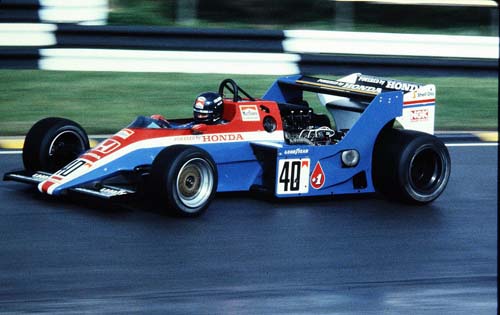
1983 - Stefan Johansson - Spirit Racing - Spirit 201C Honda

1983 – Stefan Johansson – Spirit Racing – Spirit 201C Honda

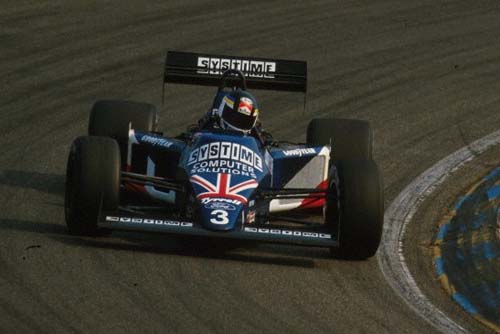
1984 - Stefan Johansson - Tyrrell Racing Organisation - Tyrrell 012

1984 – Stefan Johansson – Tyrrell Racing Organisation – Tyrrell 012

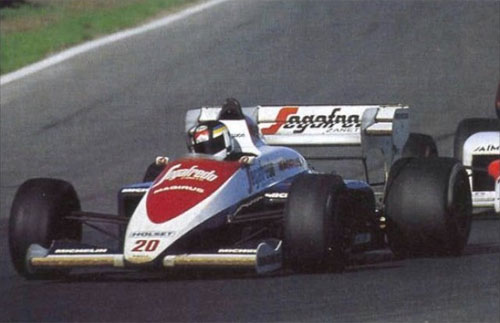
1984 - Stefan Johansson - Toleman Group Motorsport - Toleman TG184

1984 – Stefan Johansson – Toleman Group Motorsport – Toleman TG184

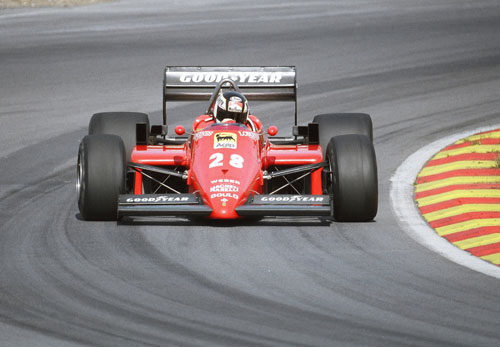
1985 - Stefan Johansson - Scuderia Ferrari - Ferrari 156

1985 – Stefan Johansson – Scuderia Ferrari – Ferrari 156

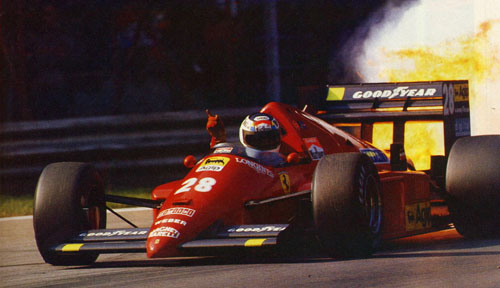
1986 - Stefan Johansson - Scuderia Ferrari - Ferari F1-86

1986 – Stefan Johansson – Scuderia Ferrari – Ferari F1-86

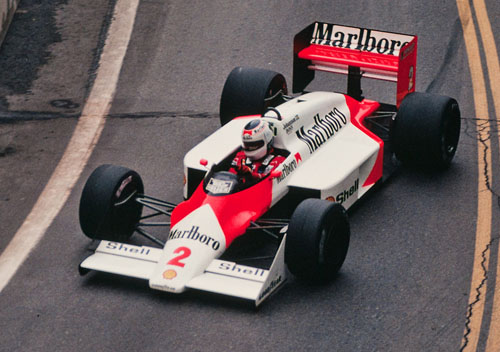
1987 - Stefan Johansson - Marlboro McLaren International - McLaren MP4-3

1987 – Stefan Johansson – Marlboro McLaren International – McLaren MP4-3

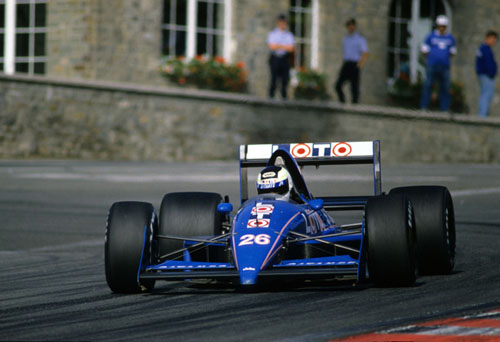
1988 - Stefan Johansson - Ligier Loto - Ligier JS31

1988 – Stefan Johansson – Ligier Loto – Ligier JS31

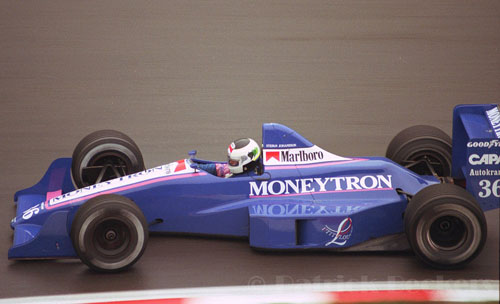
1989 - Stefan Johansson - Moneytron Onyx - Onyx ORE-1

1989 – Stefan Johansson – Moneytron Onyx – Onyx ORE-1

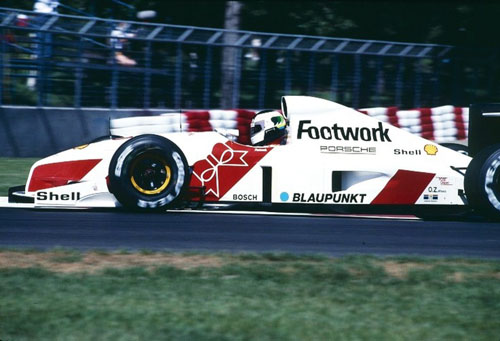
1991 - Stefan Johansson - Footwork Grand Prix International - Footwork FA12 Porsche

1991 – Stefan Johansson – Footwork Grand Prix International – Footwork FA12 Porsche

Having got himself into several front-running F1 cars, the likeable Johansson never quite managed to make the most of his opportunities. His first forays into the big time were a disaster – still an inexperience driver, Johansson was offered an F1 drive with Shadow in 1980, but after failing to qualify in either Argentina or Brazil he retreated back to Formula Three. Three years later, with the British F3 championship and several Formula Two victories in his pocket, he made his F1 return with Spirit. The team was uncompetitive, but the following season he impressed as a stand-in at Toleman, recording a fourth-place finish in Italy and earning himself a drive for 1985. Unfortunately the team folded before the season began, but after a one-off drive for Tyrrell, Johansson found himself driving for Ferrari after they split with Rene Arnoux. He seized his chance, grabbing consecutive second places in Canada and Detroit and points finishes elsewhere. The Scuderia retained his services in 1986 and though he scored points frequently, he moved on to McLaren in 1987. More podium finishes followed, but Johansson lost his seat to Ayrton Senna at the end of the year. From then on Johansson was on the downward slope and after disappointing seasons with Ligier and Onyx, and short stints with Footwork and AGS, he headed off to race in the USA.

1989 - Stefan Johansson

1989 – Stefan Johansson

More information at www.stefanjohansson.com

All Swedish Formula One drivers:

Jo Bonnier (1956 – 1971)
Ronnie Peterson (1970 – 1978)
Reine Wisell (1970 – 1974)
Bertil Roos (1974)
Torsten Palm (1975)
Gunnar Nilsson (1976 – 1977)
Conny Andersson (1976 – 1977)
Slim Borgudd (1981 – 1982)
Stefan Johansson (1980 – 1991)
Marcus Ericsson (2014 – ….)
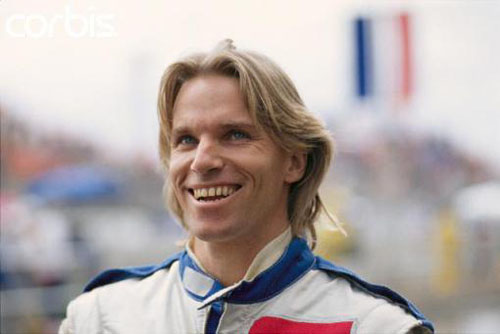
F1 – Slim Borgudd

March 14th, 2014

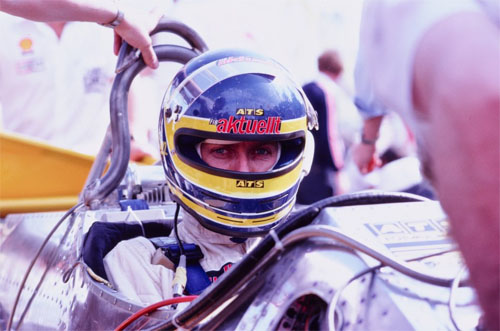
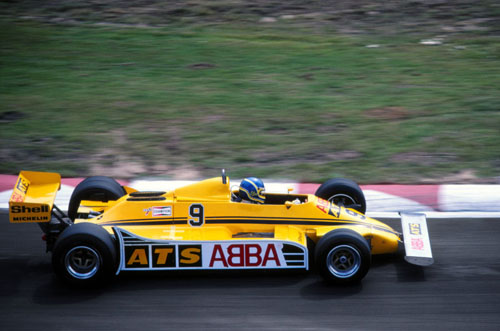
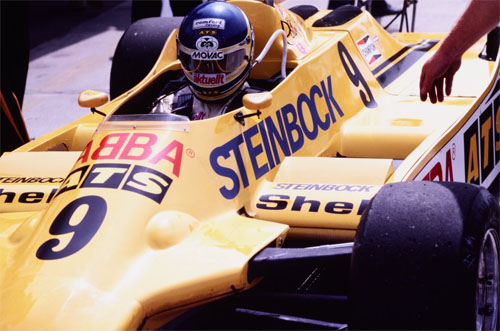
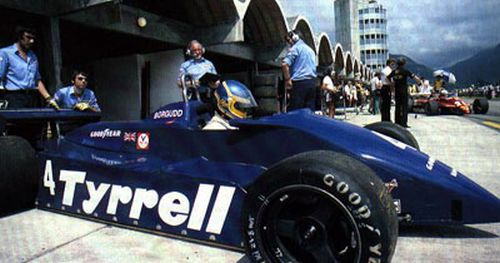
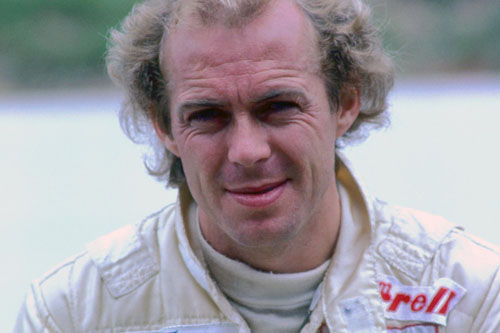
Slim Borgudd (born November 25, 1946) participated in Formula One in 1981 and 1982.He raced for the ATS and Tyrrell teams.

1981 - Slim Borgudd in an ATS D4 at Belgium GP

1981 – Slim Borgudd in an ATS D4 at Belgium GP

1981 - Slim Borgudd - Team ATS - ATS HGS1

1981 – Slim Borgudd – Team ATS – ATS HGS1

1981 - Slim Borgudd in an ATS D4 at German GP.jpg

1981 – Slim Borgudd in an ATS D4 at German GP.jpg


1982 - Slim Borgudd - Team Tyrrell - Tyrrell 011

1982 – Slim Borgudd – Team Tyrrell – Tyrrell 011

Once the drummer with Swedish pop band ABBA, Tommy ‘Slim’ Borgudd only began to race seriously when he was in his thirties, but that didn’t stop him impressing in both the Swedish and European Formula Three championships in 1978/79. In 1981 Borgudd secured the funding for an F1 drive with ATS, but it proved a difficult season and sixth place in Great Britain was his only reward. He subsequently moved to Tyrrell in 1982, but was replaced when his funding ran dry.

1982 - Slim Borgudd

1982 – Slim Borgudd

More information at www.slimracing.co.uk

All Swedish Formula One drivers:

Jo Bonnier (1956 – 1971)
Ronnie Peterson (1970 – 1978)
Reine Wisell (1970 – 1974)
Bertil Roos (1974)
Torsten Palm (1975)
Gunnar Nilsson (1976 – 1977)
Conny Andersson (1976 – 1977)
Slim Borgudd (1981 – 1982)
Stefan Johansson (1980 – 1991)
Marcus Ericsson (2014 – ….)
F1 – Conny Andersson

March 14th, 2014

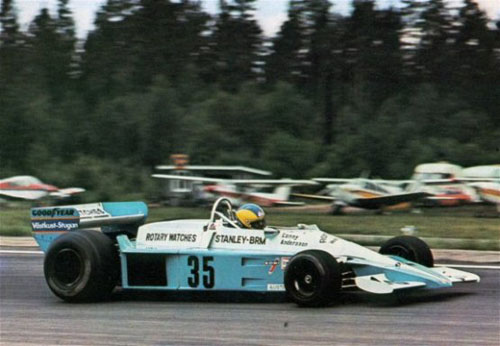
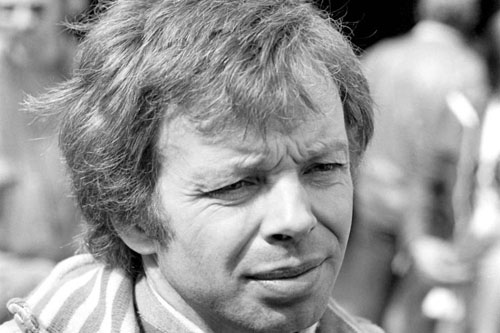
Conny Andersson (born 28 December 1939 in Alingsås, Sweden) participated in Formula One during 1976 and 1977 for the Surtees and BRM teams.

1976 - Conny Andersson Team Surtees - Surtees TS19 - Cosworth V8

1976 – Conny Andersson – Team Surtees – Surtees TS19 – Cosworth V8

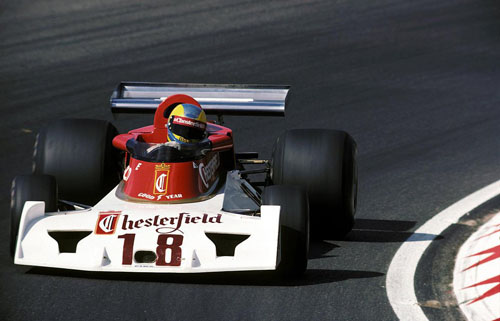
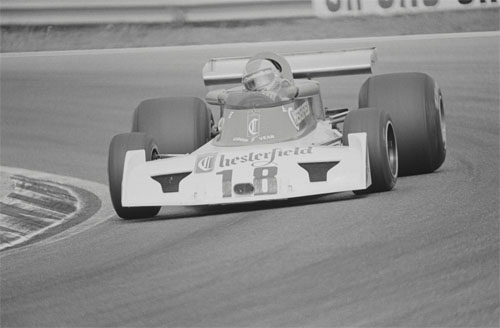
1976 - Conny Andersson drives car number 18, a Surtees-Cosworth TS19 at Dutch Grand Prix

1976 – Conny Andersson drives car number 18, a Surtees-Cosworth TS19 at Dutch Grand Prix

1977 - Conny Andersson Rotary Watches Stanley BRM	- BRM P207 BRM V12

1977 – Conny Andersson – Rotary Watches Stanley BRM – BRM P207 BRM V12

The Stockholm racer must have thought he’d never get an F1 chance after spending seven years in Formula Three, but finally, after being pipped to the European title by a young Riccardo Patrese in 1976, Andersson earned a drive with Surtees at the Dutch Grand Prix. Unfortunately the outing was a relative failure, and his attempts to add more Grand Prix starts to his resume the following season in the uncompetitive BRM P207 proved futile.

1976 - Conny Andersson

1976 – Conny Andersson

More information at en.wikipedia.org/wiki/Conny_Andersson

All Swedish Formula One drivers:

Jo Bonnier (1956 – 1971)
Ronnie Peterson (1970 – 1978)
Reine Wisell (1970 – 1974)
Bertil Roos (1974)
Torsten Palm (1975)
Gunnar Nilsson (1976 – 1977)
Conny Andersson (1976 – 1977)
Slim Borgudd (1981 – 1982)
Stefan Johansson (1980 – 1991)
Marcus Ericsson (2014 – ….)
F1 – Gunnar Nilsson

March 14th, 2014

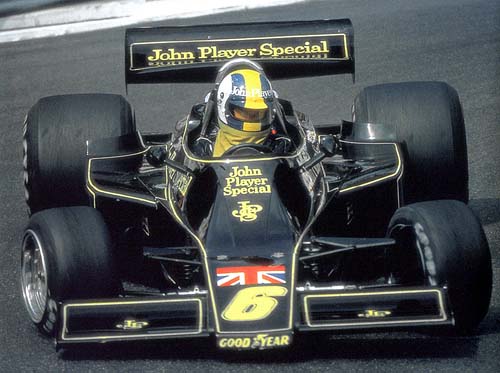
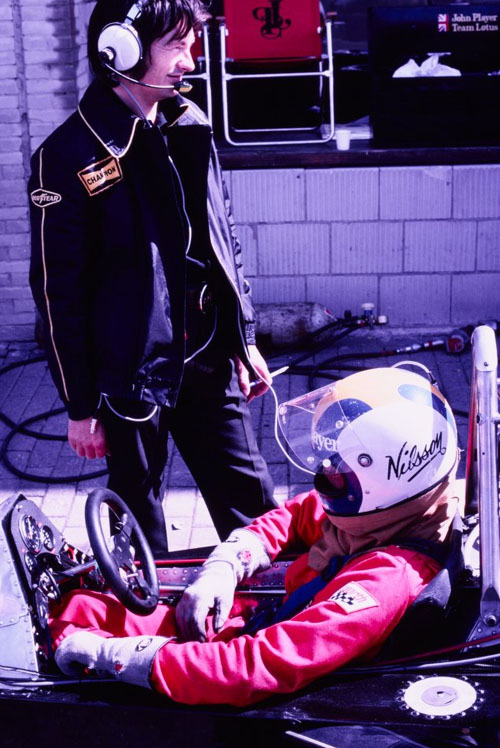
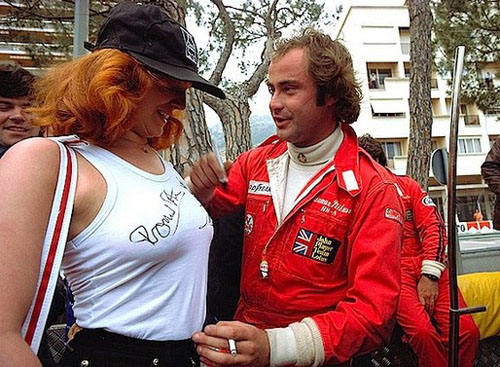
Gunnar Nilsson (20 November 1948 (Helsingborg) – 20 October 1978) entered 32 Formula One Grand Prix races, qualifying for all of them. He won once, at the 1977 Belgian Grand Prix. He participated in Formula One during 1976 and 1977 for John Player Team Lotus.

1976 - Gunnar Nilsson -John Player Team Lotus - Lotus 77

1976 – Gunnar Nilsson -John Player Team Lotus – Lotus 77

1976 - Gunnar Nilsson sits in his Lotus-Cosworth 77 in the pits at the Dutch Grand Prix

1976 – Gunnar Nilsson sits in his Lotus-Cosworth 77 in the pits at the Dutch Grand Prix

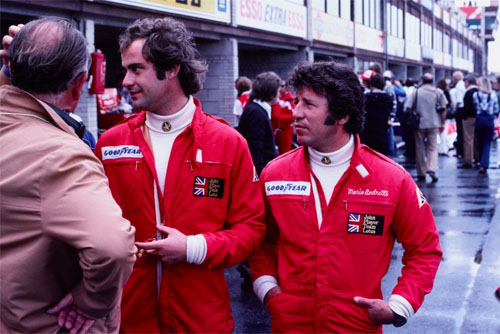
1976 - Gunnar Nilsson and Mario Andretti of JPS Team Lotus in the pits at Zandvoort

1976 – Gunnar Nilsson and Mario Andretti of JPS Team Lotus in the pits at Zandvoort

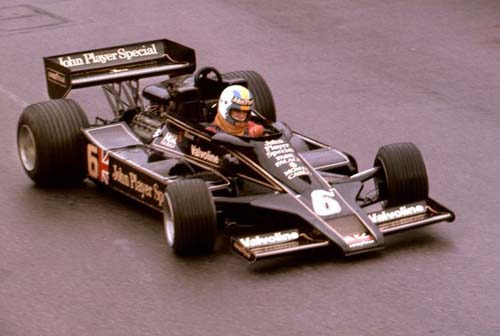
1977 - Gunnar Nilsson - John Player Team Lotus - Lotus 78

1977 – Gunnar Nilsson – John Player Team Lotus – Lotus 78

Gregarious Gunnar was a relative latecomer to motor racing, but before long he’d worked his way to the 1975 British F3 title with March. The following year Nilsson looked set to go F1 racing with the British team, but countryman Ronnie Peterson subsequently engineered a swap that instead saw Nilsson join the stuttering Lotus team while Peterson returned to March. Despite the Lotus 77’s lack of frontline pace, Nilsson took the car to two podium finishes in his debut season and was soon being touted as a future world champion. Colin Chapman retained Nilsson in ‘77 and alongside Mario Andretti he helped develop the ground-effect Lotus 78 into a race winner. Andretti got the team on the board first with two early-season victories, but Nilsson wasn’t to be undone and earned his only Grand Prix victory with a memorable wet-weather performance in Belgium, the highlight of which was an around-the-outside pass on Niki Lauda’s Ferrari. Sadly though, towards the end of the year as Nilsson’s performances took a dive and it was revealed that he was suffering from cancer. He signed with Arrows for the 1978 season, but by that stage the illness had taken hold and he was forced to watch from the sidelines. Just five weeks after Peterson’s tragic death, Sweden lost another star as Nilsson too passed away.

1977 - Gunnar Nilsson

1977 – Gunnar Nilsson

More information at Gunnar Nilssons Cancerstiftelse and en.wikipedia.org/wiki/Gunnar_Nilsson

All Swedish Formula One drivers:

Jo Bonnier (1956 – 1971)
Ronnie Peterson (1970 – 1978)
Reine Wisell (1970 – 1974)
Bertil Roos (1974)
Torsten Palm (1975)
Gunnar Nilsson (1976 – 1977)
Conny Andersson (1976 – 1977)
Slim Borgudd (1981 – 1982)
Stefan Johansson (1980 – 1991)
Marcus Ericsson (2014 – ….)
F1 – Torsten Palm

March 14th, 2014

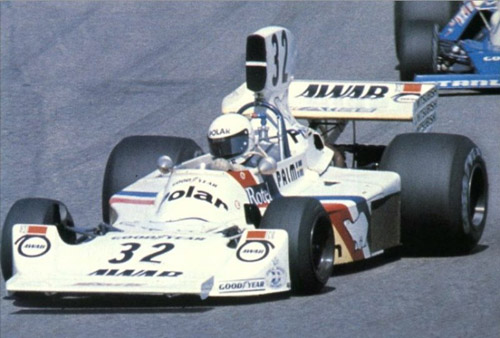
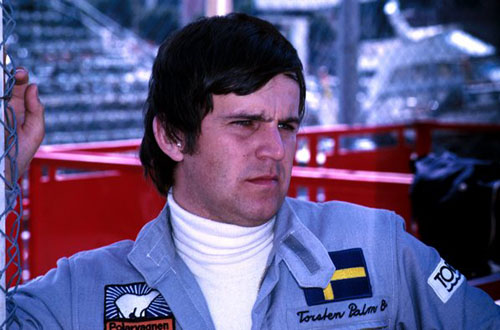
Torsten Palm (born July 23, 1947 in Kristinehamn) participated in two Formula One World Championship Grands Prix with a rented Hesketh in 1975, the Monaco and Swedish GP.

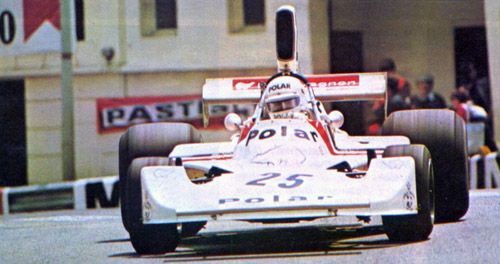
1975 - Torsten Palm - Polar Caravans - Hesketh 308

1975 – Torsten Palm – Polar Caravans – Hesketh 308 (Monaco)

1975 - Torsten Palm - Polar Caravans - Hesketh 308 (Sweden)

1975 – Torsten Palm – Polar Caravans – Hesketh 308 (Sweden)

Like Roos, Palm’s sole F1 appearance came on home soil when he hired a Hesketh 308 to contest the 1975 Swedish Grand Prix. After failing to qualify the car at Monaco, Palm was relieved to make the grid at Anderstorp, but in the race he could manage only tenth place.

1975 - Torsten Palm

1975 – Torsten Palm

More information at sv.wikipedia.org/wiki/Torsten_Palm

All Swedish Formula One drivers:

Jo Bonnier (1956 – 1971)
Ronnie Peterson (1970 – 1978)
Reine Wisell (1970 – 1974)
Bertil Roos (1974)
Torsten Palm (1975)
Gunnar Nilsson (1976 – 1977)
Conny Andersson (1976 – 1977)
Slim Borgudd (1981 – 1982)
Stefan Johansson (1980 – 1991)
Marcus Ericsson (2014 – ….)
F1 – Bertil Roos

March 14th, 2014

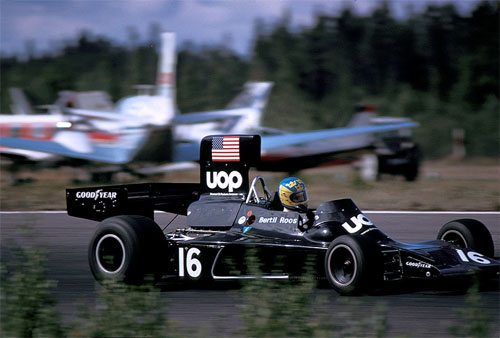
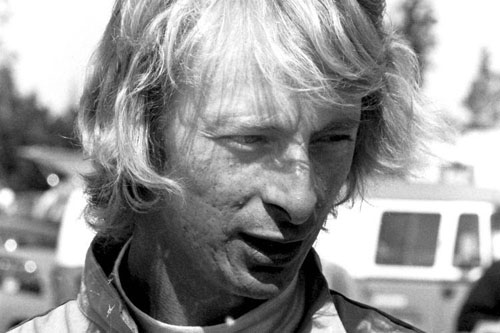
Bertil Roos (born October 12, 1943) participated in a single Formula One Grand Prix, his home race in 1974, from which he retired with transmission failure.

1974 - Bertil Roos - UOP Shadow Racing Team - Shadow DN3

1974 – Bertil Roos – UOP Shadow Racing Team – Shadow DN3

Having made a name for himself in both European Formula Two and Formula Atlantic, Roos was invited to contest his home Grand Prix with Shadow in 1974. But the alliance was not a happy one – Roos qualified poorly at Anderstorp before retiring with gearbox trouble. He never competed in F1 racing again.

1974 - Bertil Roos

1974 – Bertil Roos

More information at www.racenow.com – Bertil Roos Racing School

All Swedish Formula One drivers:

Jo Bonnier (1956 – 1971)
Ronnie Peterson (1970 – 1978)
Reine Wisell (1970 – 1974)
Bertil Roos (1974)
Torsten Palm (1975)
Gunnar Nilsson (1976 – 1977)
Conny Andersson (1976 – 1977)
Slim Borgudd (1981 – 1982)
Stefan Johansson (1980 – 1991)
Marcus Ericsson (2014 – ….)