home

[ Content | Sidebar ]

Vestdijk in Eindhoven – NL 🇳🇱

November 18th, 2017

International Volvo Photo Locations Part 296
Click for Volvo Photography Locations Overview

1978 – Volvo 66 at Vestdijk and Nieuwstraat / Dommelstraat in Eindhoven, The Netherlands 🇳🇱

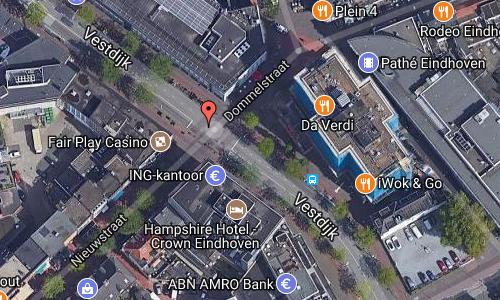
2017 – Vestdijk and Nieuwstraat in Eindhoven, The Netherlands (Google Streetview)

De Vestdijk is a street in Eindhoven that runs between 18 September Plein in the north to Geldropseweg in the south.

This area was heavy damaged in the WW2 during Operation Market Garden to aid the US 101st Airborne Division paratroopers in securing the bridges in and around the town on 18 September 1944, which destroyed large parts of the city Eindhoven. The reconstruction that followed left very little historical remains and the post-war reconstruction period saw drastic renovation plans in high-rise style, some of which were implemented. At the time, there was little regard for historical heritage; in the 1960s, a new city hall was built and its neo-gothic predecessor (1867) demolished to make way for a planned arterial road that never materialised.

1973 – Vestdijk and Nieuwstraat in Eindhoven, The Netherlands.

The early 20th century saw additions in technical industry with the advent of car and truck manufacturing company Van Doorne’s Automobiel Fabriek (DAF) and the subsequent shift towards electronics and engineering, with the traditional tobacco and textile industries waning and finally disappearing in the 1970s.

Eindhoven is a municipality and a city in the south of the Netherlands, originally at the confluence of the Dommel and Gender streams. The Gender was dammed short of the city centre in the 1950s and the Dommel still runs through the city. The city has a population of 223,220 in January 2015, making it the fifth-largest municipality of the Netherlands and the largest in the province of North Brabant.

Close to the Vestdijk, you will find the Philips Museum and the DAF Museum.

More information at en.wikipedia.org and www.thisiseindhoven.com.

Volvo Photography Locations

Elmegade in Copenhagen – DK 🇩🇰

November 18th, 2017

International Volvo Photo Locations Part 295
Click for Volvo Photography Locations Overview

2016 - Volvo XC90 T8 R-design at Sund Sult on Elmegade in Copenhagen, Denmark

2016 – Volvo XC90 T8 R-design at Sund Sult on Elmegade in Copenhagen Denmark

2017 – Elmegade in Copenhagen, Denmark

Elmegade is a popular and vibrant side street to Nørrebrogade and Sankt Hans Square in Nørrebro.

The street buzzes with activity and is known for its small creative boutiques, bars, take away’s and cafes.

In Elmegade, the atmosphere is relaxing and cozy – just like in Værnedamsvej and in Jægersborggade – and many young people and students hang out with friends on the sidewalk, outside the cafes or at benches at Sankt Hans Square.

Also young families with children and girlfriends with prams meet for a chat and a cup of coffee at The Laundromat Café or outside Kaffebar.

Many Copenhageners really do love Elmegade so go visit it while you are in Copenhagen, feel the lively but relaxing atmosphere and find out if you love it too!

More information at da.wikipedia.org and www.visitcopenhagen.com.

Volvo Photography Locations

Beach in Løkken – DK 🇩🇰

August 4th, 2017

International Volvo Photo Locations Part 294

Click for Volvo Photography Locations Overview

1966 – Volvo P220 at Løkken Strand

1966 – Volvo P1800S at Løkken Strand 🇩🇰.

1966 – Volvo P1800S at Løkken Strand🇩🇰.

1966 – Volvo P1800S at Løkken Strand 🇩🇰.

1966 – Volvo P1800S at Løkken Strand 🇩🇰.

1975 – Volvo 245 DL at Løkken Strand 🇩🇰.

1979 – Volvo 245 GLE at Løkken Strand in Denmark 🇩🇰.

1979 – Volvo 245 GLE at Løkken Strand in Denmark 🇩🇰.

1981 – Volvo 245 GLT at Løkken beach 🇩🇰.

1981 – Volvo 244 Turbo at Løkken beach 🇩🇰.

1981 – Volvo 244 GLT and GL on Løkken beach in Denmark 🇩🇰.

1981 – Volvo 244 Turbo at Løkken beach 🇩🇰.

1981 – Volvo 244 Turbo at Løkken beach 🇩🇰.

1981 – Volvo 244 Turbo at Løkken beach with German plates 🇩🇰.

1981 – Volvo 244 Turbo & 1928 – Volvo PV4 at Løkken beach near Løkken in Denmark 🇩🇰.

1981 – Volvo 244 Turbo & 1928 – Volvo PV4 at Løkken beach near Løkken in Denmark 🇩🇰.

1981 – Volvo 262C Bertone at the beach in Løkken 🇩🇰.

1988 – Volvo 780 at Løkken Strand 🇩🇰.

2017 – Volvo V40 Cross Country with Surfboard on beach at Løkken in Denmark 🇩🇰.

2017 – Volvo V40 Cross Country with Surfboard on beach at Løkken in Denmark 🇩🇰.

2016 – Volvo S60 Cross Country at Løkken Strand near Løkken in Nordjylland, Denmark 🇩🇰.

2016 – Volvo S60 Cross Country at Løkken Strand near Løkken in Nordjylland, Denmark 🇩🇰.

2016 – Volvo S60 Cross Country at Løkken Strand near Løkken in Nordjylland, Denmark 🇩🇰.

2017 – Løkken in Denmark (Google Streetview)

2017 – Løkken in Denmark (Google Streetview)

The beach in Løkken is one of the rare beaches in Europe where it is possible and legitimate to drive on the beach with your car.

This beach is very unique with its relics from the 2nd World War. Many bunkers have appeared as the ocean has removed some of the sand dunes. On this fine, white 10 km long beach you will also find the characteristic fishing cutters pulled up on shore when the catch of the day has been caught.

Løkken is the epitome of a North Jutland beach town on the west coast. Here, one of Denmark’s very best beaches is at your disposal. Be prepared for fresh fish, large sandy beach areas and unsettled weather conditions. The town invites to a stroll through its charming streets lined with small yellow-washed houses, cafés, restaurants and shops – you will be accompanied by the constant roar of the waves and, the salty smell of the sea with sand stealing round corners, depositing round café chairs and tables. For a town can hardly be any closer to the beach than Løkken. The North Sea, Løkken beach with its classic beach huts, the white dunes and the charming urban life are all elements that make visitors return, year after year. For Løkken has it all: shopping, active holiday, fine dining, art and culture, child-friendly beaches and atmosphere all year round.

Løkken Beach has to be experienced, regardless whether you come for the bathing or not. The 500 iconic beach huts bear witness to Denmark’s historical bathing culture; and it goes without saying that this beach, boasting the finest white sand, has been awarded Blue Flag status. Have an ice cream on the jetty while enjoying the fabulous sunsets by the North Sea. If you take a stroll along the beach, the World War II bunkers will conjure up a sense of history. Løkken also houses a number of small galleries; and leaving the central part of the town, you will enter the old part of the town with its yellow fishermen’s huts still lining the meandering streets.

A little further to the north of Løkken, at Rubjerg Knude, there is more history and beautiful scenery to be experienced. The old, and absolutely unique lighthouse Rubjerg Knude Fyr, is still there. Alas, it is doomed to disappear into the sea before long, so seize the chance to experience this very special attraction while you can.

The beach in Løkken was part of the 2017 Volvo campaign ‘Discover Volvo’ on Volvo Cars UK website (link).

This beautiful beach in Denmark might well inspire you to get your activity equipment out of storage.

Are you ready to release the full potential?

Like the surfboard bought after a once-in-a-lifetime trip to Australia, now calling to you from the garage. Or the kite-surfing kit that longs to soar through the air when the sun shines at its brightest. Or the portable barbecue that serves up the best kebabs as soon as the weather turns perfect.

Break them out of storage, and show them a little love. There’s a beach in Denmark that’s crying out to be introduced to your surfboard, your kite and your grill. It’s a perfect place to surf, swim, camp, cook and sunbathe. It’s called Løkken, and it’s located in the north of the country on a thriving and popular stretch of coastline. And its inviting white sands, hundreds of beach huts and lively seaside town vibe make it a really attractive destination for holidaymakers of all types.

Løkken is a great place to camp, to surf and to relax. It’s also the kind of place where you finally can put that surfboard to the test. So, we drove there to try out Volvo Cars’ range of pack and load accessories – and to sample the crisp ocean air.

Løkken occupies part of the coastline known imaginatively as “the top of Denmark” – part of North Jutland that is studded with tourist hotspots. Most of the crowds head for the highly popular tourist resort of Skagen, a lively town on the east side of a jaunty little peninsula. But for a distinguished and equally scenic alternative with plenty of stories and slightly fewer daytrippers, Løkken is just right.

There’s plenty of history and culture to soak up here: like the wartime fortifications, and the houses of the various artists and writers who, throughout the centuries, have sought the area out for inspiration. Its history as an important fishing and trade port has left its mark on the landscape as well. But sometime in the 1960s, the focus switched from trade to tourism: and the numbers of visitors started to swell. Now, the town’s 1600 inhabitants are joined by hundreds of thousands of other people every year.

The area is a great base from which to explore the wide, flat dunes and hinterlands, with their accessible terrain, charming attractions and beautiful views.

Because of this, trekking and horse riding are popular choices of activity in the region. Surf schools and golf courses have sprung up and flourished. And kite surfers, windsurfers and cyclists can be spotted making the most of the coastline, the wide beaches and the clifftop trails.

It’s almost like it was tailor-made for your outdoor gear.

So what are you waiting for? Let’s help your surfboard see the light of day. We’ll gladly provide you with the means to get everything you need into or onto your car, and after that, safely from your driveway to Denmark. Then, the opportunities are all yours.

1981 – Volvo 244 Turbo & PV4 on Lökken Strand

1981 – Volvo 244 Turbo & PV4 on Lökken Strand

For the 1981 yearbook for Volvo Cars, a photo was made with the latest 244 Turbo and the first Volvo sedan, the PV4, in one photo. The location was Lökken beach in Denmark.
These photos come from the Svenska Volvoklubben Facebook group. Esko Tikkanen explained there how he participated, as a Volvo employee, in the photo work as a model alongside with hired models. The weather was very bad the first day, even it was still august. The PV4 almost sank through the wet sand in the sea. All took shelter in the small Polar caravan that waited on site. The second day, weather was much better and a great photo was made! Thank you Esko for the story!

More information at en.wikipedia.org and www.visitnordjylland.com.

Volvo Photography Locations

Lilla Bergsgatan in Göteborg 🇸🇪

July 5th, 2017

Volvo Photo Locations Part 276
Historic Volvo Photography Locations Overview
bookmark www.volvophotolocations.com today!

2017 – Volvo XC60 at Lilla Bergsgatan in Göteborg, Sweden.

2017 – Volvo XC60 at Lilla Bergsgatan in Göteborg

2017 – Lilla Bergsgatan in Göteborg (Google Streetview)

2017 – Lilla Bergsgatan in Göteborg (Google Streetview)

2017 – Lilla Bergsgatan in Göteborg (Google Streetview)

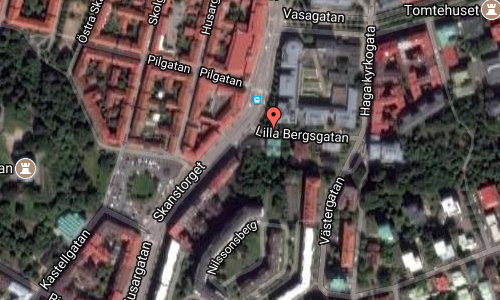
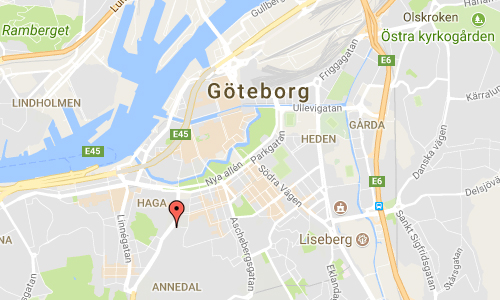
Lilla Bergsgatan is a street in Goteborg between Linnéstaden and Haga. The street is running behind the Göteborgs Universitet Handelshögskolan on Vasagatan. The street runs from Västergatan to Sprängkullsgatan in Annedal.

Oscar Properties from Stockholm has recently bought the complex on Lilla Bergsgatan 1 in Annedal. Plans are made to built between 100 and 150 apartments. Unclear is if the current building on the corner will remain on streetlevel.

Thanks to Max Larsson for finding this Volvo Photo Location!

More information at sv.wikipedia.org and oscarproperties.com.

Volvo Photo Locations

Almedalsbiblioteket on Donnersgatan in Visby on Gotland 🇸🇪

July 4th, 2017

Volvo Photo Locations Part 275
Historic Volvo Photography Locations Overview
bookmark www.volvophotolocations.com today!

2012 – Volvo XC60 at Almedalsbiblioteket on Donnersgatan in Visby on Gotland in Sweden (photography by Johan Wedenström)

2012 – Volvo XC60 at Almedalsbiblioteket on Donnersgatan in Visby on Gotland in Sweden

2012 – Volvo XC60 at Almedalsbiblioteket on Donnersgatan in Visby on Gotland in Sweden

2017 – Almedalsbiblioteket on Donnersgatan in Visby on Gotland (Google Streetview)

2017 – Almedalsbiblioteket on Donnersgatan in Visby on Gotland (Google Streetview)

Almedalsbiblioteket is located on Donnersgatan at Almedalsparken in Visby on Gotland, Sweden.

Almedalsbiblioteket is a public and university library managed by both the Region Gotland and Uppsala universitetsbibliotek. Business is placed from the beginning in 2001 located in the special library located in downtown Visby. The library has a large collection of Gotlandica (literature with a relation to Gotland) and a large collection of children an youth books.

The library building was built between 2000 and 2001 and was inaugurated on 22 september 2001. Architects Christer Malmström and Anders Grape wanted a building with modern design and modern materials in harmony with the medieval world heritage city of Visby. The austere exterior shape, with its simple straight shapes are largely the Gotland building tradition, as well as the choice of materials and colors. By mixing concrete with cement and pigments, a color close to the limestone was created. The whole color scheme of various shades of gray, white and gray-green is the Gotland landscape colors. In the large glass surfaces the medieval city is reflected, both outside and inside the building.

Interior designers Annika Tengstrand and Olle Salmonsson have created a functional and beautiful interior that interacts with the house and the architect’s intentions. The library is compactly decorated with shelves in straight lines to achieve a simplicity that matches the building. In the free and open spaces are reading spaces, where you can fully enjoy the house’s openness. The materials are oak, ash, gray homespun, black leather, black paint and a green hue that captures both the glass facades and green Almedalen outside. The intention has been to design an environment in which architecture, external environment and interior design interact and create rooms that are both practical and restfully beautiful. The library foyer is in itself an aesthetic experience due to the choice of building materials and the space that the glazed space permits. The floor of limestone with a hint of marble was designed by Karin Tyrefors.

The library is an example of how architecture, technology and efficient use of the surrounding nature, can create excellent environment, indoor climate and minimal environmental impact. With the help of the Baltic Sea water and the sun’s rays keep the library a cool place in summer and warm in winter.

More information at sv.wikipedia.org and www.almedalsbiblioteket.se.

Volvo Photo Locations

Eklandagatan near Gibraltargatan in Göteborg 🇸🇪

July 4th, 2017

Volvo Photo Locations Part 274
Historic Volvo Photography Locations Overview
bookmark www.volvophotolocations.com today!

1944 – Volvo PV444 (prototype / preproduction) on Eklandagatan near Gibraltargatan in Göteborg

2017 – Eklandagatan near Gibraltargatan in Göteborg (Google Streetview)

2017 – Eklandagatan near Gibraltargatan in Göteborg (Google Streetview)

Eklandagatan in Göteborg, is a 1400 meter long street, that received it’s current name in 1923. It is characterized by a long hill, extending from Södra Vägen in the district of Lorensberg up to Wallenbergsgatan in the district of Johanneberg.

Earlier, the street Eklandavägen (1921-23) was called after Eklanda by, whose property was part of the donation land on which Göteborg was built on.

On a map from 1923, Eklandagatan is written to extend right up to the current Doctor Fries torg in Södra Guldheden.

More information at sv.wikipedia.org.

Volvo Photo Locations

Kungsbacka Stadshus on Gertrudsgatan in Kungsbacka 🇸🇪

July 4th, 2017

Volvo Photo Locations Part 273
Historic Volvo Photography Locations Overview
bookmark www.volvophotolocations.com today!

1947 – Volvo PV444a at Kungsbacka Stadshus on Gertrudsgatan in Kungsbacka, Sweden

2017 – Kungsbacka Stadshus on Gertrudsgatan in Kungsbacka (Google Streetview)

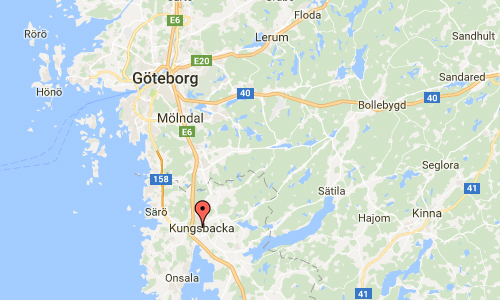
Kungsbacka Stadshus is located on Gertrudsgatan in Kungsbacka, south of Göteborg.

The building was built in the years 1934 and 1935. It is built on a hillside. Carrying walls and tiles are made of concrete. Outer walls are insulated with gas concrete. The slightly sloping roof of the courtyard is double-covered with Icopalpapp. The basement contains unpacking rooms, billiard room, economy and storage rooms, boiler room and garage.

Kungsbacka is a locality and the seat of Kungsbacka Municipality in Halland County, Sweden, with 19,057 inhabitants in 2010. It is one of the most affluent parts of Sweden, in part due to its simultaneous proximity to the countryside and the large city of Göteborg. The first records referring to Kungsbacka as a town date from the 15th century, when it was part of Denmark. By the time it was recognised as part of Sweden (1658), the river running through the town, on which some transportation of goods took place, was almost completely overgrown and despite pleas to restore its function, this did not occur. Some trade still took place from the coast, but the town’s significance as a place of naval commerce lessened over the centuries. Today, it is the home of over 2,000 businesses, and the river is still running through it.

A devastating fire in 1846 destroyed the town centre, sparing only a little red wooden cabin which is still standing today. In late 2006 and early 2014 other fires affected the town centre, and construction works are currently ongoing to restore the loss of wooden buildings.

The town remained small until the 1960s. The municipal reform of 1971 made it the seat of the much larger Kungsbacka Municipality. The town began to grow as a part of Metropolitan Göteborg. It is the southern terminus of the Göteborg commuter rail system, situated 28 km from central Göteborg.

More information at sv.wikipedia.org and www.visitkungsbacka.se.

Volvo Photo Locations

Nya Varvet Building in Göteborg 🇸🇪

July 4th, 2017

Volvo Photo Locations Part 272
Historic Volvo Photography Locations Overview
bookmark www.volvophotolocations.com today!

2012 – Volvo S80 at Nordiska högskolan för folkhälsovetenskap at Nya Varvet Building in Västra Frölunda, Göteborg

2017 – Nordiska högskolan för folkhälsovetenskap at Nya Varvet Building (Google Streetview)

2017 – Nordiska högskolan för folkhälsovetenskap at Nya Varvet Building (Google Streetview)

Nordiska högskolan för folkhälsovetenskap (or in English the Nordic College for Public Health) is a shared Nordic educational institution in Göteborg, Sweden, which educates health personnel on Master’s and Doctorate level in addition to doing broader research work. They are financed through the Swedish Department of Health and Social Security and the Nordic Council.

NHV was founded in 1953, started its programmes on Master’s level in 1978 and on doctorate level in 1987. The school was terminated in 2014.

Nya Varvet is a neighborhood, a former naval harbor and a prison in the municipality of Göteborg.

More information at sv.wikipedia.org.

Volvo Photo Locations

Ekenäs Gård on Jonseredvägen in Lerum 🇸🇪

June 24th, 2017

Volvo Photo Locations Part 271
Historic Volvo Photography Locations Overview
bookmark www.volvophotolocations.com today!

1961 – Volvo Amazon at Ekenäs Gård on Jonseredvägen in Lerum 🇸🇪.

1961 – Volvo 122 S Amazon at Ekenäs Gård on Jonseredvägen in Lerum 🇸🇪.

1970 – Volvo 1800 E at Ekenäs Gård on Jonseredvägen in Lerum 🇸🇪.

1970 – Volvo 1800 E at Ekenäs Gård on Jonseredvägen in Lerum 🇸🇪.

1970 – Volvo 1800 E at Ekenäs Gård on Jonseredvägen in Lerum 🇸🇪.

1970 – Volvo 1800 E at Ekenäs Gård on Jonseredvägen in Lerum 🇸🇪.

1968 – Volvo 1800 S at the former greenhouse west of Ekenäs Gård on Jonseredvägen in Lerum 🇸🇪.

2019 – Volvo S90 at Ekenäs Gård on Jonseredvägen in Lerum (Still image from the Facebook video for Valantines day 2019)

2019 – Volvo P1800 at Ekenäs Gård on Jonseredvägen in Lerum (Still image from the Facebook video for Valantines day 2019)

2017 – Ekenäs Gård on Jonseredvägen in Lerum (Google Streetview)

2017 – Ekenäs Gård on Jonseredvägen in Lerum (Google Streetview)

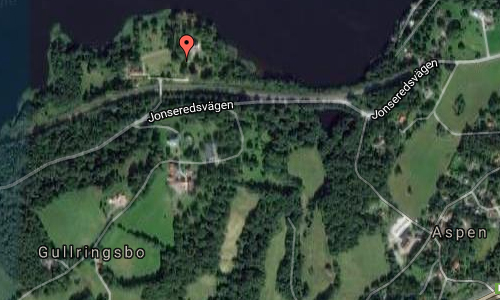
Ekenäs Gård is located at the Jonseredvägen in Lerum, between Jonsered and Lerum, east of Göteborg.

Ekenäs Gård belonged earlier to Gullringsbo, whick is located on the other side of the Jonseredsägen. Carl Krüger built Ekenäs Gård in 1908 on “Täcka Udden” and this beautiful castle is designed by his brother Ernst Krüger in a stunning Art Deco-style.

Lerum is a locality and the seat of Lerum Municipality in Västra Götaland County, Sweden. It had 16,855 inhabitants in 2010. Lerum has a station on the Göteborg commuter rail system and is a suburb of Göteborg.

The river of Säveån runs through Lerum municipality. 5 kilometres (3 miles) of it is surrounded by the nature reserve Säveåns Naturreservat, where bridges dating back as far as the 18th century as well as a variety of animal life and beautiful nature can be found.

Thank you Peter Ohlson for finding this location!

More information at sv.wikipedia.org.

Volvo Photo Locations

Sockerbruket at Klippan in Göteborg 🇸🇪

June 24th, 2017

Volvo Photo Locations Part 270
Historic Volvo Photography Locations Overview

1995 – Volvo 850 GLT at Klippans Strandpromenad near Sockerbruket on Banehagsgatan in Majorna in Göteborg, Sweden 🇸🇪.

2018 – Volvo XC60 T8 Twin Engine AWD at Sockerbruket at Banehagsgatan in Majorna in Göteborg, Sweden 🇸🇪.

2017 – Volvo 1800S (1968) with Pelle Petterson at Sockerbruket in Göteborg, Sweden 🇸🇪. (Photography by Nicke Johansson)

2017 – Volvo 1800S (1968) with Pelle Petterson at Sockerbruket in Göteborg, Sweden 🇸🇪. (Photography by Nicke Johansson)

2017 – Volvo 1800S (1968) with Pelle Petterson at Sockerbruket in Göteborg, Sweden 🇸🇪. (Photography by Nicke Johansson)

2008 – Volvo XC60 D5 AWD at Sockerbruket in Göteborg, Sweden 🇸🇪.

2008 – Volvo XC60 D5 AWD at Sockerbruket in Göteborg, Sweden 🇸🇪.

2008 – Volvo XC60 D5 AWD at Sockerbruket in Göteborg, Sweden 🇸🇪.

2008 – Volvo XC60 D5 AWD at Sockerbruket in Göteborg, Sweden 🇸🇪.

2008 – Volvo XC60 D5 AWD at Sockerbruket in Göteborg, Sweden 🇸🇪.

2008 – Volvo XC60 D5 AWD at Sockerbruket in Göteborg, Sweden 🇸🇪.

2008 – Volvo XC60 D5 AWD at Sockerbruket in Göteborg, Sweden 🇸🇪.

2008 – Volvo XC60 D5 AWD at Sockerbruket in Göteborg, Sweden 🇸🇪.

2008 – Volvo XC60 D5 AWD at Sockerbruket in Göteborg, Sweden 🇸🇪.

2017 – Sockerbruket in Göteborg (Google Streetview)

2017 – Sockerbruket in Göteborg (Google Streetview)

Sockerbruket at Klippan in Göteborg is a former industrial complex that was used for the sugar production.

Klippan is an area alongside the river Götaälven in the western part of Göteborg, near Älvsborgsbron. Klippan is located in the district of Majorna.

The name Klippan or Ekenäsklippan is considered to be from the mountain, “Lilla Klippan” or “Skinnareklippan”, which was located northeast of the Old Älvsborg fortress, and which formed the harbor itself Klippan or “the cliff”. Already in the Karlskronik from the 1450s, the “Klippan” is mentioned. On the small mountain, you’ll find the Sankta Birgitta’s chapel, built in 1857 by David Carnegie. The Stora Klippan has long been level with the ground.

Klippan can be considered to be Göteborgs first real port, because further toward the sea, the water was not deep enough for a port. Subsequently, goods where transfered with smaller boats to their final destination towards the city.

At Klippan, the Eastindian company had its port for the ships that went and came back from China.

The former sugar industry also characterizes the area. Toppsockerfabriken at Banehagsgatan 1 is also called the top sugar station, the centrifuge station and Stora Slottet, completed in 1901.

Hans Hedlund designed it in neo-Gothic style and gave the building a strong castle character through thorns and gates and a fog lamp facing the harbor entrance. The height corresponds to the old castle of Älvsborg. The building raged many of the castle’s remains but part of the ruin remained. It belongs to remains of the old foundation and a walled stone dated 1588 which meets the main entrance.

In 1957, production ceased and after the city of Göteborg took over and renovated the building, hundreds of artists moved into the Konstnärernas Kollektivverkstad in the early 1970s.

The Sockerbrukets office at Banehagsgatan 15 was built in 1848 as a sugar magazine on land that was completed in the late 1700s. Both raw sugar and refined sugar have been stored in the premises. From the end of the 1890s, when a treasurer and four bookkeepers moved into the upper floor, the premises worked as the sugar consumption wage office.

In the autumn of 1917, the other nine officials of the Sockerbrukets also moved from the headquarters of Södra Hamngatan. After the closure of Sockerbrukets in 1957, the building has been used as offices, workshops and cafés. The power station at Sockerbruket was completed in 1899 when switching from steam to electricity on Carnegie’s use. It was built primarily for the sugar industry, but initially also provided the porter beer brewery with electricity and, if necessary, also served as a transformer station for AC and DC. A wall-mounted wall along the entire back of the building ran until 1940 a boiler center that got its charcoal via conveyors from boats on the quayside. The power station was in use until 1957 when sugar production was stopped. Since 1963 the building has been used as a workshop.

More information at sv.wikipedia.org, www.sockerbruketarena.se, www.alltidgot.com/sagan-om-sockerbruket/ and gamlagoteborg.se.

Volvo Photo Locations