home

[ Content | Sidebar ]

Storgatan in Torekov 🇸🇪

August 24th, 2016

Volvo Photo Locations Part 221
Historic Volvo Photography Locations Overview

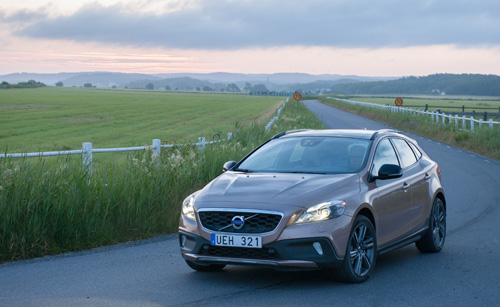
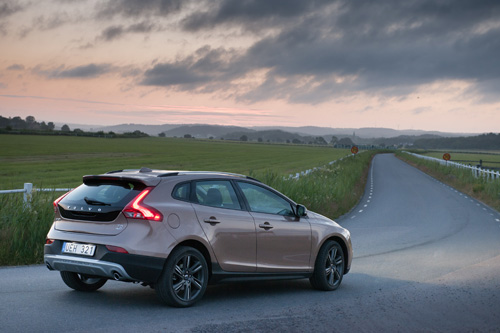
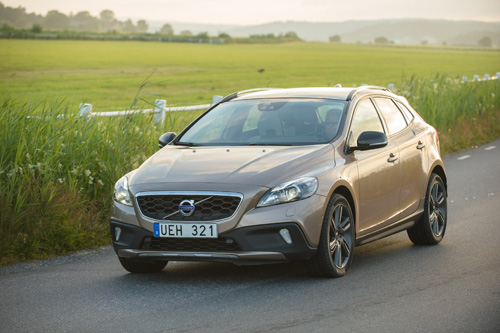
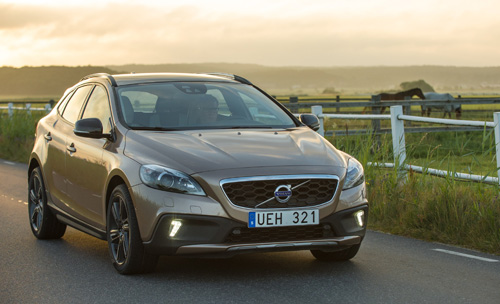
2016 - Volvo V60 in Torekov

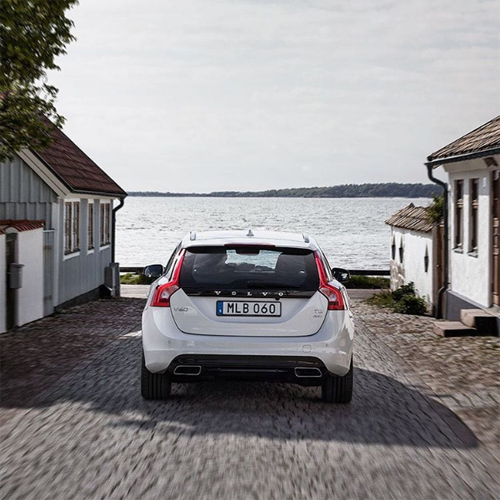
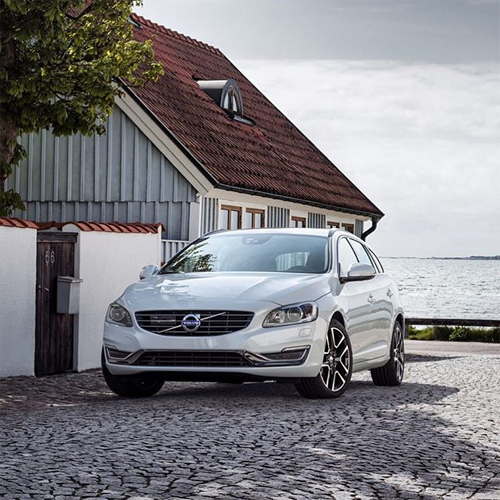
2016 – Volvo V60 T6 AWD at Storgatan in Torekov, Sweden

2016 - Volvo V60 T6 AWD at Storgatan in Torekov, Sweden

2016 – Volvo V60 at Storgatan in Torekov, Sweden

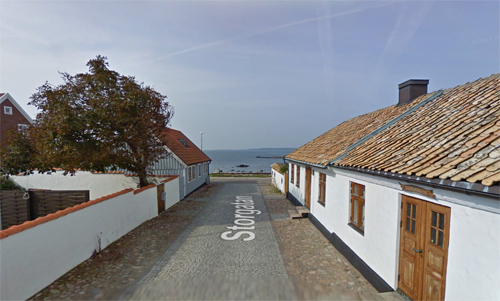
2016 - Storgatan in Torekov (Google Streetview)

2016 – Storgatan in Torekov (Google Streetview)

Storgatan in Torekov is a small street in the center of Torekov, close to the harbor of Torekov.

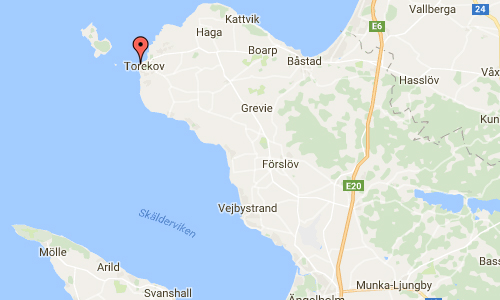
Torekov is a locality situated in Båstad Municipality, Skåne County, Sweden with 863 inhabitants in 2010. It is still a fishing village but it is today known as a summer resort.

In August, 1971 Torekov hosted a meeting in which it was decided to strip the Swedish king of all but his symbolic formal political powers, known as the “Torekov Compromise”.

According to an old legend, the town is named after a girl later known as Saint Thora who was drowned by her stepmother, found on the shore of Torekov, and buried by a blind man who then regained his sight. However, the more prosaic explanation refers to two old words thora meaning height, and kove meaning cabin or hut.

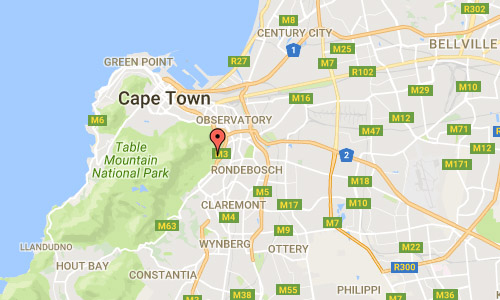
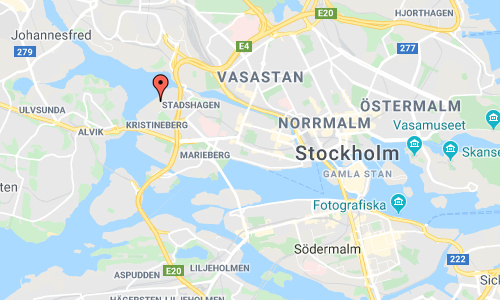
2016 - Storgatan in Torekov Maps02

2016 - Storgatan in Torekov Maps01

More information at sv.wikipedia.org, www.torekov.se and www.bastad.com.

Volvo Photo Locations

Jan Wilsgaard speaks…

August 21st, 2016

Volvo Cars Press Release from September 2, 1985 at the launch of the 760 and 740 Station Wagons.
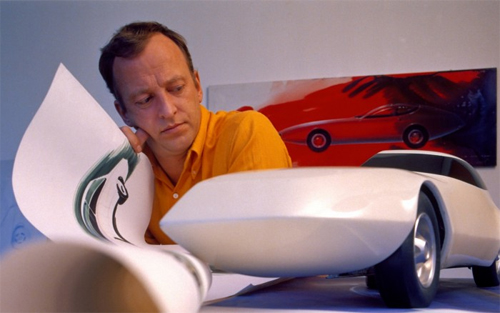
2016 - Jan Wilsgaard - Volvo Designer

JAN WILSGAARD, DESIGNER

The man who turned the van into a station wagon.

– Follow the laws of nature and don’t complicate matters! Functional and sensible designs are often the best looking.
If that sounds easy, then there’s an opening for you as a car designer, because the words are those of Jan Wilsgaard, chief design engineer and stylist at Volvo, and one of the most important persons behind Volvo’s very successful station wagon concept.
Jan Wilsgaard bases his opinions on 35 years’ experience of designing cars. He came to Volvo in 1950, and one of his first jobs was to design better rear windows for the PV Duett Van, or the PV 445 as it was officially
termed. And now he can watch with satisfaction as the Volvo 760 and 740 Station Wagons are introduced.

You’ll have to really be aware of every step that is being made and all that are going to be made in design development. The Duett Van project started rather hesitantly.
– I think the matter was discussed about a year before Assar Gabrielsson, who headed Volvo at that time, gave the go-ahead for production. The car was at last to reach the marketplace, but only in a limited series.
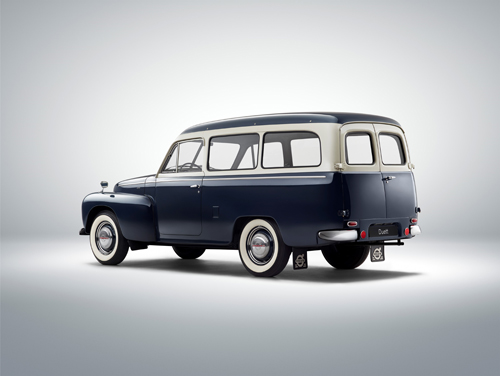
Volvo Duett

Volvo Duett

Right on time
A total of 1,000 of the PV445 Duett Van were built- and the model was a success. They already had station wagons in the USA – but Volvo was the first European manufacturer to introduce a model that could be used both as a private car and a transporter.

The uncertainty which prevailed before the introduction was quickly dispelled.
– We were luckier with the timing of our introduction than we had counted on. We knew that it was a handy and practical car with good driving characteristics, but we had never hoped to be so spot-on with the timing of its introduction.

The Duett Van gave birth to a new design ideology and therefore it quickly formed its own market niche.
– The situation which the Duett created is similar in some ways to the situation we have today with the station wagons of the 760 and 740 Series, Jan Wilsgaard continues. They are also a new approach, a new solution to how one can combine many desirable features in one and the same car.

The five-door versions of the 760 and 740 have also created a niche for themselves. There is no other car in the market today that can compare in its ability to combine the benefits of a sedan with the very spacious cargo area of a wagon.
– The difference now, compared with the introduction of the Duett Van years ago, is that we are much more familiar with the market and know what it requires, Wilsgaard went on.
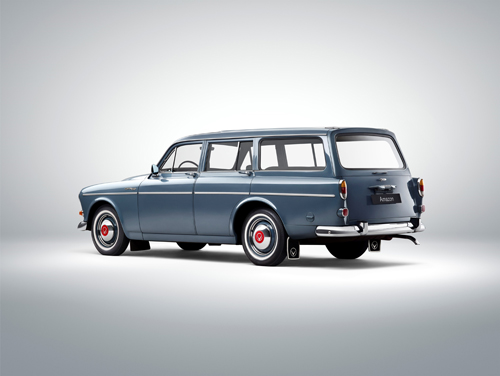
Volvo P221 Amazon

Volvo P221 Amazon

With an eye to the US
The next enterprising step by Volvo after the Duett was when it introduced the station wagon version of the Volvo 121/122 S.
– The main item for discussion at Volvo in those days was which way the rear doors would open.

A look to the US showed that American station wagons of those days had a tailgate that was horizontally split, approximately in the middle.
With the lower section folded down, it provided an extra platform when loading. It was also often possible to wind the window down into the bottom section of the tailgate.

Volvo 145 in the planning
Volvo decided on the horizontally split tailgate.

The Volvo PV 444 and 121/122 S were first intended to be produced only as sedans. The station wagon versions came quite a few years after the initial introduction. However, when Volvo was creating the successor to these cars, the 140, a station wagon was included in the planning from the very start. After the successes achieved by the Duett Van and the 121/122 S wagons, Volvo’s station wagon concept had already started to attract attention both at home and abroad and when the Volvo 145 was introduced to the market it was given a very enthusiastic reception.
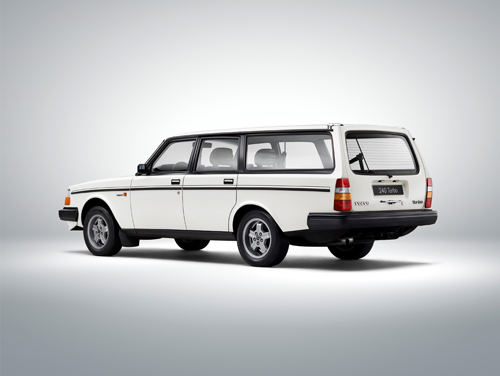
Volvo 245 Turbo

Volvo 245 Turbo

Welcome prestige – goodbye prejudice
– The 145 is a classic. Looking at it today, it is difficult to imagine that it is 20 years old. There can be very few other cars that have aged so little.

Out of the 145 evolved the Volvo 245 in 1974 and the station wagon programme continued to climb the ladder of success.

Step by step, as the 245 became more and more a prestige car, the elusion of it being longer and more cumbersome than the sedans was gradually wiped out.

– It was quite an easy impression to get since the car was much bigger inside, but it ended in exactly the same place as the sedan! By way of the DL and GL models, the station wagons became more powerful.

And in 1981 the 245 Turbo was introduced – a station wagon with sports car performance. With 155 horsepower under the bonnet, and options which included power steering and leather upholstery, the van-like image of yesteryear was gone for ever. The Volvo 240 station wagon has also been a great success. In its segment, it holds 38% of the European market. Its development has been explosive – from 26.7% in 1980 to about 38% in 1984.
The development of the Volvo 740 and 760 Series started way back in the 1970’s. Sedan and station wagon models were developed in parallel although for various reasons it was decided to introduce the two types at different times.

It was around 1975 that Jan Wilsgaard and his team started work on what was to become the 740 and 760 station wagons.
– When I have done my work, years of detailed design work remain to be done. Designs are tested, compared and checked. Today, Jan Wilsgaard is looking more and more to the 1990’s and the magical year 2000.
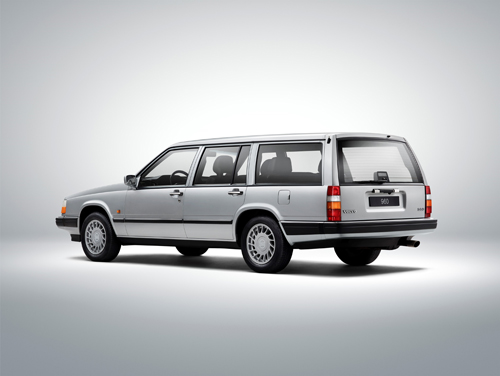
Volvo 960

Volvo 960

Looking in the crystal ball
– Cars will always have four wheels. The basic concept of today will remain the same. Just look back, what did cars look like about 15 years ago?
The things we are working with today are new materials. The all aluminium tailgate of our new station wagons is one example.

Jan Wilsgaard continues to look into his crystal ball. Up to now, his 35 years in the business have been extremely successful. Wilsgaard continues to keep about 10 years ahead of the field, and he has been doing so since the 1950’s when he first came to Volvo from the Gothenburg School of Applied Arts where he studied sculpture and interior architecture.

This proved to be an ideal combination for a car designer who works a lot with clay models and sketches.
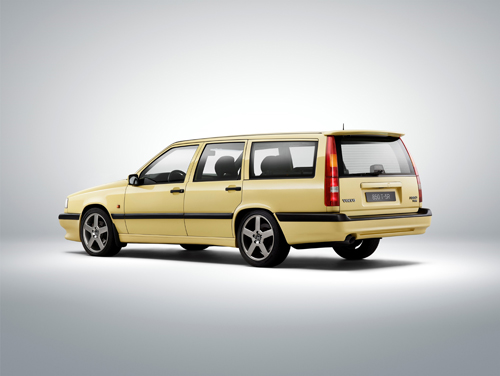
Volvo 850 T-5R

Volvo 850 T-5R

What will follow the gingerbread vogue?
– The 50’s brought us lots of standards but not a lot of fun. The vogue in those days was practicality, how many inches between cooker and table top, fitted units with painted hardboard doors – all very practical but rather dull.
– The 80’s brought back the whirly motifs of the gingerbread vogue with intricately worked things. We felt a need to associate with a specific product, feel that it was our own special kitchen – or car.
What the 90’s will bring, no doubt Jan Wilsgaard can already see in his crystal ball. The man who turned the van into a “limousine wagon” and Volvo into Europe’s leading make of station wagon in its segment.

Volvo Cars Press Release from September 2, 1985 at the launch of the 760 and 740 Station Wagons.

On August 6 2016, Jan Wilsgaard died after a long sickness. His work will however, never die as long as a Volvo Amazon, 140, 240 or 760 rolls on the road anywhere in the world…


Adderley St in Cape Town – SA 🇿🇦

August 19th, 2016

International Volvo Photo Locations Part 213
Click for Volvo Photography Locations Overview

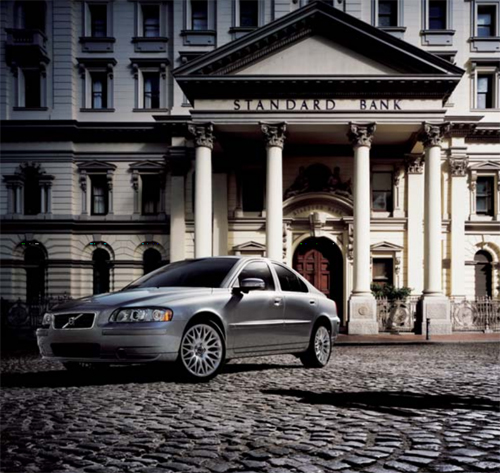
2007 - Volvo S60

2007 – Volvo S60

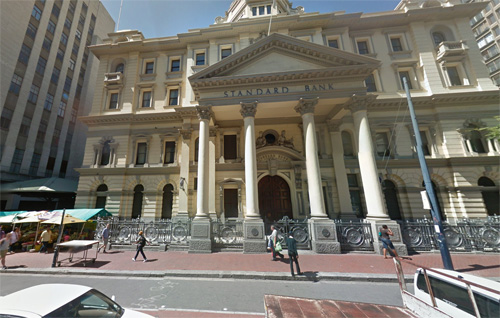
2016 - Standard Bank at Adderley St in Cape Town SA  (Google Streetview)

2016 – Standard Bank at Adderley St in Cape Town SA (Google Streetview)

Adderley Street is a famous street in Cape Town, South Africa. It is considered the main street of the central business district (downtown) of Cape Town. The Christmas lights, night markets, main train station and numerous shops and restaurants and office towers are on this thoroughfare.

The street was originally named Heerengracht, after the canal (“gracht”) which ran down its centre, and which had its origins in the rivers from Table Mountain. At the time the street was more of a wide walkway beside the canal, which was crossed by various stone bridges.

The network of canals were covered over, throughout Cape Town, in the 1860s. The Heerengracht river and canal therefore became an underground pipe-line. For many years the street was residential, lined with large oak trees, but by 1850 it had become strongly commercial in character.

Mayor Hercules Jarvis named it Adderley Street in 1850, to honour British Parliamentarian Charles Bowyer Adderley (elevated to the peerage as Baron Norton in 1878) who fought successfully against the plan for the British government to make Cape Town into another penal colony.

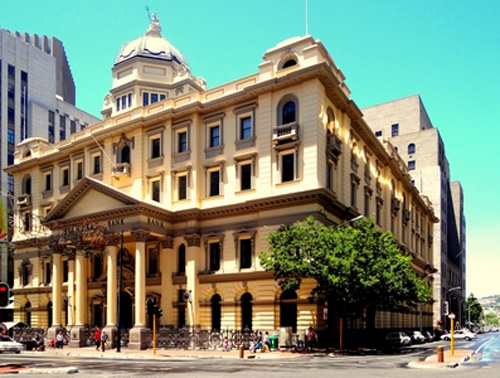
2016 - Standard Bank at Adderley St in Cape Town SA

In 1879, the City Council offered a site in Adderley Street, on a ninety-nine year lease at £150 per annum, to the Bank. Charles Freeman designed it, in the neo-classic style that was favoured so widely by the Victorians. Plans were completed in 1881, and a local contractor, T. J. C. Inglesby, completed the building at a cost of £27,000.

The two-storied design featured a colonnaded entrance, with a statue of Brittania on the dome. The carved heads over the entrance are of “Ceres”, goddess of agriculture and of “Poseidon”, god of the sea (and trade). In 1922 two extra floors were added and the dome and statue were replaced after the completion of the addition.

The new premises were opened on the 19th of March 1883.

At the time of the opening of its new premises, the head office of the bank in Southern Africa was still situated in Port Elizabeth, but with the extension of the railway system to the North, the development of Cape Town as the then economic centre of the sub-continent became increasingly apparent. In August 1885, the head office of the bank moved from Port Elizabeth to the new building in Adderley Street.

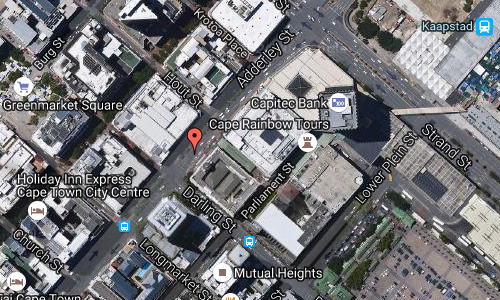
2016 - Standard Bank at Adderley St in Cape Town SA Maps02

2016 - Standard Bank at Adderley St in Cape Town SA Maps01

More information at www.standardbank.co.zawww.southafrica-travel.net, capetownhistory.com and en.wikipedia.org.

Volvo Photography Locations

University of Cape Town Upper Campus on Jammie Plaza in Cape Town – SA 🇿🇦

August 19th, 2016

International Volvo Photo Locations Part 212
Click for Volvo Photography Locations Overview

2007 - Volvo S60

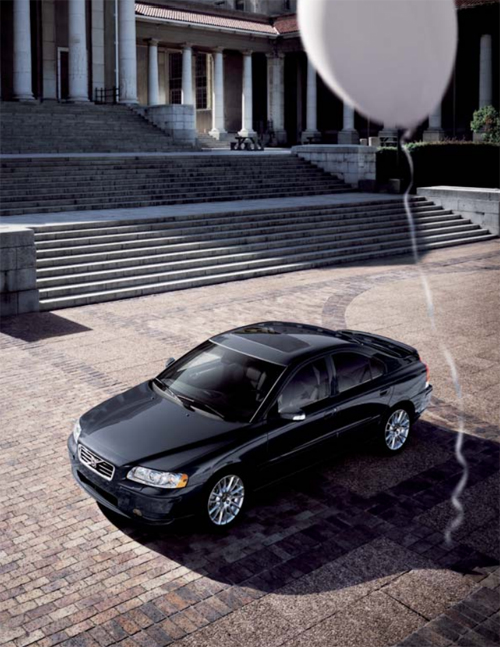
2007 – Volvo S60 at University of Cape Town Upper Campus on Jammie Plaza in Cape Town, South Africa 🇿🇦.

2007 – Volvo S60 at University of Cape Town Upper Campus on Jammie Plaza in Cape Town, South Africa 🇿🇦.

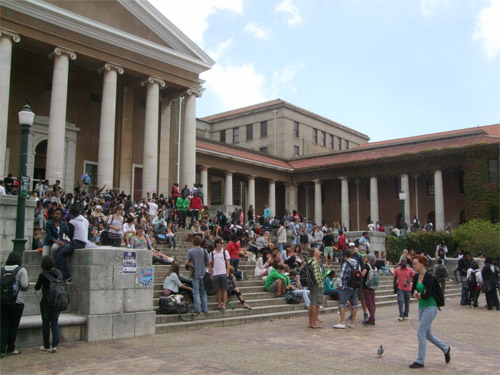
2016 – University of Cape Town Upper Campus on Jammie Plaza in Cape Town (Google Streetview)

2016 - University of Cape Town  Upper Campus on Jammie Plaza in Cape Town (Google Streetview)

2016 – University of Cape Town Upper Campus on Jammie Plaza in Cape Town (Google Streetview)

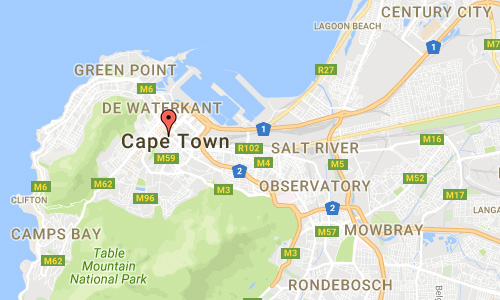
The University of Cape Town is located in the Jameson Hall on Jammie Plaza, the focal point on Upper Campus in Rondebosch, Cape Town, South Africa.

The University of Cape Town (UCT) is a public research university located in Cape Town in the Western Cape province of South Africa. UCT was founded in 1829 as the South African College, and is the oldest university in South Africa and the second oldest extant university in Africa. UCT is the highest-ranked African university in the QS World University Rankings, the Times Higher Education World University Rankings, and the Academic Ranking of World Universities, and its Law and Commerce Faculties are consistently placed among the hundred best internationally. The language of instruction is English.

2016 - University of Cape Town  Upper Campus on Jammie Plaza in Cape Town

2016 – University of Cape Town Upper Campus on Jammie Plaza in Cape Town

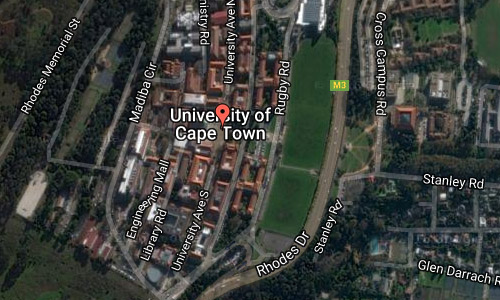
The main teaching campus, known as Upper Campus, is located on the Rhodes Estate on the slopes of Devil’s Peak. This campus contains, in a relatively compact site, the faculties of Science, Engineering, Commerce, and Humanities (except for the arts departments), as well as Smuts Hall and Fuller Hall residences. Upper Campus is centered on Jameson Hall, the location for graduation and other ceremonial events, as well as many examinations. The original buildings and layout of Upper Campus were designed by JM Solomon and built between 1928 and 1930. Since that time, many more buildings have been added as the university has grown. Upper Campus is also home to the main library, The Chancellor Oppenheimer library which holds the majority of the University’s 1.3 million volume collection.

2016 - University of Cape Town in Cape TownMaps02

2016 - University of Cape Town in Cape TownMaps01

More information at www.uct.ac.za and en.wikipedia.org.

Volvo Photography Locations

Via Galea in Cetara – I 🇮🇹

August 18th, 2016

International Volvo Photo Locations Part 211
Click for Volvo Photography Locations Overview

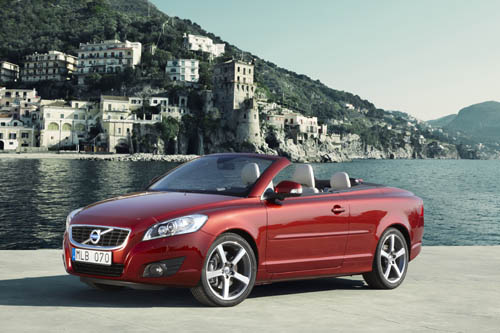
2011 - Volvo C70

2011 – Volvo C70 on the Via Galea in Porto di Cetara near Strada Statale Amalfitana in Cetara, Italy 🇮🇹.

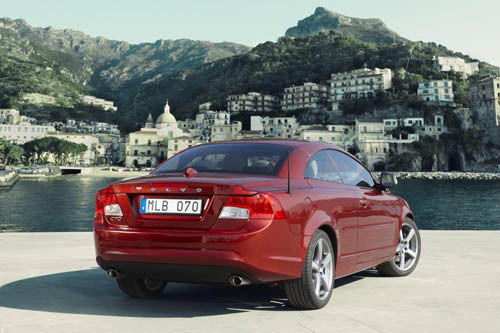
2011 - Volvo C70

2011 – Volvo C70 on the Via Galea in Porto di Cetara near Strada Statale Amalfitana in Cetara, Italy 🇮🇹.

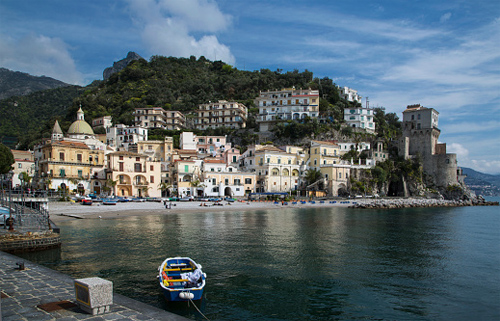
2016 - Via Galea in Porto di Cetara in Cetara in Italy (Google Streetview)

2016 – Via Galea in Porto di Cetara in Cetara in Italy (Google Streetview)

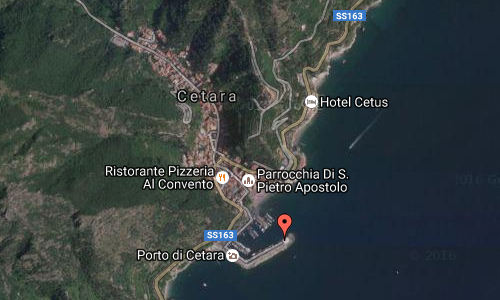
The location of these photos is the Via Galea that stretches from the village into the sea in the Porto di Cetara near Strade Statale Amalfitana in Cetara in Italy, just south of Napoli.

Cetara is a town and comune in the province of Salerno in the Campania region of south-western Italy. It is located in the territory of the Amalfi Coast.
The village was originally a settlement for a group of armed Muslims in 880. Characterized to be a village of fishermen (especially of tuna), its name take origins probably from the Latin word Cetaria (in Greek Ketèia), meaning almadraba (in Italian tonnara); or cetari, meaning fishmongers of big fishes.

2016 - Via Galea in Porto di Cetara in Cetara in Italy

2016 – Via Galea in Porto di Cetara in Cetara in Italy

Cetara is located by the Tyrrhenian Sea, on the Amalfi Drive road between the “Marina” of Albori and Erchie, bordering with the municipalities of Vietri sul Mare and Maiori. Its municipalities is extended from the coast to the Mount Falerio and counts only one civil parish (frazione): the little village of Fuenti, situated on the hills close to the Amalfi Drive.

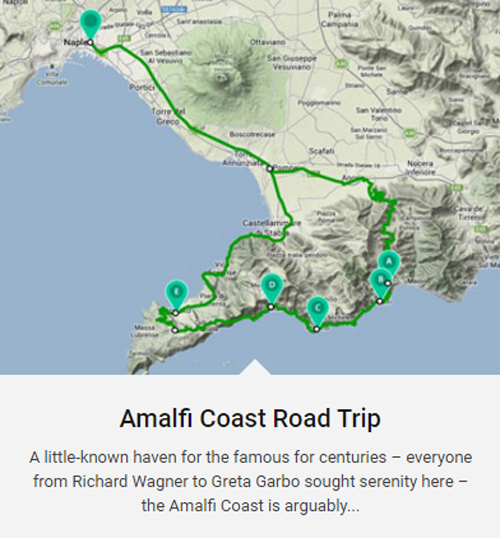
The Amalfi Drive (formally Strada statale 163 Amalfitana) is the conventional name of a stretch of road which runs along the stretch of the Amalfi Coast between the southern Italian towns of Sorrento and Amalfi. The road was originally built by the Romans. The drive between Salerno, at the southern base of the peninsula, and Positano follows the coast for about 80 km.

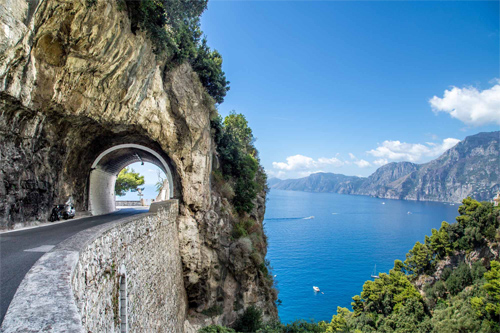
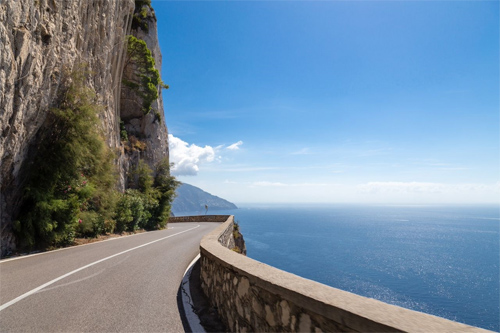
For the greater part of its route, the road is carved out of the side of the coastal cliffs, giving spectacular views down to the Tyrrhenian Sea and on the other side up to the towering cliffs above. The road passes through the village of Positano, which is built on the side of the hill. Both the village and the whole drive are leading tourist attractions in the area.

The Costiera Amalfitana, or Amalfi Coast, is widely considered Italy’s most scenic stretch of coastline, a landscape of towering bluffs, pastel-hued villages terraced into hillsides, precipitous corniche roads, luxuriant gardens, and expansive vistas over turquoise waters and green-swathed mountains. Deemed by UNESCO “an outstanding example of a Mediterranean landscape, with exceptional cultural and natural scenic values,” the coast was awarded a coveted spot on the World Heritage list in 1997.

2016 - Amalfi Coast Drive 02

2016 - Amalfi Coast Drive 01

The Amalfi Coast lies along the southern flanks of the Sorrento Peninsula, a cliff-edged promontory that wanders out from the mainland at the southern end of the Bay of Naples. Its most famous towns—Amalfi, Positano, and Ravello—have captivated and inspired artists for centuries, from 14th-century writer Giovanni Boccaccio to 19th-century composer Richard Wagner and 20th-century playwright Tennessee Williams.

The roads along the Amalfi Coast are famously winding, narrow, and challenging to drive. Add in drop-dead views and daring Italian drivers, known for their behind-the-wheel bravado, and this road trip offers one of the more exciting driving experiences in Europe. The popular Amalfi Coast route follows the shoreline from Sorrento south to Salerno. Locals recommend planning a drive of the Amalfi Coast during the shoulder tourist seasons, mid-September to October and May, when the road is less crowded and lumbering tour buses are fewer.

2016 - Cetara Maps02

2016 - Cetara Maps01

More information at it.wikipedia.org, travel.nationalgeographic.com and www.comune.cetara.sa.it.

Volvo Photography Locations

Archäopark Vogelherd in Niederstotzingen – D 🇩🇪

August 18th, 2016

International Volvo Photo Locations Part 210
Click for Volvo Photography Locations Overview

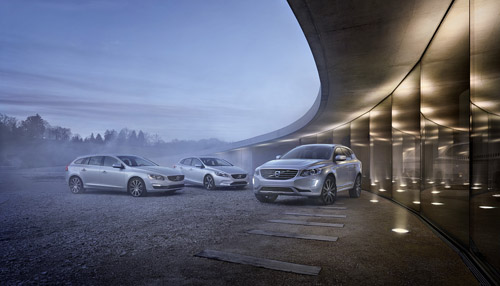
2015 - Volvo V40 and V60

2015 – Volvo V40 and V60 at Archäopark Vogelherd in Niederstotzingen in Germany 🇩🇪. (photo by Thomas Motta)

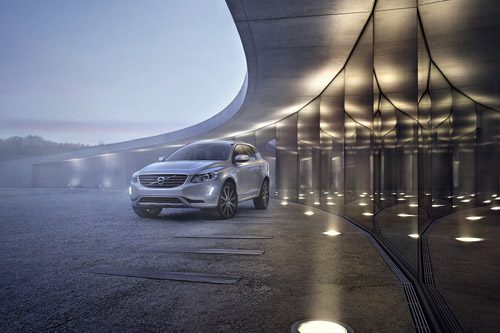
2015 – Volvo XC60 and V60 at Archäopark Vogelherd in Niederstotzingen in Germany 🇩🇪. (photo by Thomas Motta)

2015 – Volvo V40 at Archäopark Vogelherd in Niederstotzingen in Germany 🇩🇪. (photo by Thomas Motta)

2015 - Volvo V60 (photo by Thomas Motta)

2015 – Volvo V60 at Archäopark Vogelherd in Niederstotzingen in Germany 🇩🇪. (photo by Thomas Motta)

2015 - Volvo V60, V40 and XC60 (photo by Thomas Motta)

2015 – Volvo V60, V40 and XC60 at Archäopark Vogelherd in Niederstotzingen in Germany 🇩🇪. (photo by Thomas Motta)

2015 - Volvo XC60 - (photo by Thomas Motta)

2015 – Volvo XC60 at Archäopark Vogelherd in Niederstotzingen in Germany 🇩🇪. (photo by Thomas Motta)

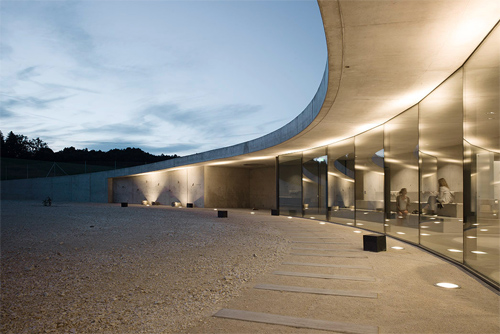
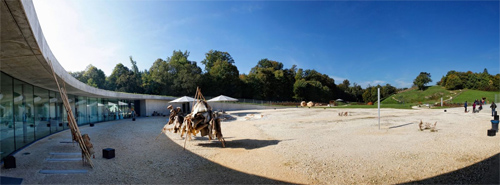
2016 - Archäopark Vogelherd in Niederstotzingen (photo by baunetzwissen.de)

2016 – Archäopark Vogelherd in Niederstotzingen (photo by baunetzwissen.de)

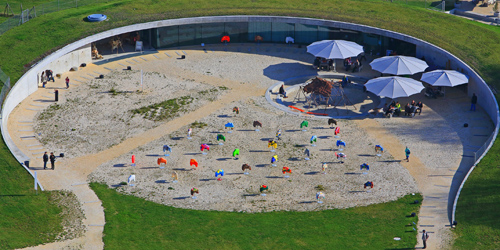
2016 - Archäopark Vogelherd in Niederstotzingen

2016 – Archäopark Vogelherd in Niederstotzingen

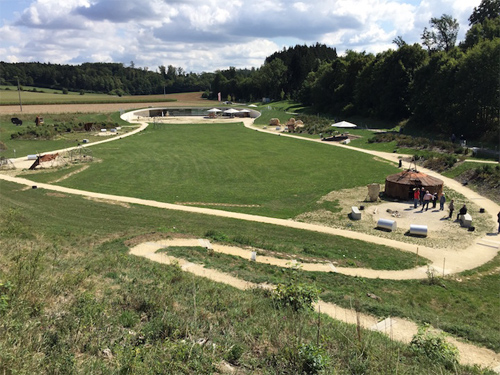
2016 - Niederstotzingen-Archäopark (photo by GEYER-LUFTBILD)

2016 – Niederstotzingen-Archäopark (photo by GEYER-LUFTBILD)

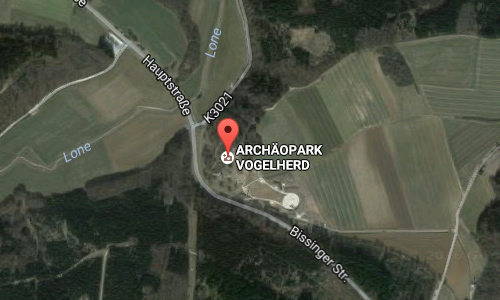
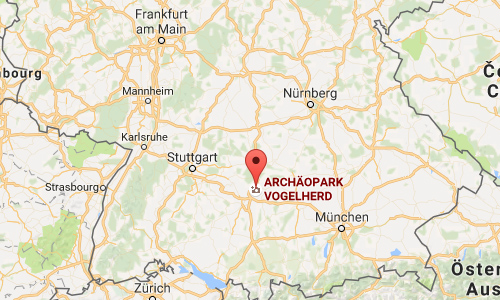
The Archäopark Vogelherd can be found at Am Vogelherd 1 in Niederstotzingen – Stetten in Germany. It is located between Stuttgart and Mûnchen. Youll get there by car, take Autobahn A 7, Ulm-Würzburg, Exit Niederstotzingen or by local trains from Ulm Main Station, direction Heidenheim and get off at Niederstotzingen or take the local buses, bus line No. 59 and 7203.

This park is the only one of its kind in Germany, a place to have a hands-on experience of the Paleolithic era. There are recreations of stone age dwellings, walking paths with facts about life in the Paleolithic, and the usual spear-throwing and fire-making activities. The small visitor’s center has a gift shop, snack bar, and two carved figures found at the site: a cave lion and an exquisite mammoth.

2016 - Archäopark Vogelherd in Niederstotzingen

You can also walk through Vogelherd Cave, a place of Neanderthal and Modern Human habitation for over 100,000 years. You can see the other figures that were excavated in this cave at the Museum Schloss Hohentübingen in Tübingen.

Closed on Mondays and also closed from January 7 to February 7. The visitors center and the lower portion of the outdoor area are wheelchair and stroller accessible.

2016 - Vogelherd Maps02

2016 - Vogelherd Maps01

More information at www.baunetzwissen.de, de.wikipedia.org and www.archaeopark-vogelherd.de.

Volvo Photography Locations

Cour St Georges on Hoogpoort in Ghent – B 🇧🇪

August 15th, 2016

International Volvo Photo Locations Part 209
Click for Volvo Photography Locations Overview

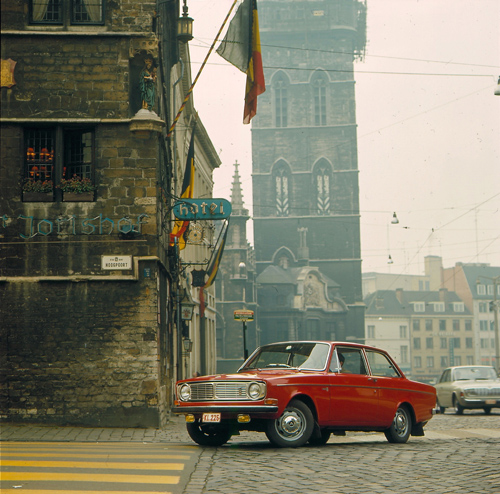
1967 - Volvo 142

1967 Volvo 142 at Sint-Jorishof or Cour St Georges on Hoogpoort and Botermarkt in Ghent, Belgium 🇧🇪.

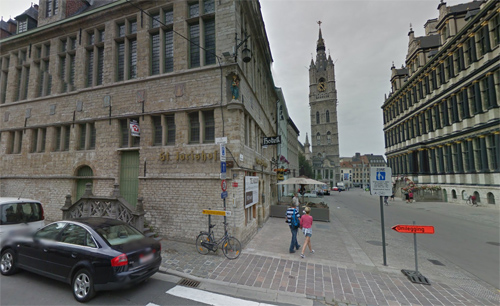
2016 - The corner of the Hoogpoort and Botermarkt in Gent, Belgium (Google Streetview)

2016 – The corner of the Hoogpoort and Botermarkt in Gent, Belgium (Google Streetview)

The corner of the Hoogpoort and Botermarkt is one of the oldest places in Gent, Belgium. On the opposite site of this corner, you will fine the town hall of Ghent, which consists of two wings. It was designed by Rombout II Keldermans and Dominic the Waeghemaekere. The oldest wing (corner Botermarkt-Hoogpoort) is still in last Gothic flamboyant style and was built between 1519 and 1539. The facade niches containing the statues of the counts of Flanders. The nineteen images were late 19th, early 20th century made.

The tower in the background is the Belfort of Gent, or Belfry of Ghent and is one of three medieval towers that overlook the old city centre of Ghent, Belgium, the other two belonging to Saint Bavo Cathedral and Saint Nicholas’ Church. Its height makes it the tallest belfry in Belgium. The belfry of Ghent, together with its attached buildings, belongs to the set of belfries of Belgium and France inscribed on UNESCO’s World Heritage List.

Ghent (Dutch: Gent) is a city and a municipality in the Flemish Region of Belgium. It is the capital and largest city of the East Flanders province and after Antwerp the largest municipality of Belgium. The city started as a settlement at the confluence of the Rivers Scheldt and Leie and in the Late Middle Ages became one of the largest and richest cities of northern Europe with some 50,000 people in 1300. It is a port and university city.

The port of Ghent, in the north of the city, is the third largest port of Belgium. It is accessed by the Ghent-Terneuzen Canal, which ends near the Dutch port of Terneuzen on the Western Scheldt. The port houses, among others, big companies like ArcelorMittal, Volvo Cars, Volvo Trucks, Volvo Parts, Honda, and Stora Enso.

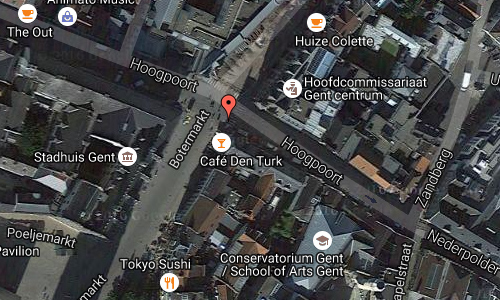
2016 - Hoogpoort in Gent Maps02

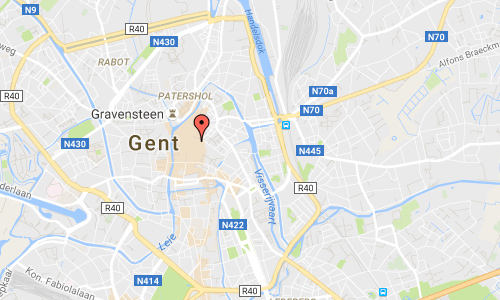
2016 - Hoogpoort in Gent Maps01

More information at visit.gent.be and en.wikipedia.org.

Volvo Photography Locations

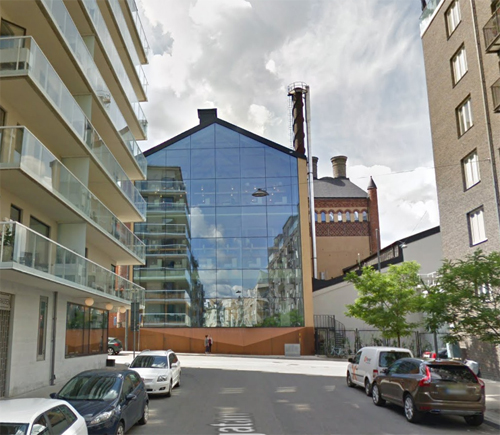
Stora Bryggeriet on Lars Forssells gatan in Stockholm 🇸🇪

August 10th, 2016

Volvo Photo Locations Part 220
Historic Volvo Photography Locations Overview
bookmark www.volvophotolocations.com today!

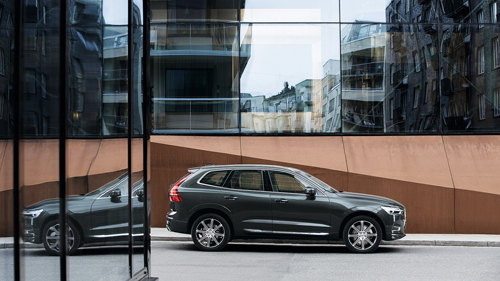
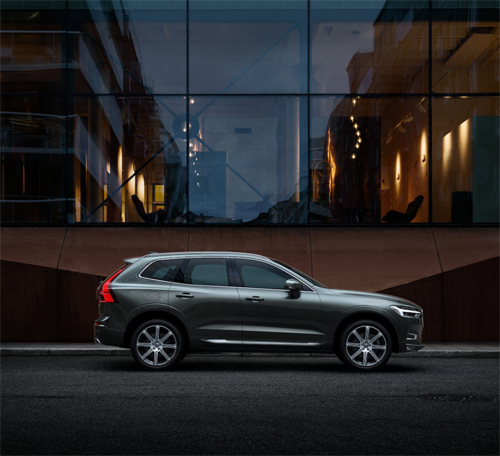
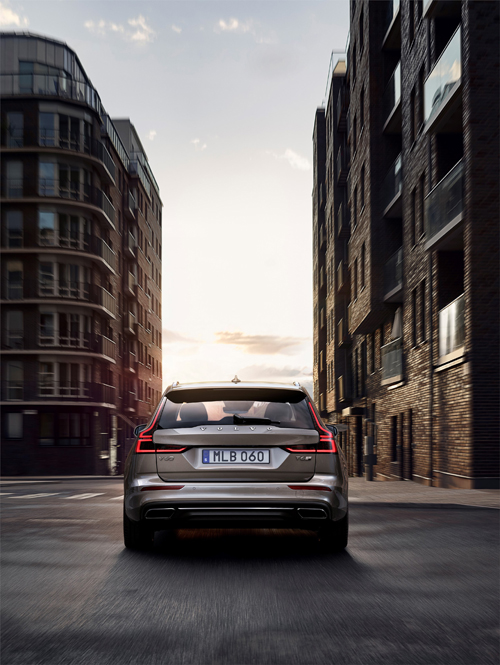
2017 – Volvo XC60 at Stora Bryggeriet or Octapharma Brewery on Lars Forssells gatan and Franzéngatan on Kungsholmen in Stockholm, Sweden 🇸🇪

2019 – Volvo XC60 at Stora Bryggeriet on Lars Forssells gatan in Stockholm 🇸🇪

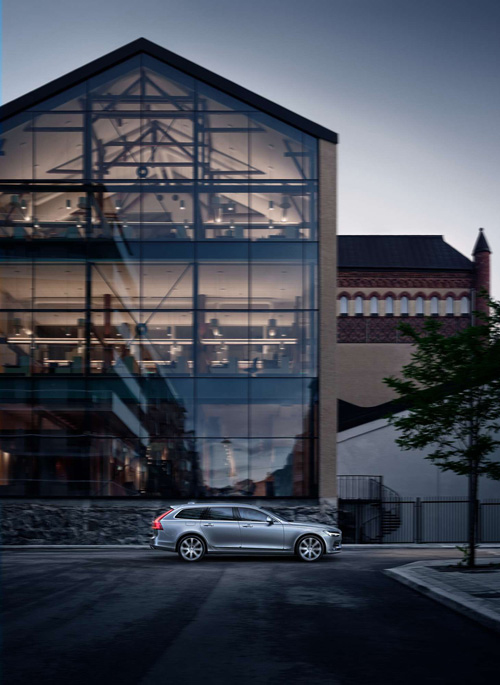
2016 – Volvo V90 at Stora Bryggeriet on Lars Forssells gatan in Stockholm 🇸🇪

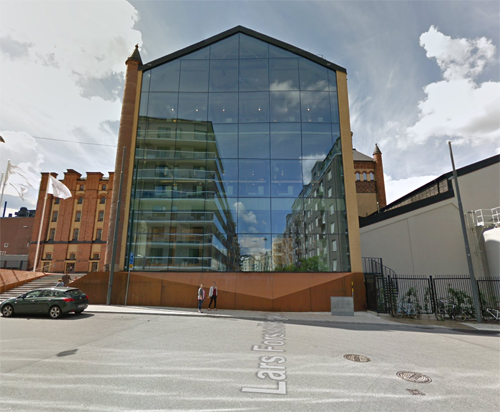
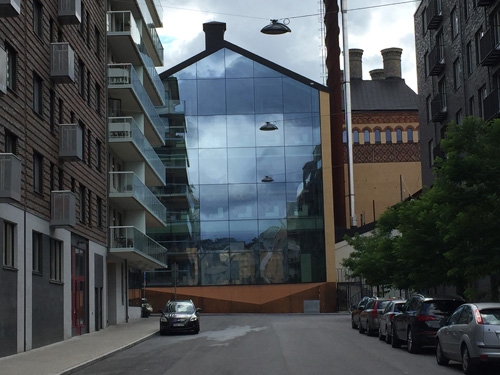
2019 – Stora Bryggeriet on Lars Forssells gatan in Stockholm (Google Streetview)

2019 – Stora Bryggeriet on Lars Forssells gatan in Stockholm (Google Streetview)

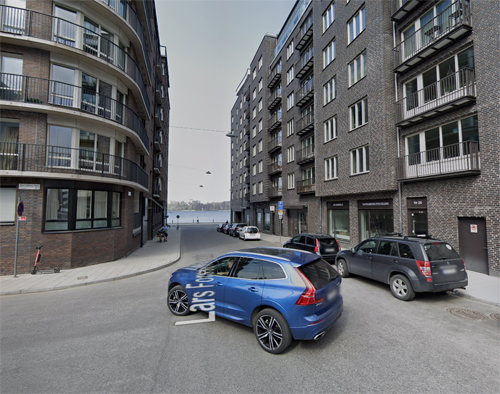
2018 – Volvo V60 Twin Engine on Lars Forssells gata in Stadshagen in Stockholm 🇸🇪

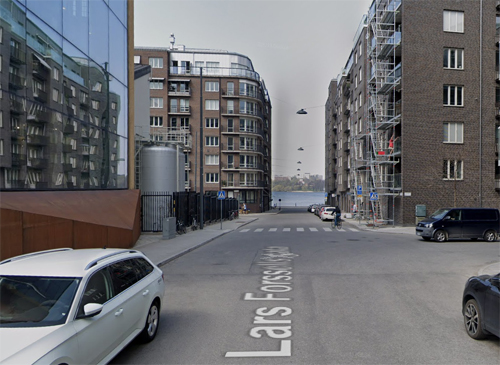
2019 – Lars Forssells gatan in Stockholm (Google Streetview)

2019 – Lars Forssells gatan in Stockholm (Google Streetview)

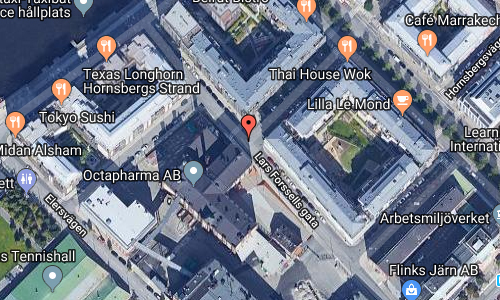
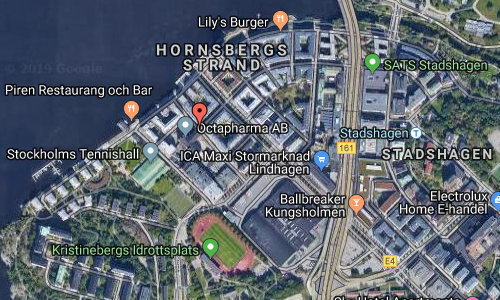
Stora Bryggeriet or Octapharma AB offices is located on Lars Forssells gatan on Kungsholmen in Stockholm, Sweden.

Stora Bryggeriet is an industrial building on Kungsholmen’s western shore next to Ulvsundasjön in Stockholm’s inner city within Hornsberg. Stora Brewery was originally built as a beer brewery and, after the brewery period, contained many different activities, including Kabi Vitrum and Pharmacia. Nowadays, the pharma group Octapharma has its Swedish production facility in the building. Stora Brewery’s remaining buildings are blue-labeled by the Stockholm City Museum, which means “that the buildings are considered to have extremely high cultural-historical values”.

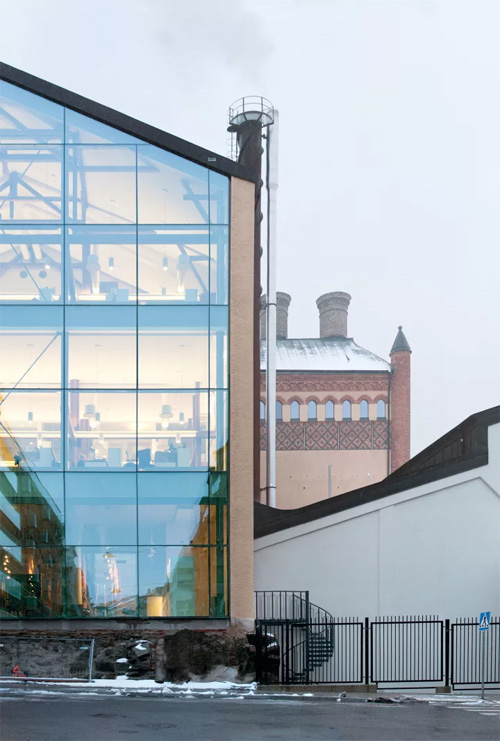
2016 - Stora Bryggeriet (own photo)

2016 – Stora Bryggeriet (own photo)

AB Stora Bryggeriet was established in 1890 to compete with AB Stockholm Breweries, including Münchenbryggeriet and Hamburger brewery. Stakeholders in AB Stora Bryggeriet were some major bakeries and Stockholms Enskilda Bank. The company wanted a model site and the order went to the German firm Maschinenfabrik Germania in Chemnitz, who made the installation of the machinery. Iron constructions were made by Ludwigsbergs verkstad, probably with German drawings. The German firm also designed the original façade in a neo-Renaissance style but these were rejected and the new order went to Stockholm architect Gustaf Lindgren. He reworked the drawings and gave the building the design as it has today.

2016 - Stora Bryggeriet in Stockholm

In 2013-2014 an extensive refurbishment of the brewery’s old machine shop was conducted which was very dilapidated. The premises were adapted into offices of pharmaceutical companies Octapharma by architects Joliark. Eye-catching was the large glazed gable against Lars Forsell street. The project was nominated for the Årets Stockholmsbyggnad 2015 which imposed a place three.

More information at joliark.se, sv.wikipedia.org, www.designboom.com and www.svd.se.

Volvo Photo Locations

Westin Hotel in Cape Town – SA

August 10th, 2016

International Volvo Photo Locations Part 208
Click for Volvo Photography Locations Overview

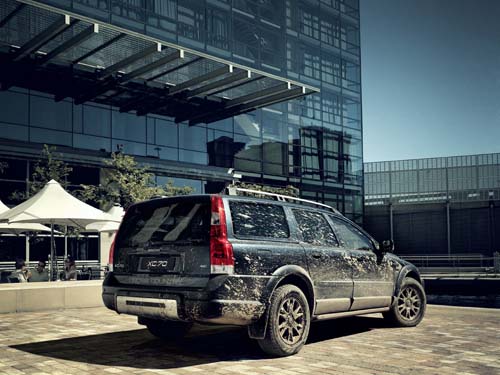
2006 – Volvo XC70

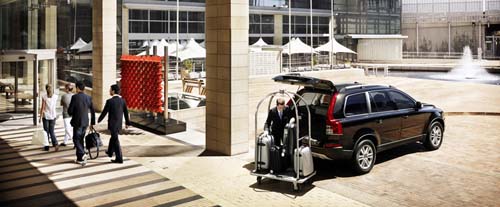
2006 – Volvo XC90

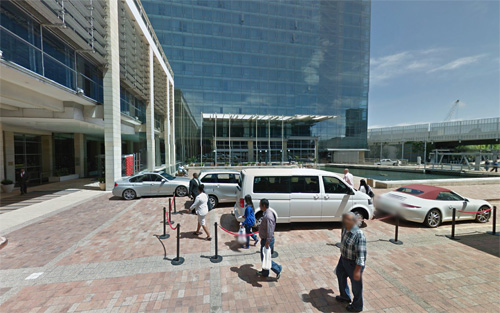
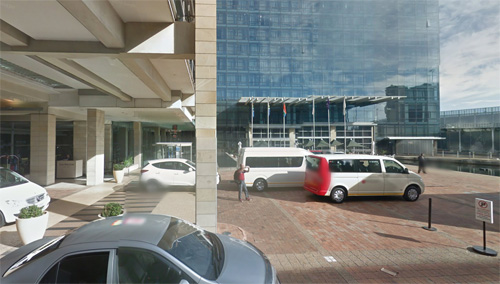
2013 - The Westin Cape Town Hotel at Convention Square on Lower Long Street in Cape Town, South Africa (Google Streetview)

2013 – The Westin Cape Town Hotel at Convention Square on Lower Long Street in Cape Town, South Africa (Google Streetview)

2016 - The Westin Cape Town Hotel at Convention Square on Lower Long Street in Cape Town, South Africa (Google Streetview)

2016 – The Westin Cape Town Hotel at Convention Square on Lower Long Street in Cape Town, South Africa (Google Streetview)

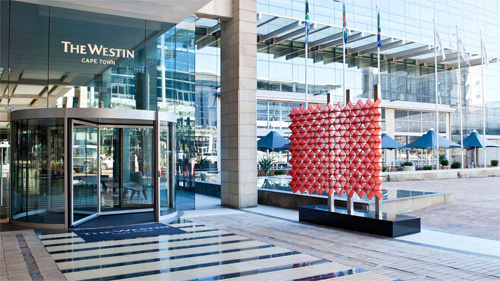
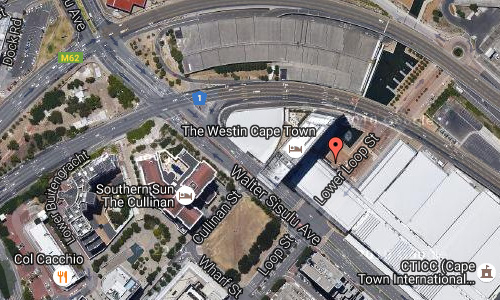
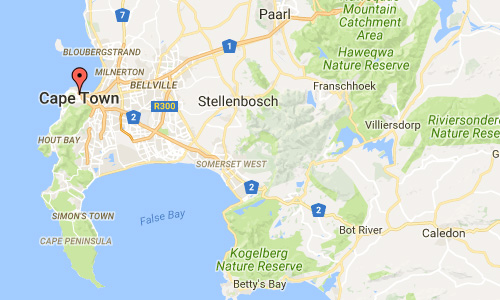
The Westin Cape Town Hotel is located near the Convention Square on Lower Long Street in Cape Town, in the capital’s cultural centre, at the entrance to the Waterfront near Long Street. Cape Town International Convention Centre is across the street from the hotel.

2016 - Westin Cape Town Hotel

Memorable experiences await you at the Westin Cape Town. Enjoy our exclusive rooms with unique views over the V&A Waterfront and Table Mountain. Our hotel’s fantastic glass façade allows clear views of the breathtaking beauty of Table Mountain, Lion’s Head and the whole of Table Bay.

The culinary diversity will also delight. Besides the large variety of restaurants in Cape Town, the hotel has a great selection of elegant restaurants and bars on offer from brasserie-style Thirty7 to ON19 with it’s panoramic views. Begin a wonderful Cape Town evening or round off your day in one of our bars: Louis B’s & Terrace and Raleigh’s Cigar Bar.

The hotel is closely located by the highly populair Waterkant area. De Waterkant is a sub-district of the suburb of Green Point, Cape Town. The neighbourhood is adjacent to the Central Business District on the southeastern end of Somerset Road. From south, it is neighboured by the historically coloured district of Bo-Kaap.

De Waterkant is typically a sought-after address for young professionals, the upper-class gay and lesbian community, and niche restaurants and retailers. The area is home to the Cape Quarter shopping mall[2] and Vega’s Cape Town campus.

2016 - Westin Cape Town Hotel Maps02

2016 - Westin Cape Town Hotel Maps01

More information at www.westincapetown.com and en.wikipedia.org.

Volvo Photography Locations

Ölmanäs ringväg in Åsa 🇸🇪

August 10th, 2016

Volvo Photo Locations Part 219
Historic Volvo Photography Locations Overview

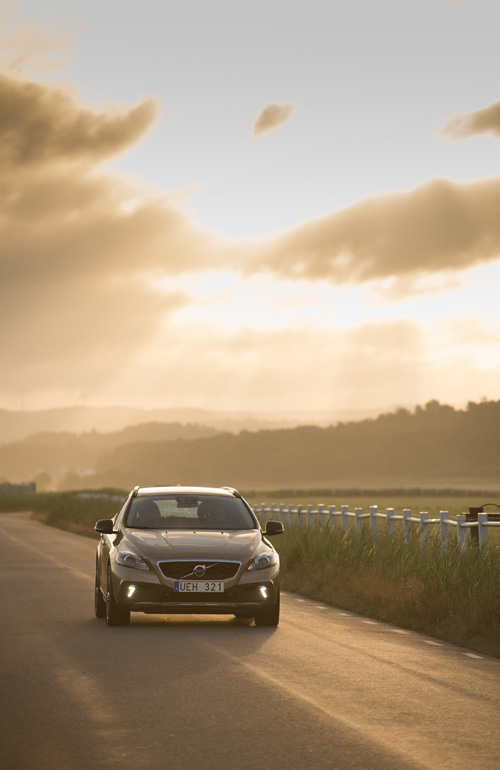
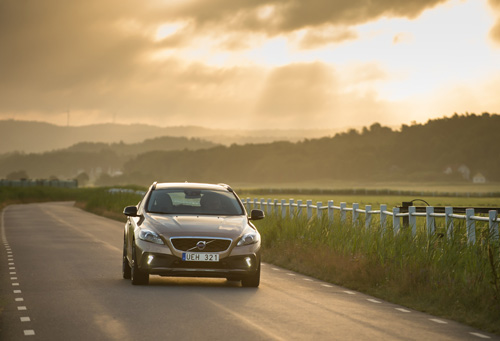
2014 - Volvo V40 Cross Country

2014 – Volvo V40 Cross Country

2014 - Volvo V40 Cross Country

2014 – Volvo V40 Cross Country

2014 - Volvo V40 Cross Country

2014 – Volvo V40 Cross Country

2014 - Volvo V40 Cross Country

2014 – Volvo V40 Cross Country

2014 - Volvo V40 Cross Country

2014 – Volvo V40 Cross Country

2014 - Volvo V40 Cross Country

2014 – Volvo V40 Cross Country

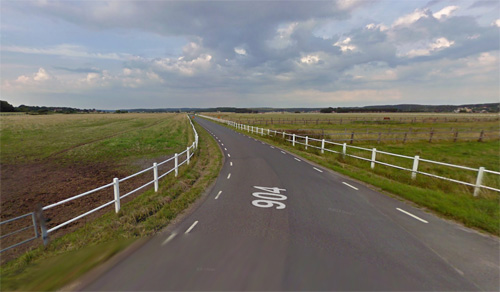
2016 - Ölmanäs ringväg at Gårda Brygga in Åsa, Kungsbacka Kommun, Sweden (Google Streetview)

2016 – Ölmanäs ringväg at Gårda Brygga in Åsa, Kungsbacka Kommun, Sweden (Google Streetview)

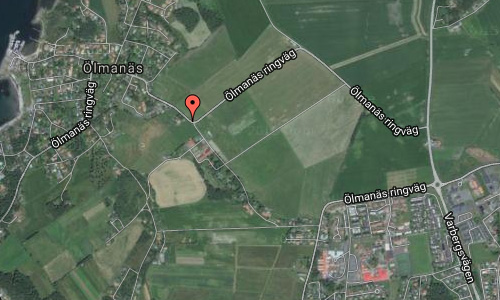
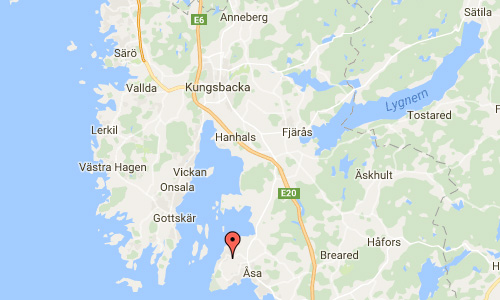
Ölmanäs ringväg is a road near Gårda Brygga in Åsa, Kungsbacka Kommun, Sweden. The road connects the north-south Varbergsvägen with the sea at Gårda Brygga, a populair bathing and sailing spot south of Göteborg.

Åsa is a locality situated in Kungsbacka Municipality, Halland County, Sweden, with 3,369 inhabitants in 2010.

2016 - Ölmanäs ringväg in Åsa Maps02

2016 - Ölmanäs ringväg in Åsa Maps01

More information at sv.wikipedia.org.

Volvo Photo Locations