home

[ Content | Sidebar ]

Engelbrektsgatan in Göteborg 🇸🇪

April 10th, 2022

Volvo Photo Locations Part 419
Volvo Photo Locations Overview
bookmark www.volvophotolocations.com today!

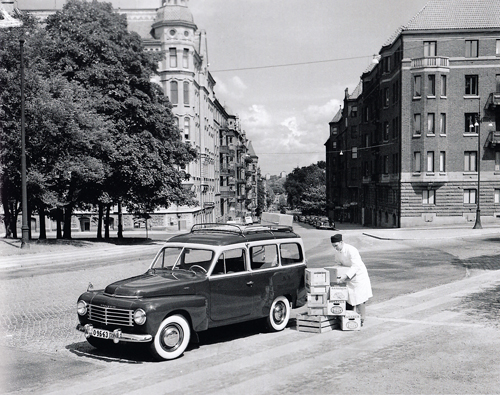
1953 – Volvo PV445 Duett at Engelbrektsgatan and Götabergsgatan in Göteborg Sweden 🇸🇪.

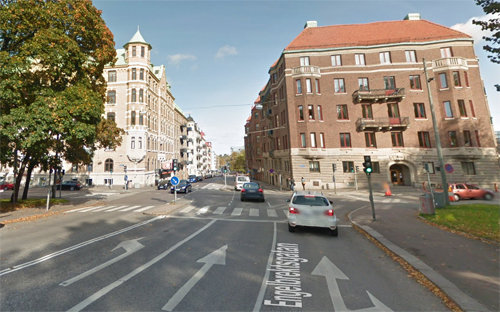
2022 – Engelbrektsgatan and Götabergsgatan in Göteborg (Google Streetview)

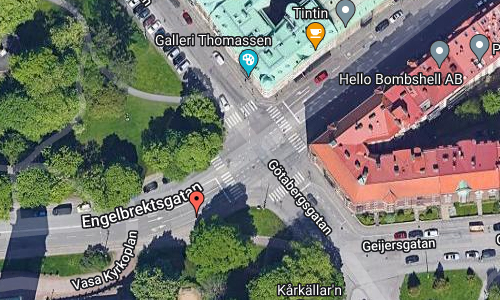
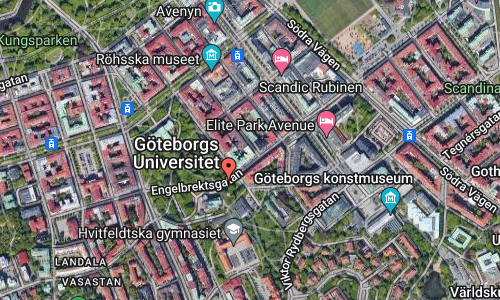
Engelbrektsgatan is an approximately 1.3 kilometer long street in Göteborg that runs from Heden, past Lorensberg and up to Vasastaden. The street was named in 1882 in memory of Engelbrekt Engelbrektsson.

Engelbrekt Engelbrektsson (1390s – 27 April/4 May 1436) was a Swedish nobleman, rebel leader and statesman of German ancestry. He was the leader of the Engelbrekt rebellion in 1434 against Eric of Pomerania, king of the Kalmar Union.

At Engelbrektsgatan you will find, among other things, Vasakyrkan with Vågens tjusning.

In the 55th block Glimmingehus, which today corresponds to Engelbrektsgatan 34 AC, was Göteborgs riding hall 1881–1934. The new riding hall in Böö was taken into use on October 31, 1937.

More information on sv.wikipedia.org and en.wikipedia.org.

Volvo Photo Locations

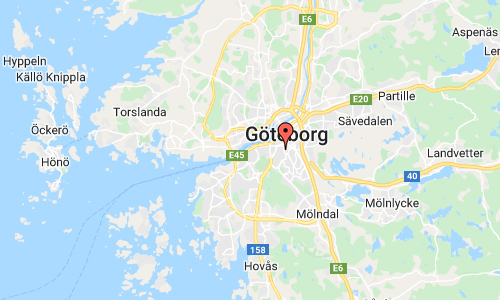
Sankt Sigfrids plan in Göteborg 🇸🇪

April 10th, 2022

Volvo Photo Locations Part 418
Volvo Photo Locations Overview
bookmark www.volvophotolocations.com today!

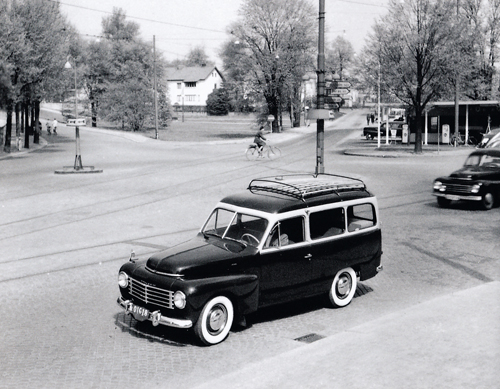
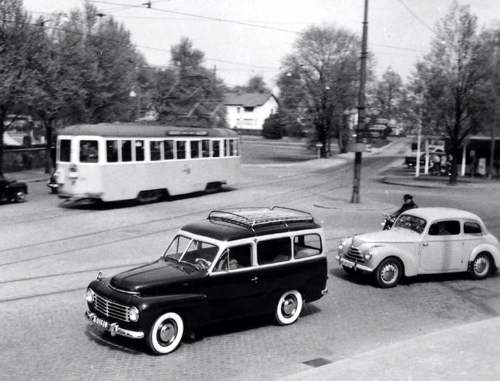
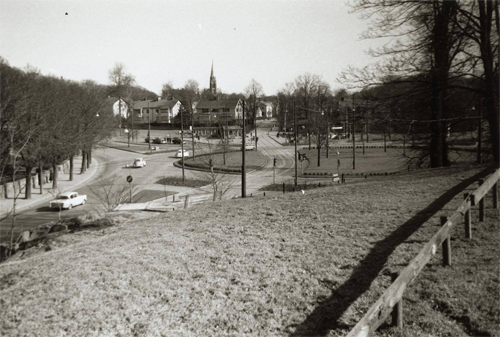
1953 – Volvo 445 Duett at Sankt Sigfrids plan in Örgryte Göteborg Sweden🇸🇪.

1953 – Volvo 445 Duett at Sankt Sigfrids plan in Örgryte Göteborg Sweden🇸🇪.

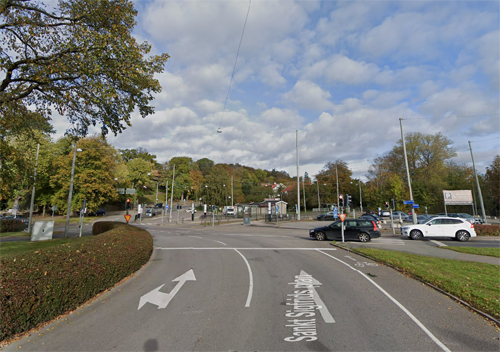
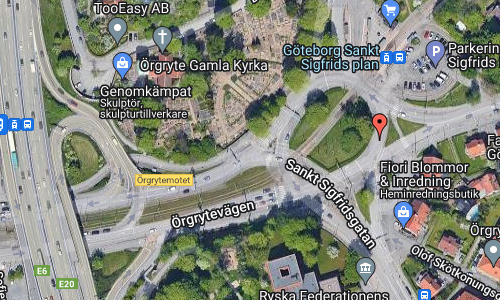
2022 – Sankt Sigfrids plan in Göteborg (Google Streetview)

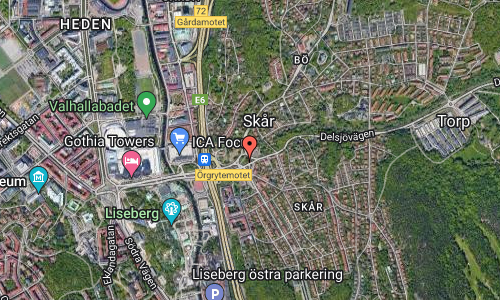
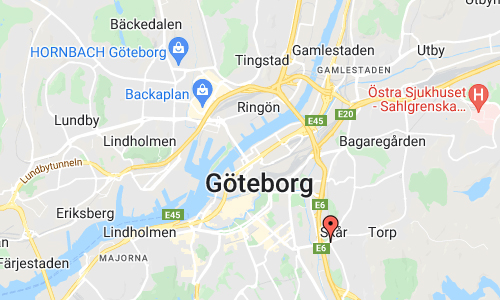
Sankt Sigfrids plan is a traffic hub in Örgryte in Göteborg, Sweden.

Sankt Sigfrid’s plan is named after Västergötland ‘s patron Sankt Sigfrid. According to legend, in the 11th century he had the first Christian church built in the current Örgryte, which is said to have been on the same site as the current Örgryte old church right next to Sankt Sigfrid’s plan.

The place, which is also called Sanktas, is about 130 x 70 meters large, and got its name in 1925 when it belonged to the district Bö. But already in connection with the Anniversary Exhibition in Gothenburg in 1923, the term Sankt Sigfrid’s plan was used in the area. At the beginning of the 20th century, there was a larger pond (approximately the same area as Örgryte old church) on the site of the current grassy roundabout, about 50 meters southeast of the cemetery wall.

1964 – Sankt Sigfrids plan (Göteborgs Stadsmuseum )

At the site, the streets Örgrytevägen, Danska vägen, Delsjövägen and Sankt Sigfridsgatan converge, as well as the smaller streets Santessonsgatan (tram only) and Olof Skötkonungsgatan. Along both sides of Santessonsgatan, Örgryte garden city spreads out, built in the 1920s. Sankt Sigfrid’s plan is numbered clockwise 1-8.

According to the original city plan from 1923, the place was to be designed relatively urbanly, characterized by rows of trees and an arched residential building to the east. Of this, only the tree line along the cemetery wall, as well as the buildings between Delsjövägen and Sankt Sigfridsgatan, were carried out.

On Sankt Sigfrid’s plan there is a small green area and a small wooden house that for many years housed a kiosk, Sankta kiosk, usually called Sanktas, but in the autumn of 2010 the premises became a fish shop instead.

In 1929, Göteborgs handelsbank built a villa on the eastern side of the site, in which a bank premises was housed on the ground floor. Today, SEB has the bank branch.

A 90 cm high bronze statue by Carl Milles, Genius, was placed in 1940 in the small park area next to the stop, but was stolen in the late autumn of 2001 after being submitted for repair. The statue is now in place again.

Sankt Sigfrid’s plan has been sung by Madness and After Shave.

More information on sv.wikipedia.org.

Volvo Photo Locations

Hotel Kung Karl on Nils Ericsonsgatan in Göteborg 🇸🇪

April 10th, 2022

Volvo Photo Locations Part 417
Volvo Photo Locations Overview
bookmark www.volvophotolocations.com today!

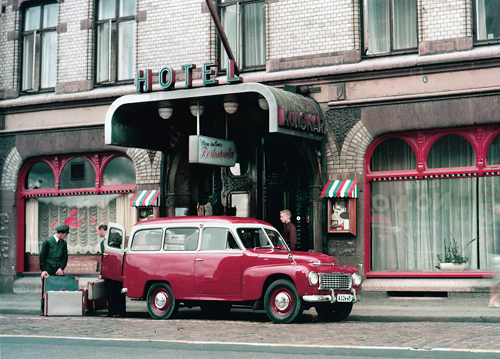
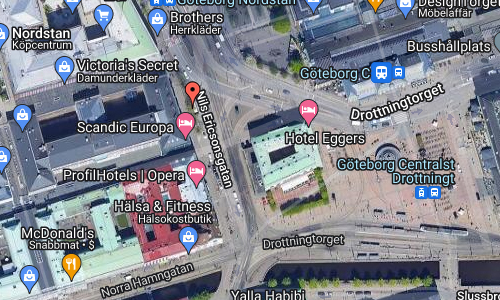
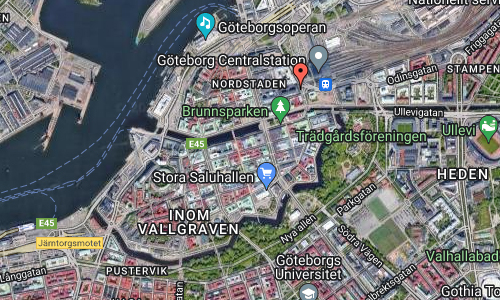
1956 – Volvo PV445 Duett at Hotel Kung Karl on Nils Ericsonsgatan near Drottningtorget in Göteborg Sweden 🇸🇪.

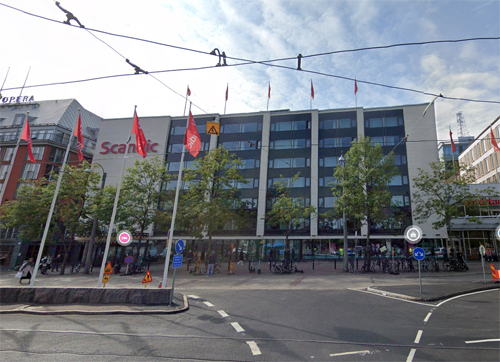
2022 – Scandic Europa Hotel on Nils Ericsonsgatan in Göteborg (Google Streetview)

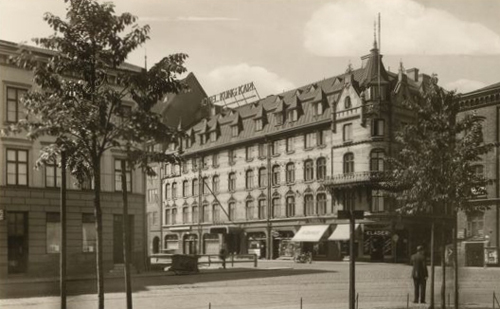
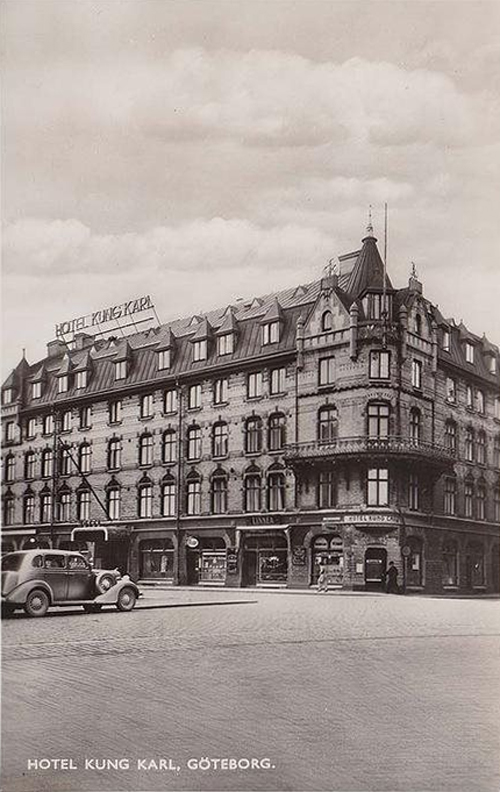
Hotel Kung Karl was a hotel located on the corner of Köpmansgatan and Nils Ericssonsgatan. Initially, it was located on the north side of Köpmansgatan in the Köpmannen district, where Hotel Europa (Hotel Scandic Europa) is now located, but in 1896 a new hotel was completed on the south side of Köpmansgatan, in the Kronobageriet district. When the new hotel was ready, the old hotel was renamed Hotel du Nord. It is thus about two different hotels with some connection when the owner of the former, IF Söderström, came to lease the latter.

The old hotel building, Hotel du Nord, was demolished in the 1960s and Hotel Europa was built in the neighborhood. The new hotel from 1896 was demolished in 2007 after the hotel was taken over by Hotel Opera and also given this name. A new hotel was then built which was named Hotel Opera or Grand Hotel Opera.

Around 1930 – Hotel Kung Karl in Göteborg

Göteborgs Aftonblad wrote about the opening of the new Hotel Kung Karl in 1896:
“Hotell Kung Karl, located at the corner of Köpmans- and Nils Ericsonsgatorna, thus in the immediate vicinity of the state railway station, has today opened its gates to the traveling public.
The hotel, which is owned by Mr. Joh. A. Holmdahl , also owner of Hotel Royal, is leased by Mr. IF Söderström, who for 14 years has been the owner of the former “Hotell Kung Karl”, now renamed “Hotel du Nord”.

The hotel was built by builder Abraham Pehrsson, the painting work was done by the company “Måleribolaget SA Wahlström”, the upholstery work by the company “Oscar Holmbergs Efterträdare”, the electric lighting by Edvin Andren & comp.

Around 1960 – Hotel Kung Karl in Göteborg, built in 1896 demolished in 2007.

The hotel has 50 elegant rooms in equipment and furniture, distributed on different floors, between which the transport takes place easily and comfortably by means of an electric passenger elevator set up by engineer Rudolf Landén.

Add to this that the hotel is equipped with its own bathing facility for cold and temperate baths and showers and that travelers do not have to miss their little “snapps” in the hotel’s homely dining room, so the hotel can rightly be registered among our city’s first class. ” (From: Göteborgs Aftonblad 3 October 1896)

More information on gamlagoteborg.se and scandichotels.com.

Volvo Photo Locations

Tunnbindarvägen in Smögen 🇸🇪

February 13th, 2022

Volvo Photo Locations Part 416
Volvo Photo Locations Overview
bookmark www.volvophotolocations.com today!

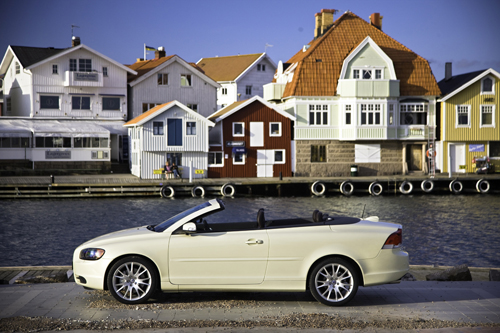
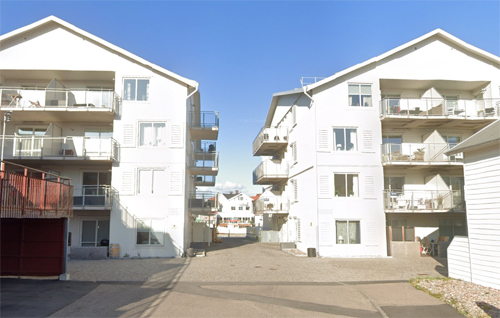
2009 – Volvo C70 at Tunnbindarvägen in Smögen, Sweden 🇸🇪.

2022 – Tunnbindarvägen in Smögen (Google Streetview)

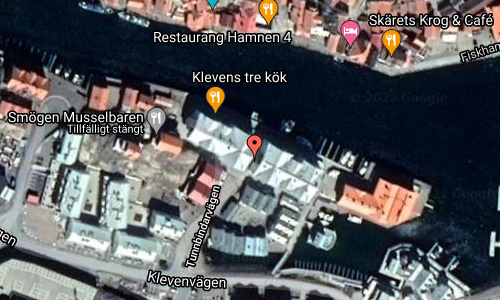
Tunnbindarvägen is a street located in Smögen, Sweden.

When the Volvo promotion photos of the C70 were made, the current housing complex was not yet built, which gave a great amazing view on the Smögenbryggan in Smögen.

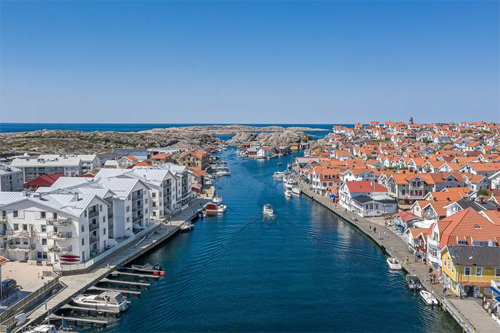
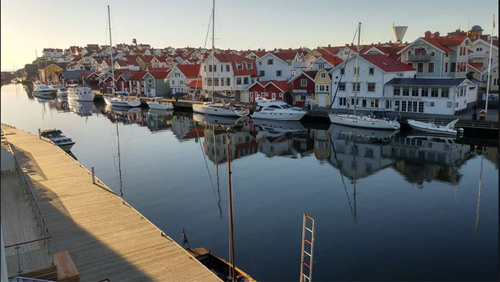
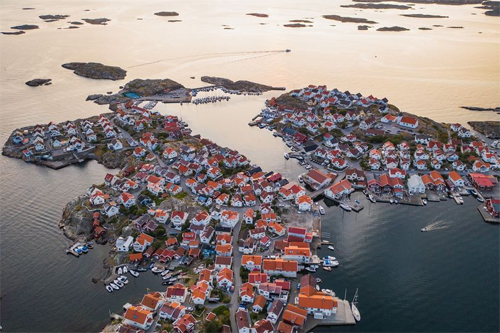
Smögenbryggan in Sotenäs municipality has thousands of visitors from all over the world every year. Smögen offers wonderful archipelago settings, good food and comfortable places to stay.

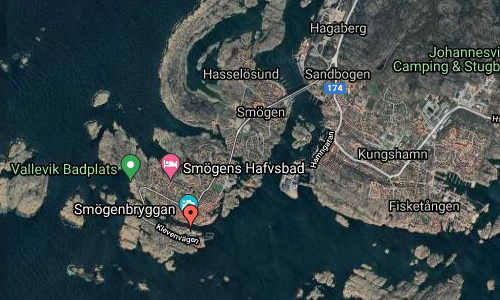
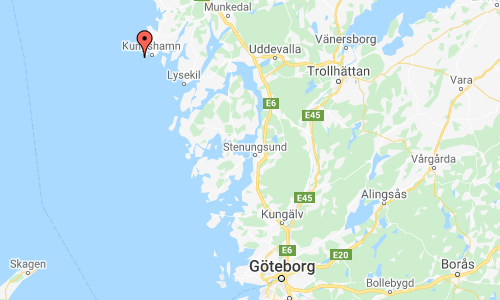
It takes just under two hours to drive from Gothenburg to Smögen. After crossing Smögen Bridge from the centre of Kungshamn, you first arrive in the northern area called Hasselön, which has residential areas, fishing huts and beautiful countryside.

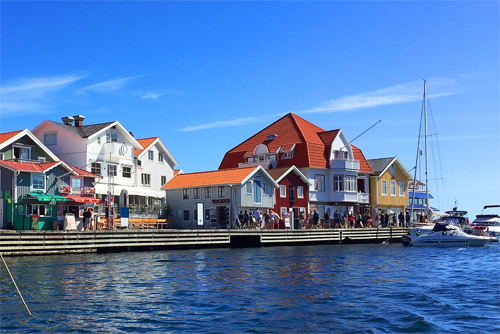
Continue for another five minutes and you come to Smögenbryggan, by far the most famous tourist spot in Bohuslän! The pier is almost 600 metres long and the many boathouses have been converted into shops, cafés and restaurants. Take a walk along the pier and enjoy the boating life, different archipelago activities, lively crowds in the summer season and a wide range of locally caught seafood in the bars and taverns, some of which are open all year round.

Fishermen used Smögen’s protected harbour as early as the mid-1500s, and the first time Smögen was mentioned in writing was in 1594. The origin of the place name is believed to be “Smyghålet”, as the small canal between the islands of Smögen and Kleven was called. The name has evolved over the years from Smögit, Smöenn, Smöget and Smygesund.

Tip! If you would like to experience Smögen without sharing it with thousands of summer tourists, why not come here in the spring or early autumn when the winds are still balmy.

More information on www.vastsverige.com and en.wikipedia.org.

Volvo Photo Locations

Strandgatan to Koholmen in Klädesholmen 🇸🇪

February 13th, 2022

Volvo Photo Locations Part 415

Volvo Photo Locations Overview
bookmark www.volvophotolocations.com today!

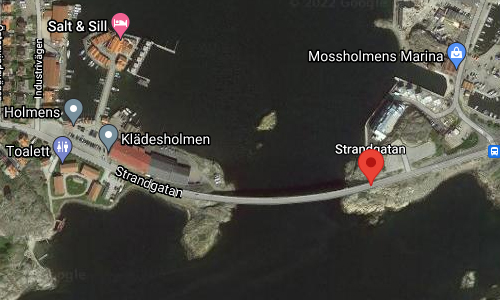
1993 – Volvo 480 Turbo on Strandgatan towards Koholmen in Klädesholmen, Sweden 🇸🇪.

2022 – Strandgatan to Koholmen in Klädesholmen (Google Streetview)

Strandgatan is a road towards Koholmen located in Klädesholmen on Tjörn, Sweden.
Klädesholmen is an island and village in Tjörn Municipality, Bohuslän, Sweden.

The urban area, with 385 inhabitants in 2010, located on two small islands, Klädesholmen and Koholmen, is connected to Tjörn via a bridge to Bleket.
The islands were formerly crown islets, where fishermen had the right to settle.
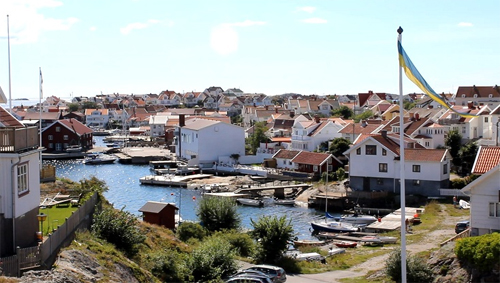
Klädesholmen is the island that lives, breathes and delivers herring and its history. It is home to a herring factory, herring museum and the Salt & Sill restaurant, which carries on the herring tradition by creating gourmet pickled dishes and flavour combinations. Each year on Herring Day a herring dish of the year is selected.

Klädesholmen is well worth a stroll to admire the traditional white wooden houses that are typical of fishing communities along the coast, and the narrow streets named after the trades of the people who lived there, such as Skomakaregatan (Shoemaker Street), Kustroddarvägen (Coastguard Road) and Fiskargränd (Fisherman’s Alley). You can relax at one of several swimming areas, eat at a restaurant or have coffee at a café, while enjoying the sights, sounds and scents of the sea.

To the west, where the houses give way to the rocky coast, right at the water’s edge, stands Claes Hake’s granite sculpture: Faith, Hope and Love. The sea itself is the source of Klädesholmen’s prosperity and cultural heritage; the shimmering silver herring around which life on the island has revolved through the ages.

Klädesholmen is a community that has historically been dominated by the rise and decline of herring stocks, and proudly continues the heritage of this, the most widespread species of fish on the planet. Surrounded by the wild sea and linked by a bridge that was built in 1983, the island has always depended on fishing and the bounty of the sea. It is believed that the island was inhabited as early as the 13th century, and when a Norwegian bishop passed Klädesholmen in 1594, he described it as an old fishing village.

Klädesholmen experienced a resurgence during the herring boom of 1747–1809; the population grew and people came to work at the herring salteries and fish oil factories, while the harbour was filled with ships from near and far, which collected salted herring and fish oil for shipping to Europe.

When the herring disappeared, the community suffered, and by 1830 the population had dropped to just over 400 and it was hard to make a living. In the 1860s the island’s fishermen headed to Ålesund outside Norway to catch cod and ling, and in 1880 they sought better luck around the Shetland Islands, around the same time that the herring returned to the west coast in 1877–1900. It was during this period that the extensive herring processing industry was built up. Massive warehouses were built to process and salt fish. The fishermen toured the harbours of Sweden in their small boats to sell their herring and fish produce. The rest is a piece of herring history.

In the early 20th century the islanders learned how to preserve herring and sprats. By this time almost a thousand people lived on the island and in the 1930s the herring canning industry grew quickly, until by 1950 there were 25 canneries on the island. But from the 1970s onwards the fish processing industry died out and only herring pickling remained, and early this century the three remaining factories merged to form Klädesholmen Seafood AB, which is now the largest Swedish-owned herring producer, and makes more than half of all pickled herring.

In 2015, herring production was transferred to larger factory premises in Rönnäng, on Tjörn, while the factory outlet remained on Klädesholmen.
More information on www.vastsverige.com and kladesholmen.se.

Volvo Photo Locations

Annies Hus on Postliden in Klädesholmen 🇸🇪

February 13th, 2022

Volvo Photo Locations Part 414
Volvo Photo Locations Overview
bookmark www.volvophotolocations.com today!

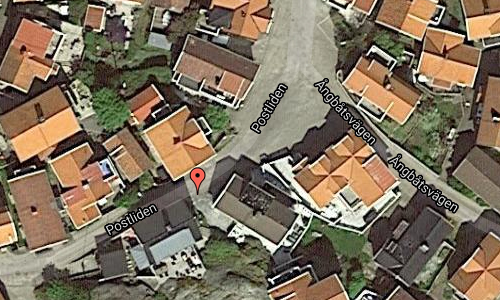
2014 – Volvo V70 Sport at Annies Hus on Postliden in Klädesholmen on Tjörn, Sweden 🇸🇪.

2022 – Annies Hus on Postliden in Klädesholmen (Google Streetview)

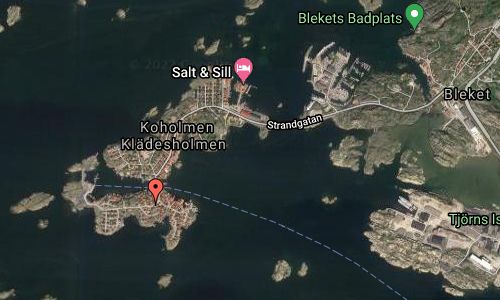
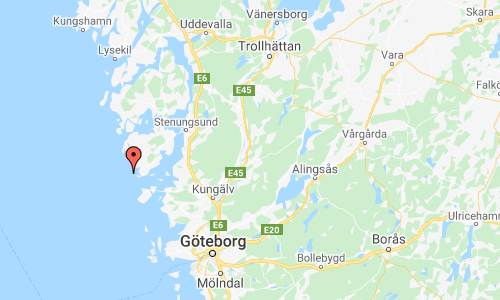
Annies Hus is located on Postliden in Klädesholmen on Tjörn, Sweden.
Klädesholmen is an island and village in Tjörn Municipality, Bohuslän, Sweden.

The urban area, with 385 inhabitants in 2010, located on two small islands, Klädesholmen and Koholmen, is connected to Tjörn via a bridge to Bleket. The islands were formerly crown islets, where fishermen had the right to settle.

Klädesholmen is the island that lives, breathes and delivers herring and its history. It is home to a herring factory, herring museum and the Salt & Sill restaurant, which carries on the herring tradition by creating gourmet pickled dishes and flavour combinations. Each year on Herring Day a herring dish of the year is selected.

Klädesholmen is well worth a stroll to admire the traditional white wooden houses that are typical of fishing communities along the coast, and the narrow streets named after the trades of the people who lived there, such as Skomakaregatan (Shoemaker Street), Kustroddarvägen (Coastguard Road) and Fiskargränd (Fisherman’s Alley). You can relax at one of several swimming areas, eat at a restaurant or have coffee at a café, while enjoying the sights, sounds and scents of the sea.

To the west, where the houses give way to the rocky coast, right at the water’s edge, stands Claes Hake’s granite sculpture: Faith, Hope and Love. The sea itself is the source of Klädesholmen’s prosperity and cultural heritage; the shimmering silver herring around which life on the island has revolved through the ages.

Klädesholmen is a community that has historically been dominated by the rise and decline of herring stocks, and proudly continues the heritage of this, the most widespread species of fish on the planet. Surrounded by the wild sea and linked by a bridge that was built in 1983, the island has always depended on fishing and the bounty of the sea. It is believed that the island was inhabited as early as the 13th century, and when a Norwegian bishop passed Klädesholmen in 1594, he described it as an old fishing village.

Klädesholmen experienced a resurgence during the herring boom of 1747–1809; the population grew and people came to work at the herring salteries and fish oil factories, while the harbour was filled with ships from near and far, which collected salted herring and fish oil for shipping to Europe.

When the herring disappeared, the community suffered, and by 1830 the population had dropped to just over 400 and it was hard to make a living. In the 1860s the island’s fishermen headed to Ålesund outside Norway to catch cod and ling, and in 1880 they sought better luck around the Shetland Islands, around the same time that the herring returned to the west coast in 1877–1900. It was during this period that the extensive herring processing industry was built up. Massive warehouses were built to process and salt fish. The fishermen toured the harbours of Sweden in their small boats to sell their herring and fish produce. The rest is a piece of herring history.

In the early 20th century the islanders learned how to preserve herring and sprats. By this time almost a thousand people lived on the island and in the 1930s the herring canning industry grew quickly, until by 1950 there were 25 canneries on the island. But from the 1970s onwards the fish processing industry died out and only herring pickling remained, and early this century the three remaining factories merged to form Klädesholmen Seafood AB, which is now the largest Swedish-owned herring producer, and makes more than half of all pickled herring.

In 2015, herring production was transferred to larger factory premises in Rönnäng, on Tjörn, while the factory outlet remained on Klädesholmen.

More information on www.vastsverige.com and www.kladesholmen.com.

Volvo Photo Locations

Kungsbackaleden E6 near Kungsbacka 🇸🇪

February 13th, 2022

Volvo Photo Locations Part 413
Volvo Photo Locations Overview
bookmark www.volvophotolocations.com today!

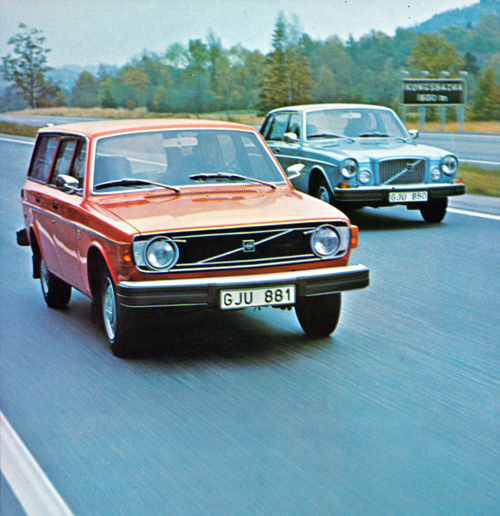
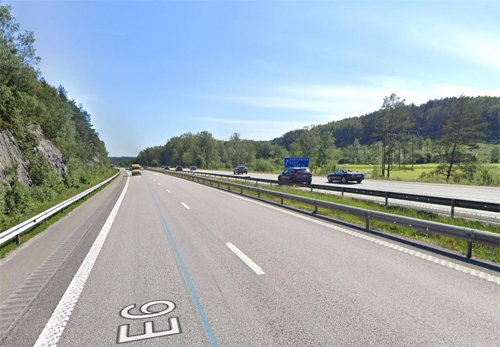
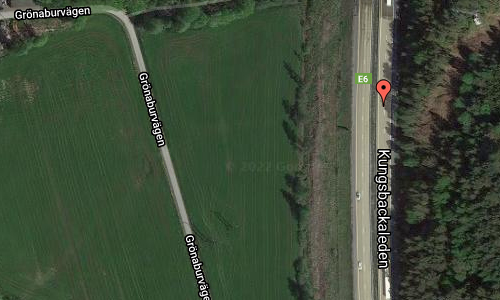
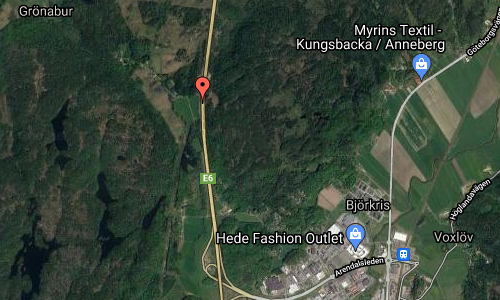
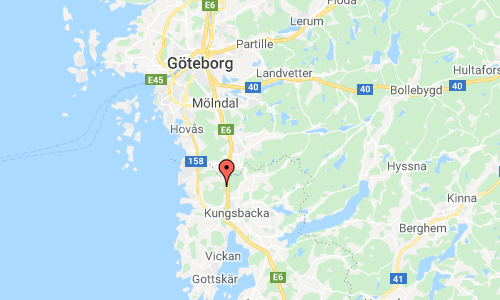
1974 – Volvo 145 de Luxe and 164 E on Kungsbackaleden E6 from Kungsbacka driving north, just past exit 61, Sweden 🇸🇪.

2022 – Kungsbackaleden E6 near Kungsbacka (Google Streetview)

Kungsbackaleden E6 is a road near Kungsbacka, this location can be found while driving north, just past exit 61, Sweden.

Kungsbackaleden is part of the E6 / E20 and runs from the Tingstad tunnel and Gullbergsmotet (exit 75) in the north to the Kungsbacka Norr junction (exit 61).

It was built in stages which were inaugurated as follows: Sagsjön – Mölndal (18 October 1963), Liseberg – Olskroksmotet (1968/69), Olskroksmotet – Tingstadstunneln (29 March 1968), Kungsbacka – Sagsjön (1972) and Mölndal – Liseberg (June 1981).

Kungsbacka is a locality and the seat of Kungsbacka Municipality in Halland County, Sweden, with 19,057 inhabitants in 2010.

It is one of the most affluent parts of Sweden, in part due to its simultaneous proximity to the countryside and the large city of Göteborg.

The first records referring to Kungsbacka as a town date from the 15th century, when it was part of Denmark. By the time it was recognised as part of Sweden (1658), the river running through the town, on which some transportation of goods took place, was almost completely overgrown and despite pleas to restore its function, this did not occur. Some trade still took place from the coast, but the town’s significance as a place of naval commerce lessened over the centuries. Today, it is the home of over 2,000 enterprises, and the river is still running through it.

A devastating fire in 1846 destroyed the town centre, sparing only a little red wooden cabin which is still standing today. In late 2006 and early 2014 other fires affected the town centre, and construction works are currently ongoing to restore the loss of wooden buildings.

The town remained small until the 1960s. The municipal reform of 1971 made it the seat of the much larger Kungsbacka Municipality. The town began to grow as a part of Metropolitan Göteborg. It is the southern terminus of the Göteborg commuter rail system, situated 28 km from central Göteborg.

More information on sv.wikipedia.org and visitkungsbacka.se.
Volvo Photo Locations

Göteborg Golf Klubb on Ryttarstigen in Hovås 🇸🇪

February 13th, 2022

Volvo Photo Locations Part 412
Volvo Photo Locations Overview
bookmark www.volvophotolocations.com today!

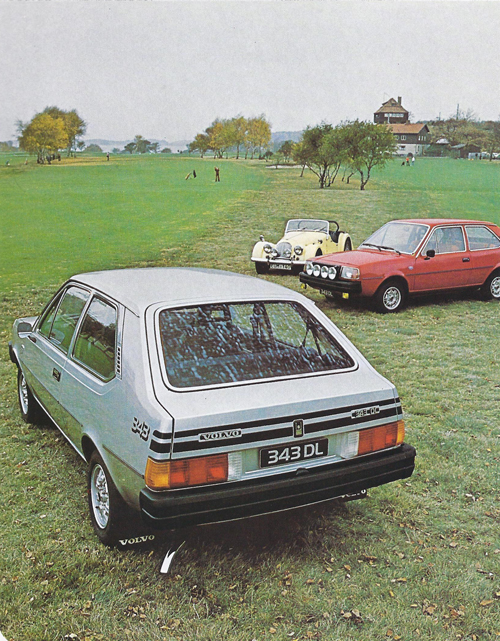
1978 – Volvo 343 DL at Göteborgs Golf Klubb on Ryttarstigen in Hovås, Göteborg, Sweden 🇸🇪.

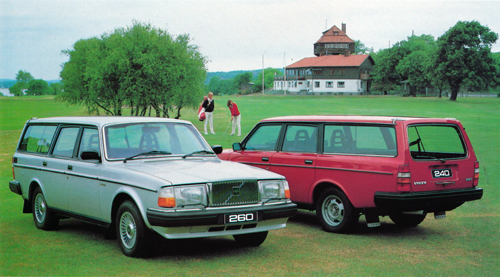
1983 – Volvo 260 GLE Estate and 240 Estate at Göteborg Golf Klubb on Ryttarstigen in Hovås, Göteborg, Sweden 🇸🇪.

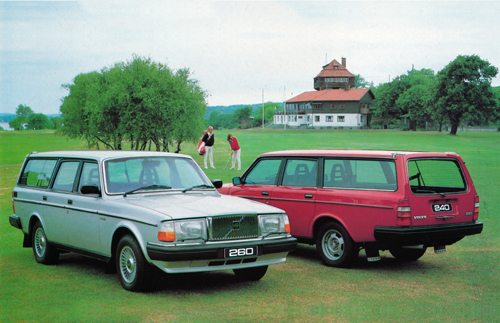
1983 – Volvo 260 GLE Estate and 240 Estate at Göteborg Golf Klubb on Ryttarstigen in Hovås, Göteborg, Sweden 🇸🇪.

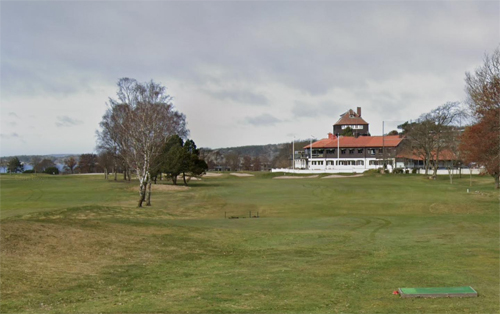
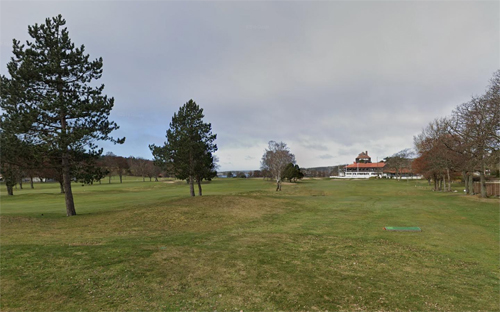
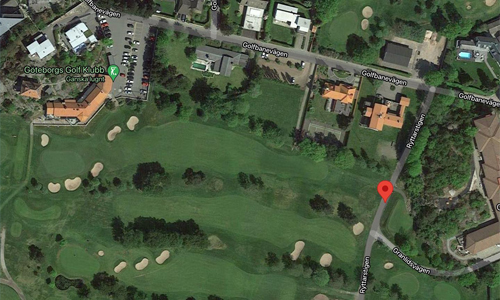
2022 – Göteborg Golf Klubb seen from Ryttarstigen in Hovås, Göteborg (Google Streetview)

2022 – Göteborg Golf Klubb seen from Ryttarstigen in Hovås, Göteborg (Google Streetview)

Göteborg Golf Klubb is located on Ryttarstigen in Hovås, south of Göteborg, Sweden.

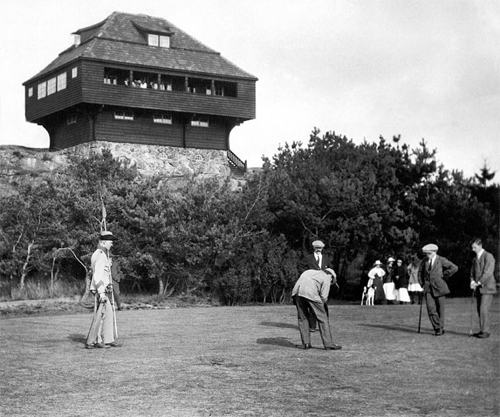
Göteborgs GK is a golf club in Hovås in Askim in southern Göteborg. The club was formed in 1902 under the name Göteborgs Idrottsförbunds Golfafdelning and is Sweden’s second oldest golf club after Särö Golf Club which was formed in 1899. Göteborgs GK is, however, Sweden’s oldest active golf club and was the first club in Sweden to be environmentally certified according to ISO 14001.

1916 – Göteborg Golf Klubb

The initiative for the formation of the club was taken by Tor Törnsten, who in 1902 formed a golf section within the Gothenburg Sports Association. He moved his golf playing from Sandviken on Norra älvstranden on Hisingen, opposite the current Gothenburg fishing port. Viktor Setterberg, the great pioneer in Swedish golf, was also a driving force in the construction of the golf course in Hovås.

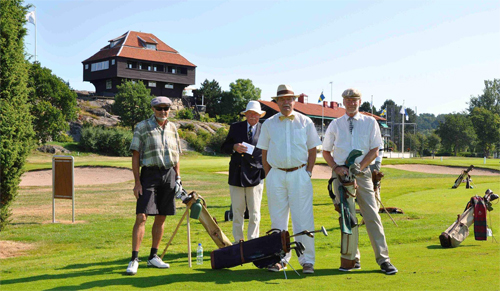
The course was built in 1904 and then included 6 holes with a total length of 1,466 meters. The number of members with their own clubs was 40 already the first summer. In the first years, the course was rented for a shorter period, but in 1910 they started subscribing for shares in a company, in order to acquire most of the land that the then 9-hole course covered. The track, which was completed in 1908, was now 2,381 meters long. The clubhouse came into being in 1910 and was designed by architect Ernst Torulf.

The Stewarts Challenge Cup is one of Sweden’s oldest sports competitions, in all categories.

On 14-16 May 1911, the club’s first national championship for both ladies and men was organized: Swedish closed (national) amateur championship competition in golf.

2022 – Göteborg Golf Klubb

Until 1923, they played on the 9-hole course. Thereafter, the course was expanded during the years 1921-23 by another 3 holes, to a total length of 3,233 meters. The expansion was led by the club’s professional, the Englishman George Roberts. Thanks to the dispatcher Conrad Pineus, the land for an 18-hole course could be acquired, and in the autumn of 1930 work began on the new course, designed by architect Andrew Persson. On October 1, 1933, the course was inaugurated by the club’s chairman Axel Brynolf. The new clubhouse was inaugurated in 1938. The number of members was then 350.
More information on sv.wikipedia.org, www.goteborgsgk.org and goteborgsgk.dynamaster.se/forstasida/kommitt-er/klubbhistoriska.

Volvo Photo Locations

Åbytravet on Åby Arenaväg in Mölndal 🇸🇪

February 13th, 2022

Volvo Photo Locations Part 411
Volvo Photo Locations Overview
bookmark www.volvophotolocations.com today!

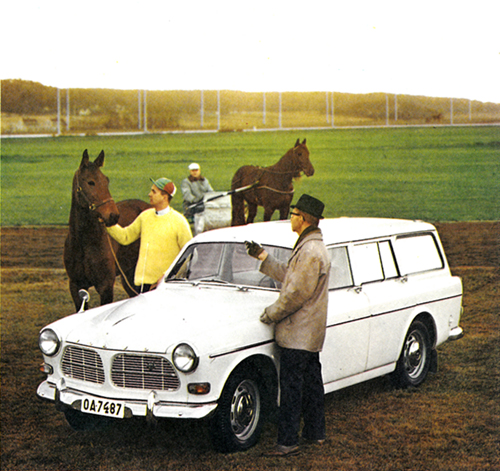
1965 – Volvo Amazon Herrgårdsvagn at Åby Horse Race Track on Åby Arenaväg in Mölndal, Sweden 🇸🇪.

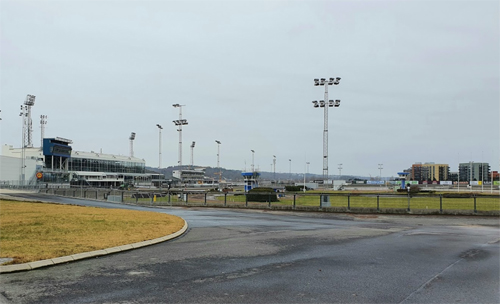
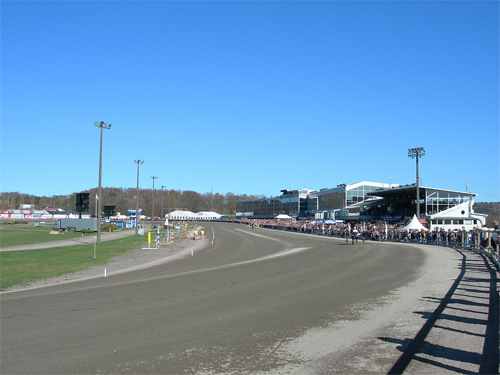
2022 – Åbytravet (Google Streetview)

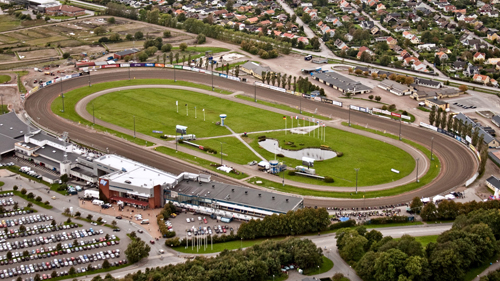
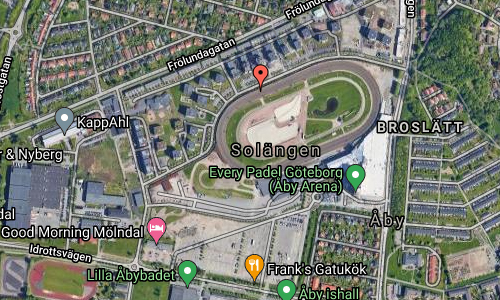
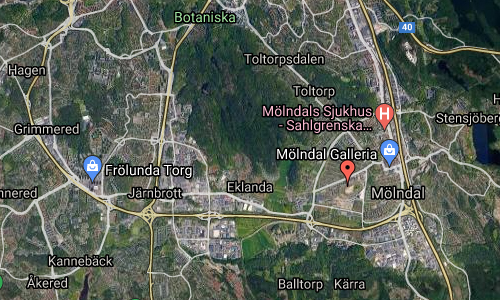
Åbytravet or Åby Racetrack is a horse racing track located on Åby Arenaväg in Mölndal, 10 km south of Göteborg, Sweden.

Åby was opened in 1936 as a track for harness racing as well as thoroughbred racing. Since October 1976, the track has been dedicated to harness racing solely.

Åby is the second biggest track for harness racing in Sweden. The length of the track is 1,000 meters.

Åbytravet – a world-class arena for both horse and guest. Their vision is to be a meeting place and an experience arena in absolute top class. They offer a captivating overall experience with excitement, entertainment and culinary experiences. They are a modern arena for trotting and equestrian sports, but you do not have to be interested in horses for a memorable experience here.
Whether you are here on a competition day or not, there is always life and movement with us. They offer a strong selection if you want to have fun and enjoy something good to eat or drink. There are several restaurants to choose from and a small café located right next to the trotting track.
Usually there are trotting competitions on Wednesdays or Thursdays, but the real highlights are STL – six Saturdays a year – with the Paralympic trotting final, Åby Grand Prix and the Swedish Championships weekend as the crowning achievement.

There is a hotel with 223 rooms, Every Padel in Mölndal offers 25 paddle courts, 21 doubles and 4 single courses. space, gym, business hotel and a congress and conference facility with up to 20 meeting rooms that make Åby Arena a destination that will attract up to 400,000 guests on an annual basis.

More information on sv.wikipedia.org, abytravet.se and www.abyarena.se.

Volvo Photo Locations

Täby Galopp on Galoppsvängen in Täby 🇸🇪

February 13th, 2022

Volvo Photo Locations Part 410
Volvo Photo Locations Overview
bookmark www.volvophotolocations.com today!

1970 – Volvo 164 at Täby Galopp on Galoppsvängen in Täby, north of Stockholm, Sweden 🇸🇪.

1970 – Volvo 164 at Täby Galopp on Galoppsvängen in Täby, north of Stockholm, Sweden 🇸🇪.

2009 – Täby Galopp (Google Streetview)

2022 – Täby Galopp (Google Streetview)

Täby Galopp was located on Galoppsvängen in Täby, north of Stockholm, Sweden.

Täby Galopp (or Täby Racecourse) was a thoroughbred horse racing venue located in Täby, approximately 15 kilometers north of Stockholm. Täby Racecourse was before its closure in 2016, the premier track in Scandinavia.

The venue opened August 28, 1960, and the Swedish King Gustaf VI Adolf was present, as well as an audience of 11,000 people. It was based on the major racecourses in the United States and its facilities was constantly up-graded and were as good as most courses in Europe and were unrivalled in Scandinavia.

1960 – Täby Galopp

Racing took place throughout the year, the variety available varying from dirt racing under lights during the winter and spring to the top flat and jump races in Scandinavia run during the summer and fall.

The course usually staged about 50 days racing a year with the dirt track being used exclusively until May. Racing under floodlights was first staged in 1965 and the formula is now working with considerable success in England at Wolverhampton Racecourse and other courses in Europe.

The left-handed track was also designed on a similar basis as courses in North America with a dirt track which was about 8 furlongs (1.6 km) in length on the outside of the turf course. There was also the added attraction of a figure-eight hurdle and steeplechase track on the inside plus stabling nearby.

During the years Täby Galopp made a significant impression on the international scene, being the first course outside the five main European countries to stage a pattern race following the granting of Group 3 status to the Stockholm Cup International in 1994.

In recognition of the quality of racing at the track, a second race, the Täby Open Sprint Championship, was awarded Group 3 status in 1998.

The 12 furlong race regularly attracted good quality horses from the rest of Europe keen to take on the best Scandinavian middle-distance horses. In 1997 Harbour Dues took the prize for Lady Herries before heading down to Australia to run a gallant fourth in the Melbourne Cup. In 2003 Labirinto won the race for France. In 2004, Collier Hill took the prize back to England and came back again to win it in 2006.

In 2011, an agreement was signed to sell the land to JM Bygg and Skanska, that intends to build 4,000 apartments on the land. The gallop was in 2016 moved to a new facility in Upplands-Bro Municipality, approximately 40 kilometres northeast of Stockholm City. The new racing venue goes under the name Bro Park. May 18th, 2016, was the very last day of competition at the Täby Racecourse, and it was called the Tribute Day.

More information on sv.wikipedia.org, www.svenskgalopp.se and www.taby.se.

Volvo Photo Locations