home

[ Content | Sidebar ]

Kopparbunken on Hörsalsvägen in Göteborg 🇸🇪

April 4th, 2012

Volvo Photo Locations Part 96

Historic Volvo Photography Locations Overview

1964 - Volvo Duett P210 Televerket

1964 – Volvo Duett P210 Televerket at Kopparbunken on Hörsalsvägen in Göteborg, Sweden 🇸🇪.
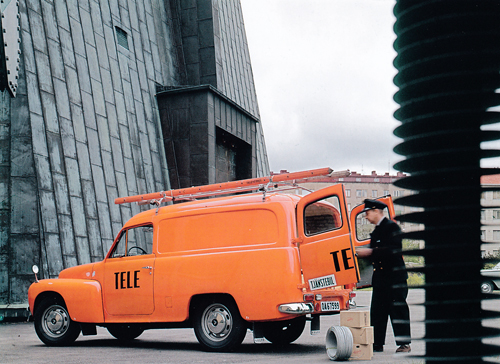
1964 – Volvo Duett P210 Televerket at Kopparbunken on Hörsalsvägen in Göteborg, Sweden 🇸🇪.
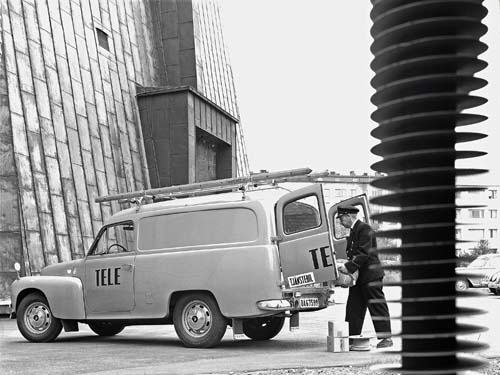
1964 – Volvo Duett (P210) at Kopparbunken on Hörsalsvägen in Göteborg, Sweden 🇸🇪.
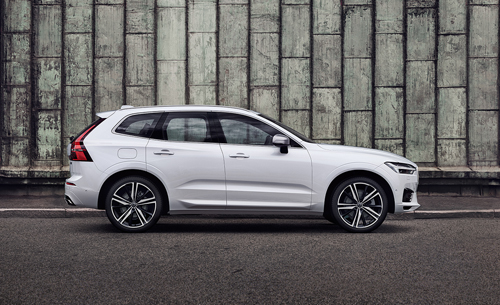
2017 – Volvo XC60 R-Design at Kopparbunken on Hörsalsvägen in Göteborg, Sweden 🇸🇪.
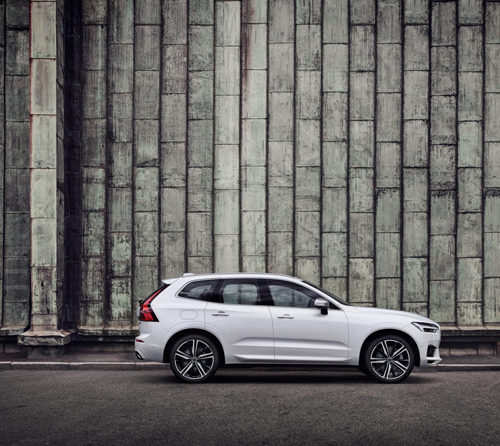
2017 – Volvo XC60 R-Design at Kopparbunken on Hörsalsvägen in Göteborg, Sweden 🇸🇪.

2017 – Volvo XC60 R-Design at Kopparbunken on Hörsalsvägen in Göteborg, Sweden 🇸🇪.

2012 – Kopparbunken at Chalmers University in Göteborg (Google Streetview)

2017 – Kopparbunken on Hörsalsvägen in Göteborg (Google Streetview)

Kopparbunken is a building with a copper outside at the Chalmer University campus in Göteborg. It can be found at the Elektrovägen.

In Swedish the name Kopparbunken can be split into two parts, koppar and bunken. Koppar means copper and bunken means bowl. So in English one could translate it into “Copper-bowl”. This explains the shape and the appearance.

It was built 1954 by architect Melchior Wernstedt and has the shape of a hexagon with each side 18 m. The height to the ceiling is also about 18 m which gives the hall a great volume of approximately 600 m3. Each side is tilting inwards which creates the bowl shape as can be seen below.

The hall has been used as a high tension laboratory by Electrical engineering at Chalmers University of Technology but also as a workshop for building organs. Besides the control room made of brick the walls are made of concrete.

Chalmers University of Technology (In Swedish: Chalmers tekniska högskola, often shortened to Chalmers), is a Swedish university located in Göteborg that focuses on research and education in technology, natural science, and architecture.

Chalmers has partnerships with major industries mostly in the Göteborg region such as Ericsson, Volvo and SKF. In the 2011 International Professional Ranking of Higher Education Institutions, Chalmers University of Technology ranked 38th in the world, ranking 1st in Sweden and 15th in Europe.

Today, Fysiken Klätterlabbet is located in this historic building.
Fysiken Klätterlabbet (“the climbing lab”) is located at Chalmers campus Johanneberg in “Kopparbunken” – a large building entirely clad in copper sheeting that was originally a laboratory for electric power systems engineering.

Klätterlabbet has 14-17 meter high climbing walls in various designs to suit everyone from beginners to very experienced climbers. If you want to go bouldering we also have a 4.5 meter high boulder island where you can climb without a rope above thick carpets. Klätterlabbet also offers climbing courses, events and a climbing shop.
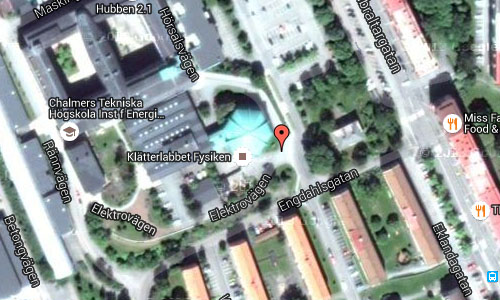
2015 - Kopparbunken Göteborg Maps02

More information on www.fysiken.nu/klatterlabbet, wikipedia.org and chalmersalumni.wordpress.com

Historic Volvo Photography Locations Overview

Central Station on Drottningtorget in Göteborg 🇸🇪

April 4th, 2012

Volvo Photo Locations Part 103
Volvo Photo Locations Overview
bookmark www.volvophotolocations.com today!

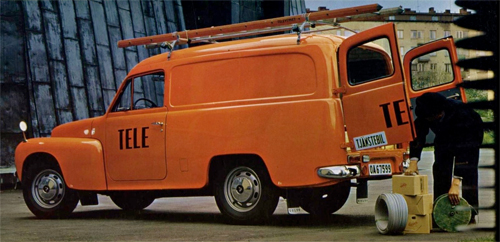
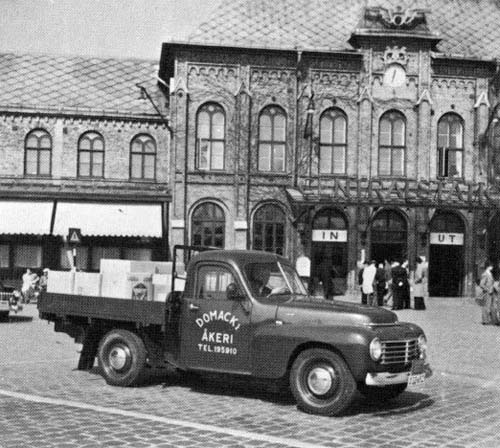
1950 – Volvo P 445 A by Floda at Central Station on Drottningtorget in Göteborg, Sweden 🇸🇪.

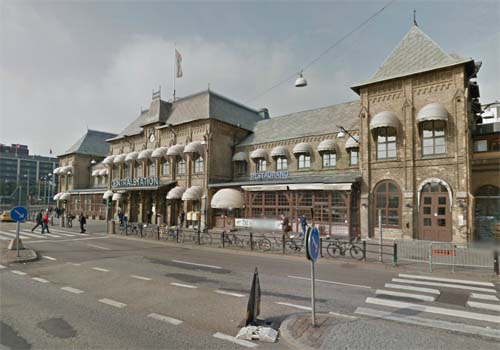
2012 – Central Station on Drottningtorget in Göteborg (Google Streetview)

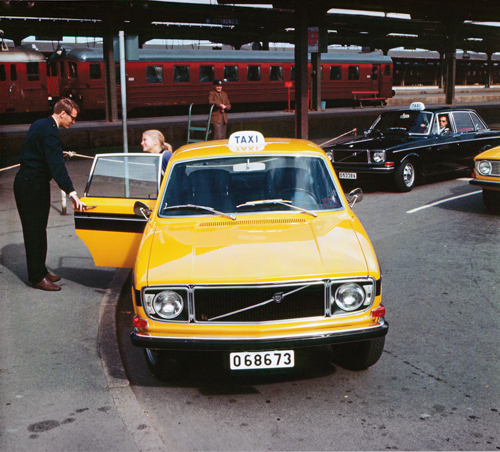
1973 – Volvo 144 Taxi at Central Station on Burggrevegatan in Göteborg Sweden 🇸🇪.

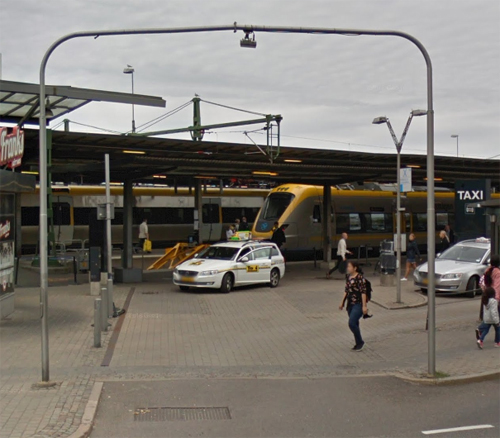
2018 – Central Station on Burggrevegatan in Göteborg (Google Streetview)

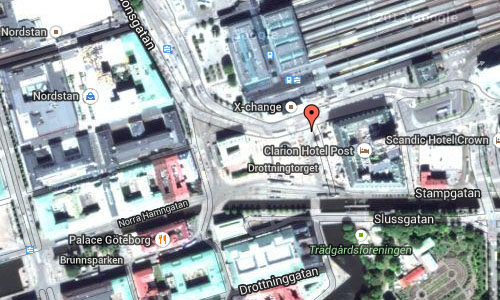
Central Station, Göteborgs centralstation or Göteborg C is the main railway station of Göteborg. The station serves 27 million passengers per year, making it the second largest railway station in Sweden after Stockholm Central Station. The station opened in October the 4th, 1858. The station is situated at Drottningtorget.

Numerous of railways were built across Sweden in the 19th century. One of the first distances was the one between Göteborg and Jonsered. As the railway grew more popular, the need for a station emerged. The Göteborg Central Station was built between the years of 1856-1858. The architect in charge was Adolf Wilhelm Edelsvärd.

Some reconstructions have been made to the station since its opening in 1858. In 1923 a fire destroyed parts of the station, so the interior had to be rebuilt. The current interior design is similar to the 1923 model with wood pillars, glass ceiling and a floor made of limestone.

During the 19th and early 20th century about one million Swedish emigrants passed the station in order to get to the harbour. Their final destination would be America.

central station göteborg maps

More information on wikipedia.org, centralengoteborg.se and www.jernhusen.se

Historic Volvo Photography Locations Overview

Klippan in Göteborg 🇸🇪

April 4th, 2012

Volvo Photo Locations Part 89
Historic Volvo Photography Locations Overview

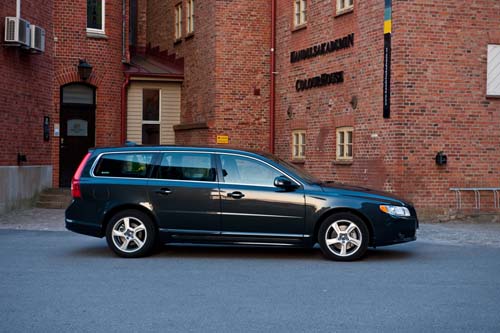
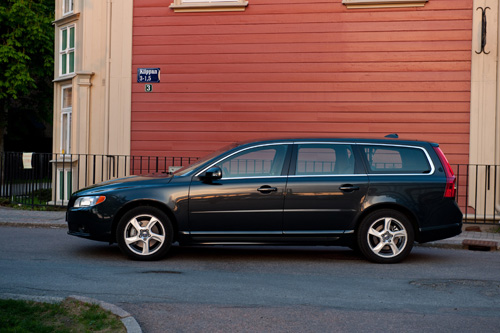
2010 – Volvo V70 at Colourhouse on Klippan in Göteborg, Sweden 🇸🇪.

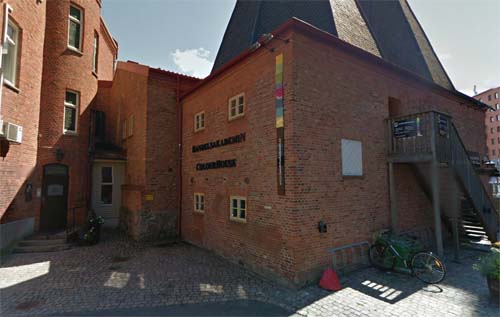
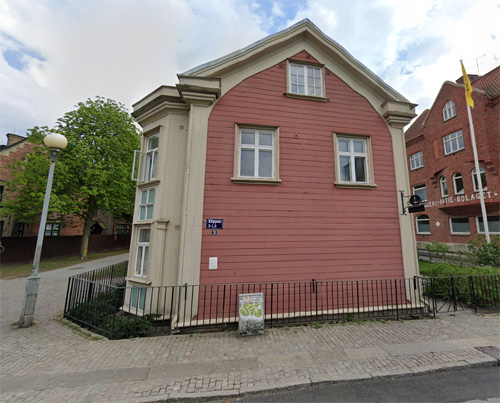
2012 – Klippan in Göteborg (Google Streetview)

2010 – Volvo V70 on Klippan in Göteborg, Sweden 🇸🇪.

2023 – Klippan in Göteborg (Google Streetview)

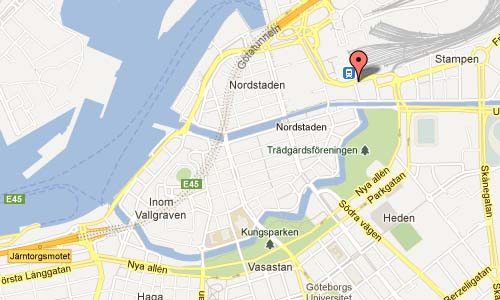
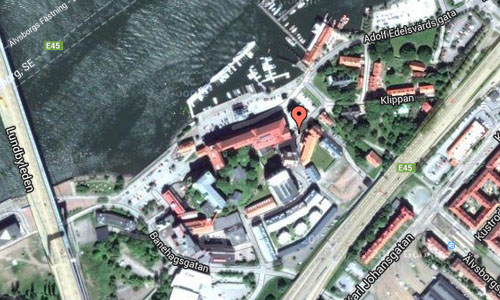
Klippan is an area at the Älvstranden in the western part of Göteborg, close to the Älvsborgsbron. Klippan is located in the city part Majorna.

The name is derived from the little mountain “Lilla Klippan” or “Skinnareklippan”, which is located north east of the old Gamla Älvsborgs fästning. On this little mountain, now here is built the Sankta Birgittas kapell, built by David Carnegie. The large mountain or Stora Klippan is since long ago gone, rocks are all removed.
Klippan is considered to be Göteborgs first real harbor, since it was in those days impossible to get further into the river because it was to shallow. Here goods were taken from the ships and transported further into the city.

In the early 1600s the first ferry link with Hisingen started over the Göta älv river. The ferry went between Klippan and and Färjestaden on the Hisingen side. In connection with the Älvsborg Bridge opening in 1967 the regular ferry service was ended.
At Klippan, the East India Company had its port for all the ships that came back from China.

Interresting things to see here are: Art center Röda sten, Klippans Kulturreservat, Sankta Birgittas kapell and the famous Sjömagasinet restaurant. Also the Novotel Göteborg is located here. In the building on the photo with the Volvo is Handelsakademin ColourHouse.

Klippan in Göteborg Maps

More information on www.rodasten.com, www.sjomagasinet.se and i love goteborg .se

Historic Volvo Photography Locations Overview

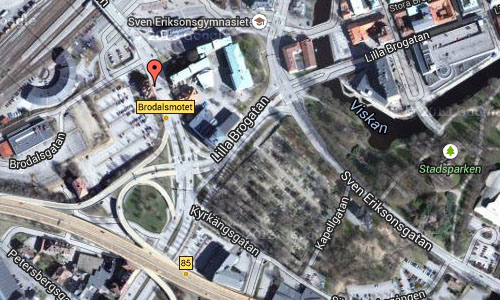
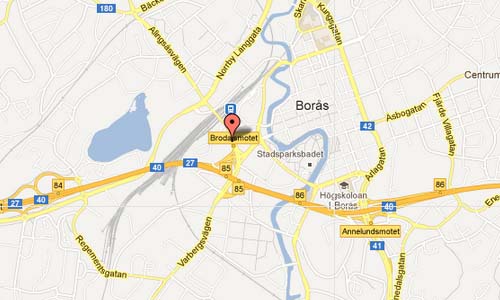
Gina Tricot HQ on Varbergsvägen in Borås 🇸🇪

April 4th, 2012

Volvo Photo Locations Part 95
Historic Volvo Photography Locations Overview

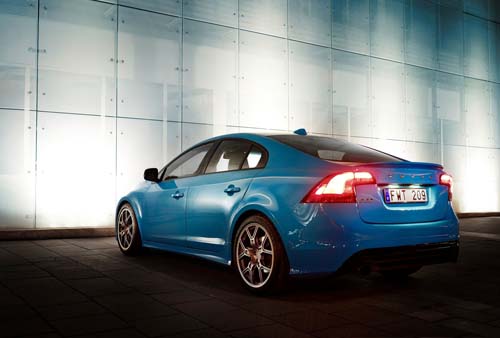
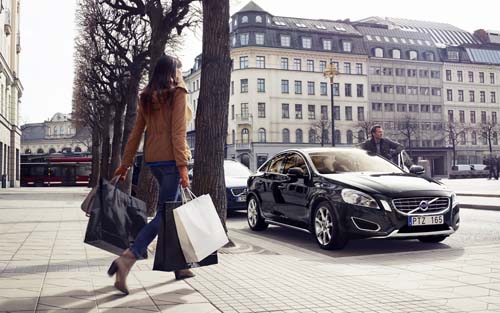
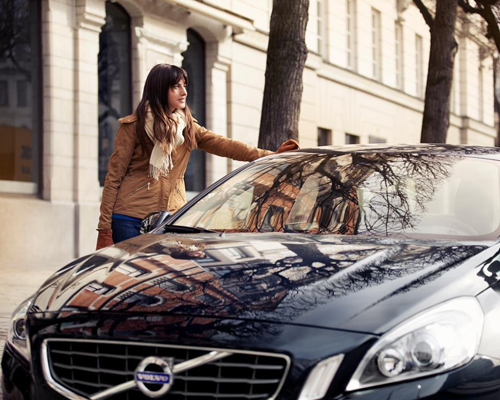
2012 – Volvo S60 Polestar at Gina Tricot HQ on Varbergsvägen in Borås, Sweden 🇸🇪.

2012 – Volvo S60 Polestar at Gina Tricot HQ on Varbergsvägen in Borås, Sweden 🇸🇪.

Gina Tricot HK is located in Borås, Sweden. The headquarters is an inspiring all-glass building, designed by architect Gert Wingårdh. Around 200 employees work here, working in everything from fashion design to marketing and finance.

Borås combines all the wealth of choice of a big city with the convenience of a small town.

As the second largest municipality in western Sweden, Borås offers a rich choice of public services, trade and commerce, cultural events, recreation and education, as well as a highly specialized labour market. Proximity to both Gothenburg and Landvetter International Airport is a major asset.

Borås is the Swedish centre for textiles and clothing with several famous companies, and a city of commerce with its 1 500 import and export companies. A lot of well-known mail order and e-commerce companies are located in Borås. Supporting this booming commerce is a large number of companies working with logistics, distribution and marketing.

The University of Borås offers courses and research in fields such as computer science, economics, textiles and engineering. Borås has a rich cultural life and has become famous for its many sculptures. There is also a symphony orchestra, a professional theatre cast, a renown art’s museum, and more.

The new building on the picture above is the new headquarters of Gina Tricot.

As Scandinavia’s fastest growing fashion retailer for women, Gina Tricot has achieved a turnover of SEK 2.5 billion in 2012. It is shared across about 175 stores in five countries and online sales.

The success was made possible by our own designs and short lead times, but above all by an exceptionally high turnover speed, i.e. the industry term for how short a time a garment is available in the store.

varbergsvägen maps2

More information on www.boras.se, www.ginatricot.com and www.polestar.se

Historic Volvo Photography Locations Overview

Norrmalmstorg in Stockholm 🇸🇪

April 4th, 2012

Volvo Photo Locations Part 88
Historic Volvo Photography Locations Overview

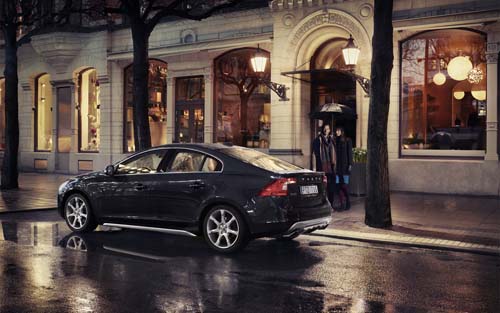
2013 – Volvo S60 on Norrmalmstorg in Stockholm 🇸🇪

2013 – Volvo S60 on Norrmalmstorg in Stockholm

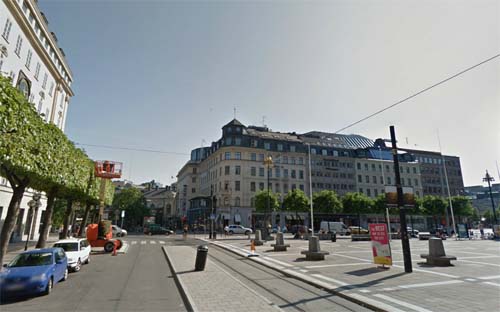
2012 – Norrmalmstorg in Stockholm (Google Streetview)

2013 – Volvo S60 on Norrmalmstorg in Stockholm 🇸🇪

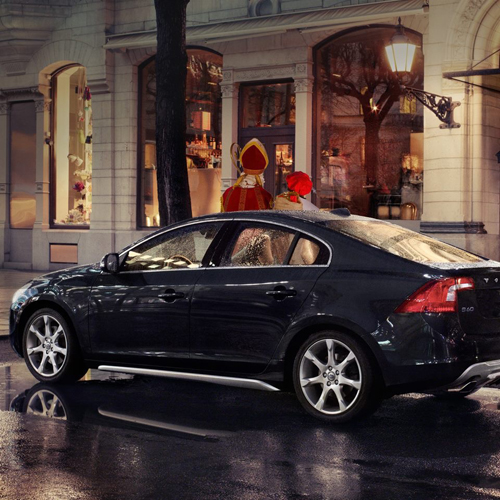
2013 – Volvo S60 at Norrmalmstorg in Stockholm (with Dutch Sinterklaas and Piet)

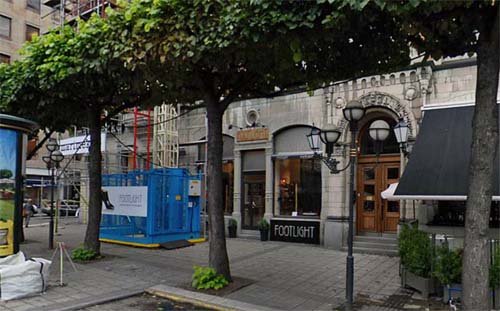
2012 – Norrmalmstorg in Stockholm (Hitta.se Gatubild)

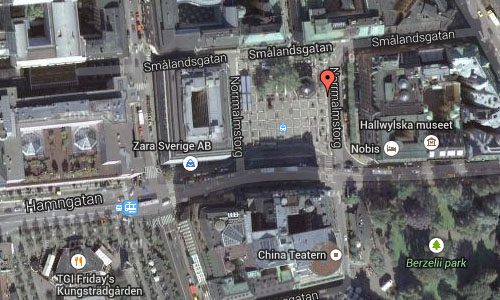
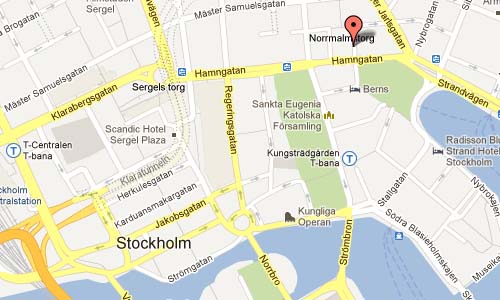
Norrmalmstorg is a square in central Stockholm. The square connects shopping streets Hamngatan and Biblioteksgatan and is the starting point for tram travellers with the Djurgården line. Close to the southwest is the park Kungsträdgården.

In the Swedish edition of Monopoly, Norrmalmstorg is the most expensive lot.

The square is famous for the Norrmalmstorg robbery which gave name to the Stockholm syndrome.
The Norrmalmstorg robbery was a bank robbery and hostage crisis best known as the origin of the term Stockholm syndrome. It occurred at the Norrmalmstorg eastern square in 1973. It was the first criminal event in Sweden covered by live television.

The most widely publicized myth about the robbery, or rather about the Stockholm syndrome, was that one or both robbers became engaged to their captives. This is not true, and may stem from a false friend in the phrase “att engagera sig i någon”. In Swedish this means “taking interest in someone”. It does not mean “to become engaged to someone” (which would be “att förlova sig med någon”).

Norrmalmstorg map2

More information on wikipedia Norrmalmstorg_robbery.

Historic Volvo Photography Locations Overview

Copperhill Mountain Lodge in Åre 🇸🇪

April 4th, 2012

Volvo Photo Locations Part 97
Historic Volvo Photography Locations Overview

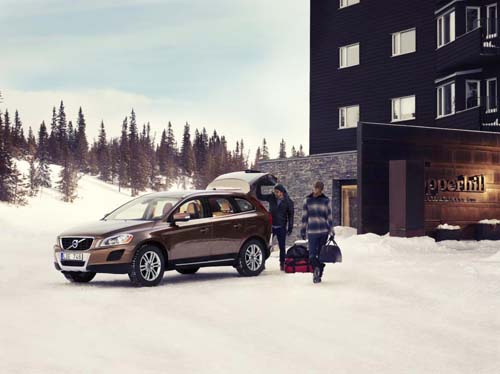
2012 - Volvo XC60

2012 – Volvo XC60

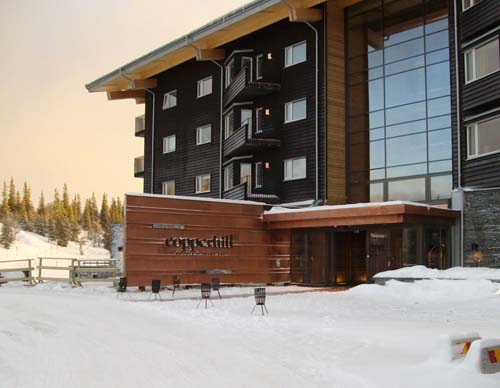
2012 – Copperhill Mountain Lodge in Åre

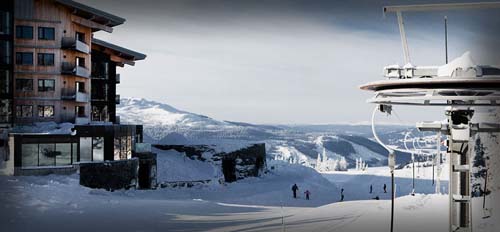
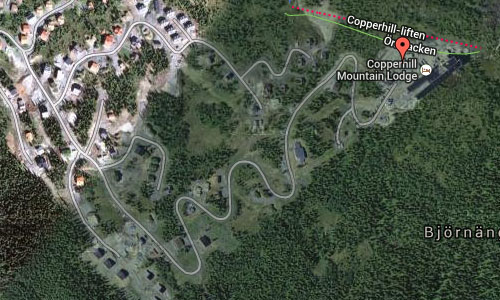
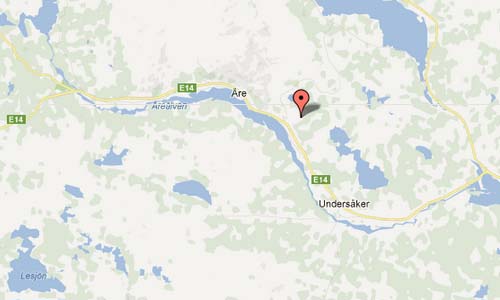
The Copperhill Mountain Lodge is a five-star hotel on the top of the Förberget Mountain in Åre, Sweden. The hotel opened on December 8, 2008, and is currently one of five hotels in Sweden, and the only mountain hotel in Scandinavia referred to as a Design Hotel. The hotel has 112 rooms and suites, with a total of 420 regular beds and 160 extra beds. It is directly connected to the Åre ski area with its own platter lift, the Copperhill Express.

The hotel is designed by American architect Peter Bohlin. It was originally supposed to consist of co-op apartments, but there was only little interest from buyers. In September 2007, construction was suspended as the main investor, Vanilla Ventures, had financial problems. Dutch venture capitalists Peter Cat and Frans Scholten later entered the project under condition that Vanilla Ventures dropped out of the project.

Since September 2009 the hotel is runned by Nordic Choice Hotels which is owned by Norwegian Petter A Stordalen. Copperhill Mountain Lodge is a member of Design Hotels™.

2012 – Copperhill Mountain Lodge in Åre

Åreskutan rests in a trough of copper ore. The first copper finds were made in the middle of the 18th century; mining soon began and was to continue over three centuries. In the Fröå area, on Åreskutan’s eastern slopes, a mining village with almost 200 inhabitants grew and flourished. Gustafsgruvan was the first mine, followed by Drottninggruvan and Carlsgruvan. The last mining period was 1909–1919 and was run by a newly-formed mining company in collaboration with American backers, the Duluth-Huså Copper Mines Company. One can still hear the whispers of history, and places of cultural and historical interest bear witness to an era of gleaming copper, riches and hard work.

copperhill mountain lodge maps2

More information on www.copperhill.se, www.are360.com and www.designhotels.com
Historic Volvo Photography Locations Overview

Lilla Bommen in Göteborg 🇸🇪

April 4th, 2012

Volvo Photo Locations Part 94
Historic Volvo Photography Locations Overview

1958 – Volvo Amazon with English men on Lilla Bommens Torg in Göteborg, Sweden 🇸🇪.
This photo was made for the international launch of the Amazon. Very likely that the photo was made at Lilla Bommens Torg.

1966 – Volvo 1800 S at Barken Viking on Lilla Bommens Torg in Göteborg, Sweden 🇸🇪.

1993 – Volvo 240 Tack on Lilla Bommens Torg in Göteborg, Sweden 🇸🇪.

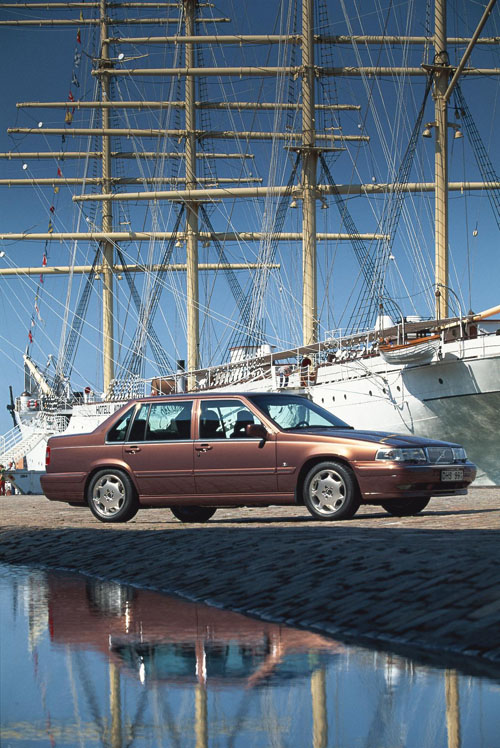
1997 – Volvo S90 on Lilla Bommens Torg in Göteborg, Sweden 🇸🇪.

1997 – Volvo S90 on Lilla Bommens Torg in Göteborg, Sweden 🇸🇪.

1997 – Volvo S90 on Lilla Bommens Torg in Göteborg, Sweden 🇸🇪.

1997 – Volvo S90

1997 – Volvo S90 on Lilla Bommens Torg in Göteborg, Sweden 🇸🇪.

2012 – Barken Viking at Lilla Bommen in Göteborg (Google Streetview)

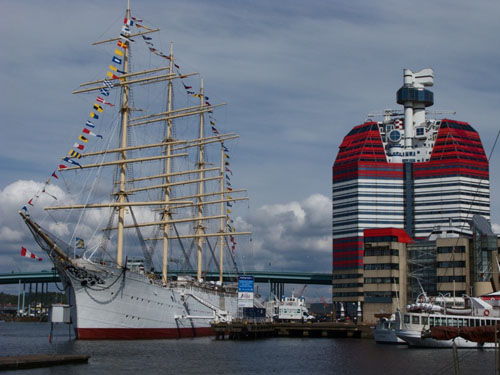
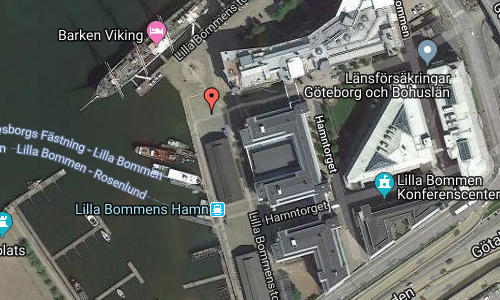
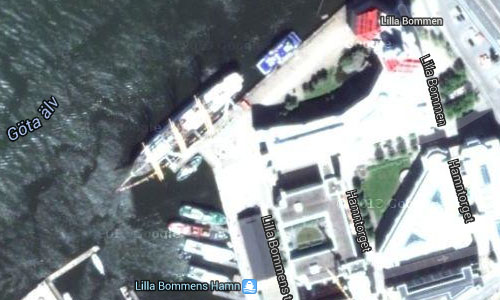
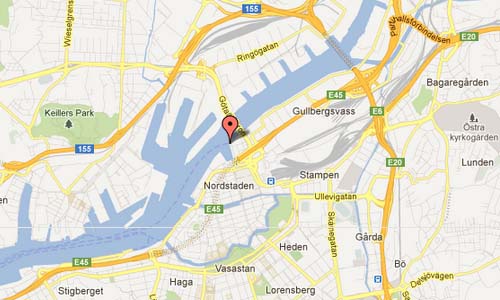
Lilla Bommen is a marina in the city center of Göteborg, at the edge of the Göta Älv, but also the name of a large area of ​​land around the harbor. The port is considered to originate in the 1640. At the west side of the marina lies the Göteborg Opera that was completed in 1994. At the east side of the marina is an office area with high-rise which also bears the name Lilla Bommen but popularly known as Skanskaskrapan or lipstick. The Barken Vikingp is located east of Lilla Bommen. The marina was completed in 1860, and was 525 meters long with a water depth of 3.5 meters.

The Viking (better known by the ship type as a prefix, Barken Viking) is a four-masted steel barque, built in 1906 by Burmeister & Wain in Copenhagen, Denmark. She is reported to be the biggest sailing ship ever built in Scandinavia.

Barken Viking at Lilla Bommen in Göteborg

Barken Viking at Lilla Bommen in Göteborg

Viking was originally built as a sail training ship for the rapidly growing Danish merchant fleet. At that time, seaworthiness and cargo capacity were given top priority.

Viking came to Göteborg, Sweden permanently in 1950, as a home for various shipping organizations, and later became a school of seamanship. Today she is moored in the Göteborg guest harbor as hotel “Barken Viking”. The owner is the Liseberg amusement park.

lilla bommen göteborg02

More information on wikipedia.org, www.stromma.se and liseberg.se

Historic Volvo Photography Locations Overview

Atlanterhavsveien or Atlantic Road in Møre og Romsdal – N 🇳🇴

April 4th, 2012

International Volvo Photo Locations Part 192
Click for Volvo Photography Locations Overview

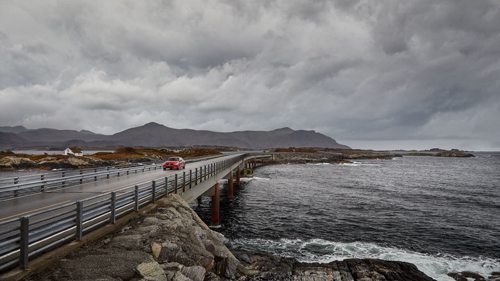
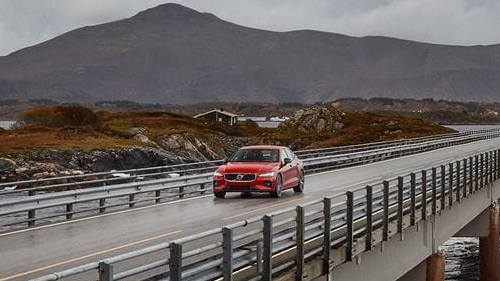
2019 – Volvo S60 T6 AWD R-Design on Hulvågbrua on Atlanterhavsveien in Norway 🇳🇴

2019 – Volvo S60 T6 AWD R-Design on Hulvågbrua on Atlanterhavsveien in Norway 🇳🇴

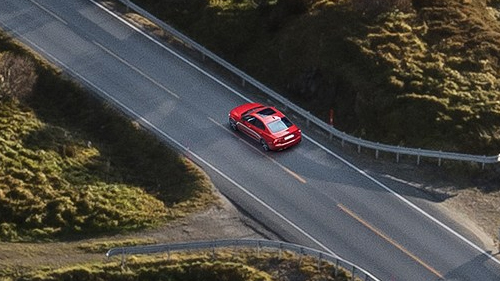
2019 – Volvo S60 T6 AWD R-Design at Hallsteinsundet on Sør Skarvøya on Atlantic Road in Vevang Norway 🇳🇴

2019 – Volvo S60 T6 AWD R-Design at Hallsteinsundet on Sør Skarvøya on Atlantic Road in Vevang Norway 🇳🇴

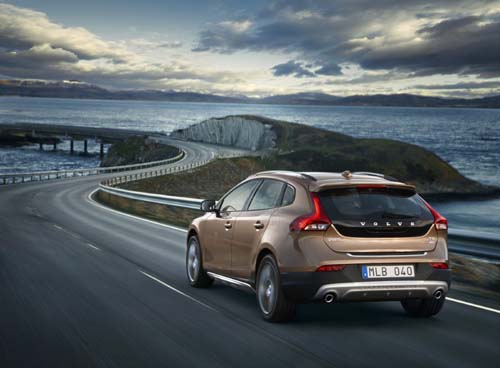
2013 – Volvo V40 Cross Country

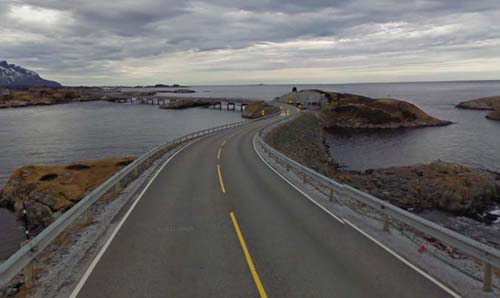
2012 – Atlanterhavsveien near Hulvabrua in Norway (Google Streetview)

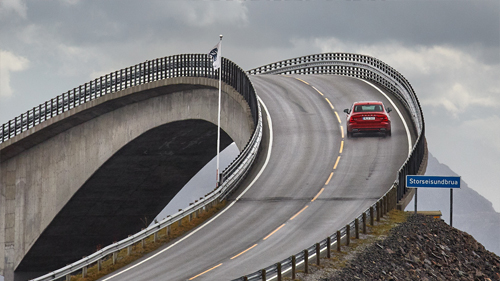
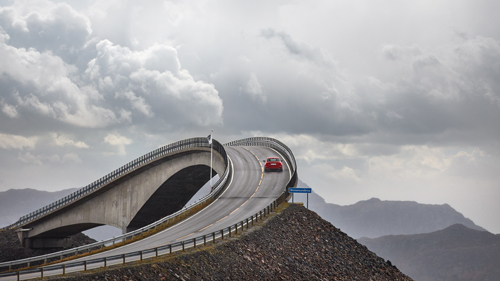
2013 – Volvo V40 Cross Country on Storseisundetbrua on Atlantic Road

2019 – Volvo S60 T6 AWD R-Design on Storseisundetbrua on Atlantic Road in Norway

2019 – Volvo S60 T6 AWD R-Design on Storseisundetbrua on Atlantic Road in Norway

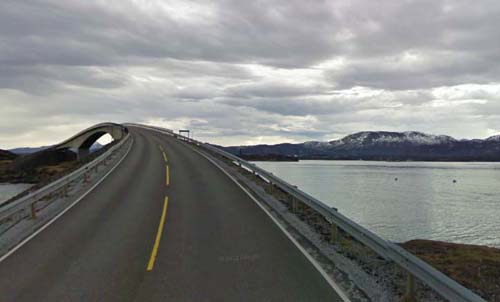
2012 – Atlanterhavsveien near Sturseisundbrua in Norway (Google Streetview)

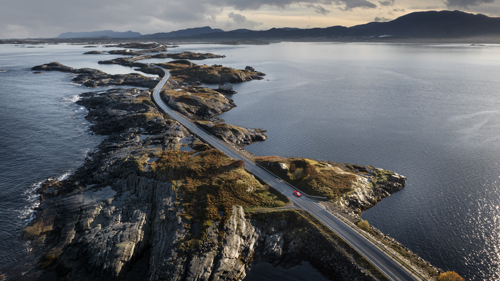
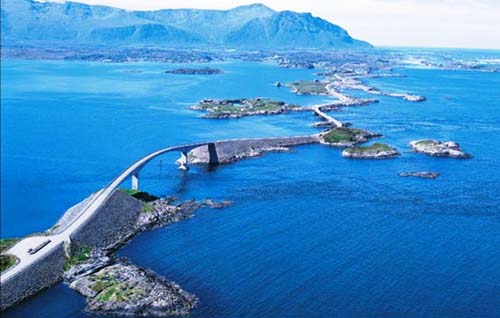
The Atlanterhavsveien or the Atlantic Ocean Road is a spectacular way to get from the mainland coast, jumping from island to island, to reach Averøy. It is a fantastic journey of twisting bridges across the sea that shortens travel times while at the same time providing fantastic views. It is no coincidence that this road is the second most visited tourist destination in Norway.

The main milestone of the road is the precisely-built Storseisundet Bridge, the longest of all (260 meters = 853 ft), which has a dramatic elevated curve to protect travelers from the surging sea. Such is the importance of this road that the Norwegians chose it as the century’s building of the country. In
addition, the British newspaper The Guardian picked it as the best road trip in the world.

Located in the western fjord area, at certain times of the year seals and even whales can be sighted. Fishing is one of the biggest attractions of the area. So much so that many people fish on the highway bridges, a fact with which travelers should be careful when driving.

Since 2009, the Atlantic Road continues from Averøy to Kristiansund through a toll tunnel named Atlanterhavstunnelen (‘Atlantic Tunnel’).

Its construction was extended for six years (almost 1.5 Km= 0.9 miles per year), but since its opening in 1989, it has become the second most visited coastal road by tourists, going on to win the 2005 award for best Norwegian construction.

To follow the road it is best to get to Molde and then take Highway 64, which is precisely the Atlanterhavsveien. The journey from the historic city of Bergen to Molde has 450 km (280 mi), covering the entire area of the fjords, no doubt an awesome ‘road trip’. Oslo is another 600 kilometers (373 mi) away.

The road has become a popular place for the automotive industry to film automotive advertisements; more than ten manufacturers have made television commercials along the route, often depicting the harsh weather.

Atlanterhavsveien seen from the air

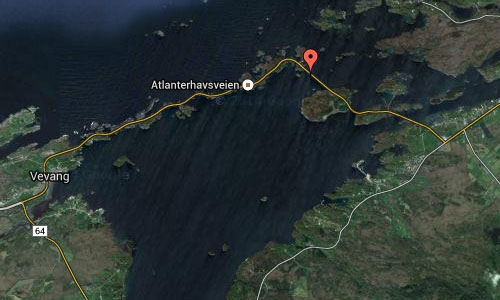
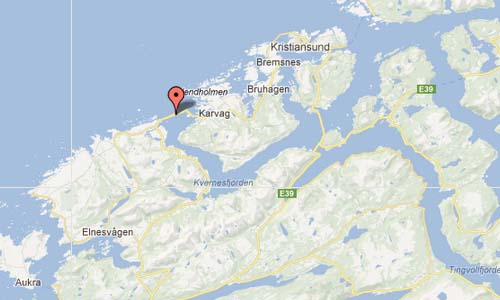
Atlanterhavsveien Maps2

More information on wikipedia.org, visitmolde.com, www.atlanterhavsveien.info and www.theatlanticroad.com

Historic Volvo Photography Locations Overview

Bredgränd in Stockholm 🇸🇪

April 4th, 2012

Volvo Photo Locations Part 102
Historic Volvo Photography Locations Overview

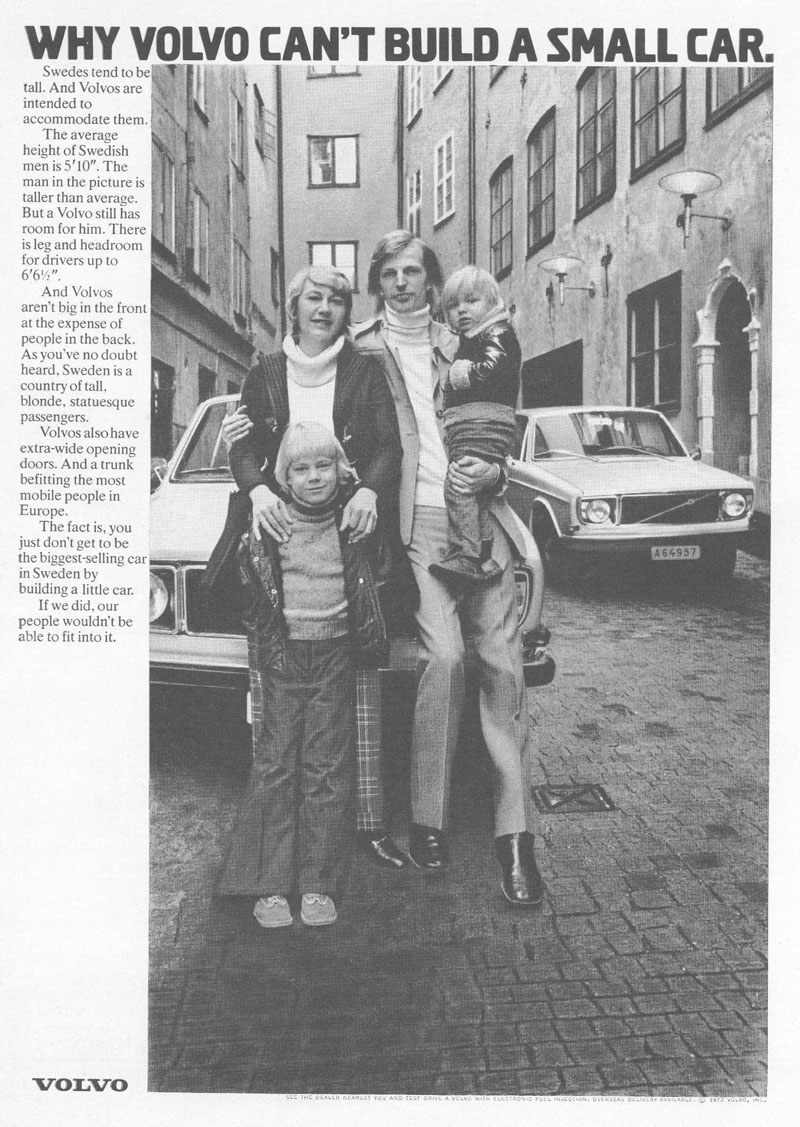
1972 – Volvo 144 on Bredgränd in Gamla Stan, Stockholm, Sweden 🇸🇪.

1972 – Original US advertisement (click to view)

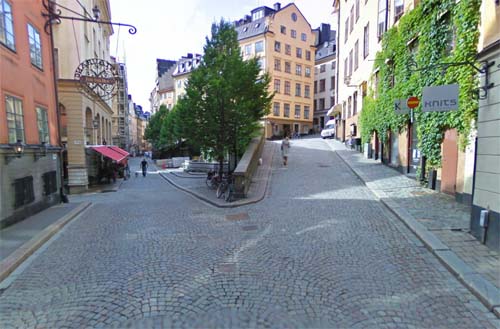
2012 – Bredgränd in Stockholm, Sweden

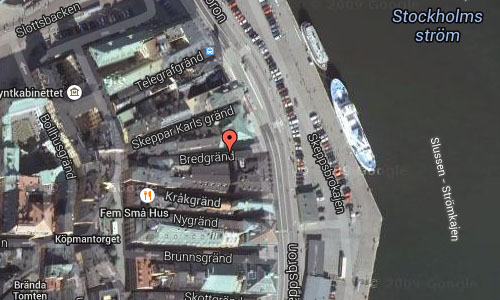
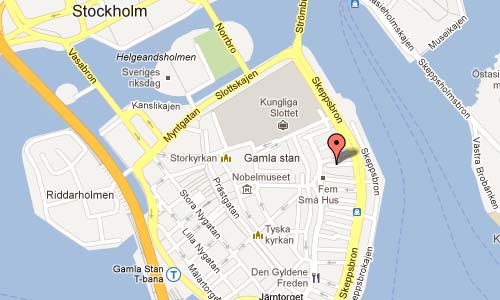
Bredgränd is an alley in Gamla stan in Stockholm. Stretching from Skeppsbron to Österlånggatan, it forms a parallel street to Skeppar Karls Gränd and Kråkgränd.

Bredgränd appears in historical records as östan mur i bredha grandena (“east of the wall in the broad alley”) in 1476 and as Östre Bredgränden (“East Broad-Alley”) in 1570. The alley was called Tunnbindargränden from 1612 (Tunnbindargränd, “The Barrel Binding Alley”) until 1711 when street names were regulated and it was named Bredgränd. It was given the name Bredgränd because it actually is wider than neighbouring alleys closest to the waterfront while the vault in the western end makes the name slightly hilarious.

Archaeological excavations in 1944 unveiled a part of the city wall from the late Middle Ages. This section of the wall was built in stone, two metres at the base, and narrowing off towards the top. Other sections of it were built in brick and occasionally even half-timbered.

bredgränd stockholm maps2

More information on en.wikipedia.org

Historic Volvo Photography Locations Overview

Österlånggatan in Stockholm 🇸🇪

April 4th, 2012

Volvo Photo Locations Part 101
Historic Volvo Photography Locations Overview

1972 – Volvo 144 on Österlånggatan in Gamla Stan, Stockholm, Sweden 🇸🇪.


1972 – Original US advertisement (click to enlarge)

2012 – Österlånggatan in Stockholm (Google Streetview)

Österlånggatan is a street in Gamla stan, the old town of Stockholm, Sweden. Stretching southward from Slottsbacken to Järntorget, it forms a parallel street to Baggensgatan and Skeppsbron. Major sights include the statue of Saint George and the Dragon on Köpmanbrinken and the restaurant Den Gyldene Freden on number 51, established in 1722 and mentioned in Guinness Book of Records as one of the oldest with an unaltered interior.

Like Västerlånggatan, Österlånggatan used to pass outside of the city walls and was for many centuries one of the city’s major streets. When Skeppsbron, the broad street and quay running to the east of Österlånggatan, was created during the 17th century, Österlånggatan lost much of the importance it used to have. Compared to Västerlånggatan, Österlånggatan is today a relatively quiet street notwithstanding the many restaurants and shops, in sharp contrast to the neighbourhood when the street formed the backyard of the dock district, crowded with sailors, taverns, travellers, and traders.

österlånggatan map stockholm Maps2

More information on en.wikipedia.org

Historic Volvo Photography Locations Overview