home

[ Content | Sidebar ]

Strömgatan in Stockholm 🇸🇪

April 4th, 2012

Volvo Photo Locations Part 100
Historic Volvo Photography Locations Overview

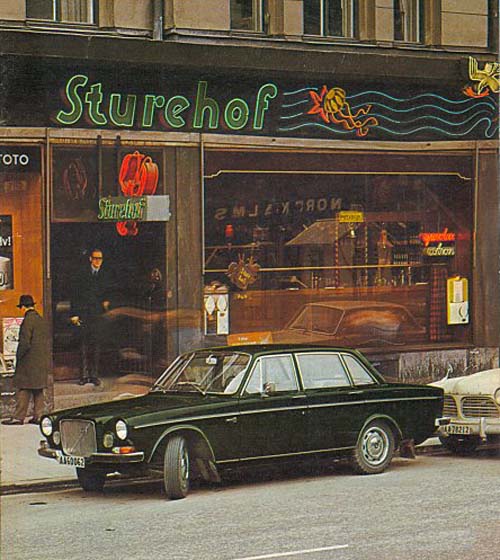
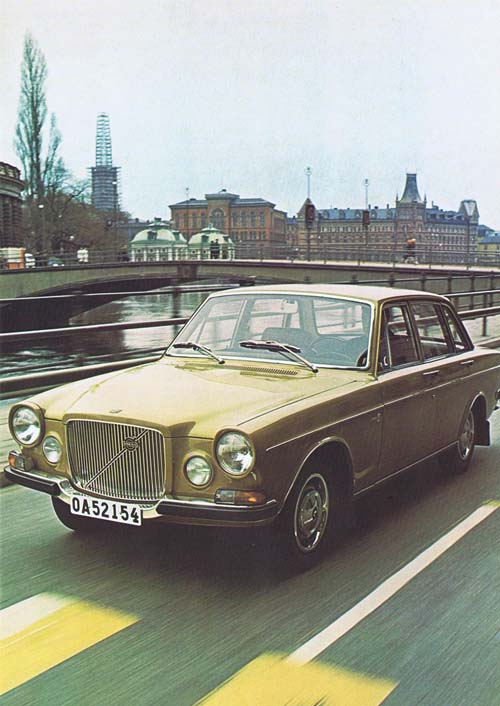
1970 – Volvo 164 on Strömgatan in Stockholm, Sweden 🇸🇪.

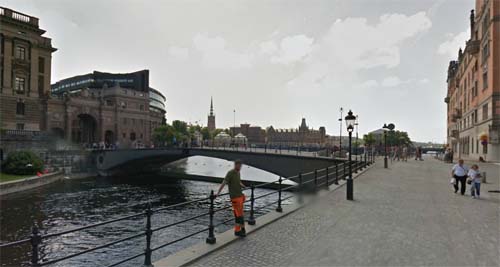
2012 – Strömgatan in Stockholm (Google Streetview)

Strömgatan is a street in central Stockholm. On Strömgatan walking, you’ll pass a number of interesting historical sites and buildings.

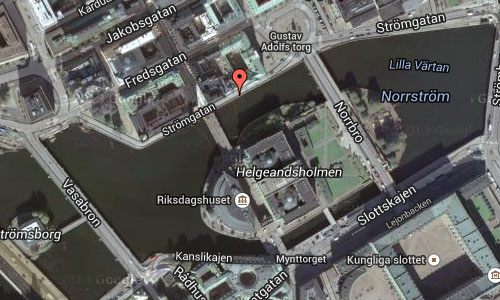
Walking man Strömgatan from east to the west leads past the Strömbron and Karl XII:s torg, then tangent to the Kungliga Operan and Gustav Adolfs torg with Arvfurstens palats. Here are fed ducks and other water birds in winter.

In the south, you get a nice look at Stockholms slott och Helgeandsholmen with the Riksdagshuset (Parliament House). To the north lies the government quarter with the headquarters and the prime minister’s official residence, Sagerska huset (Strömgatan 18). Next door on Strömgatan 20, is Adelswärdska huset, built in 1890 and designed by architect Isak Gustaf Clason.
It crossed the street of Drottninggatan end through Riksbron ends in Riksgatan. Strömgatan ends at Centralpalatset, built in 1898 and designed by architect Ernst Stenhammar.

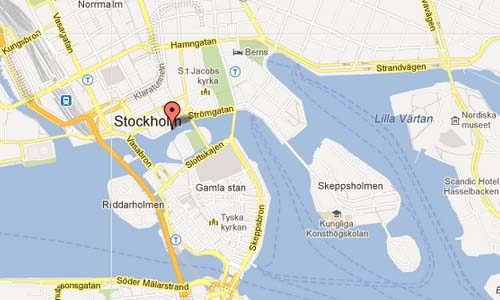
strömgatan stockholm maps2

More information at wikipedia.org

Historic Volvo Photography Locations Overview

Bohus fästning in Kungälv 🇸🇪

April 4th, 2012

Volvo Photo Locations Part 99
Historic Volvo Photography Locations Overview

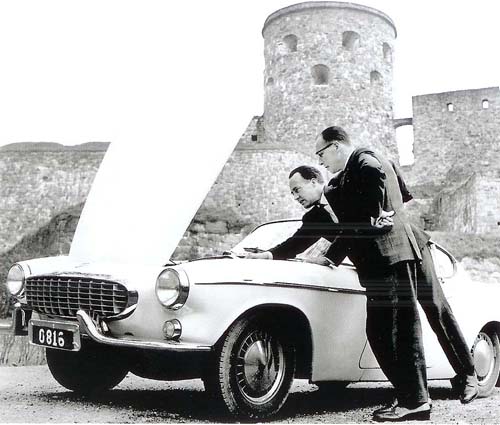
1961 – Volvo P1800 at Bohus Fästning on Fästningholmen in Kungälv, Sweden 🇸🇪.

1962 – Volvo ÖV4 (prototype from 1926 with Gunnar Berg from Volvo behind the wheel) at Bohus Fästning on Fästningholmen in Kungälv, Sweden 🇸🇪.

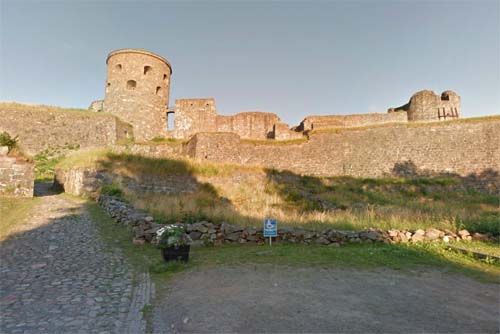
2012 – Bohus fästning in Kungälv (Google Streetview)

Bohus fästning lies along the old Norwegian – Swedish border in Kungälv, Bohuslän north east from Hisingen where the Göta river splits into two branches (20 kilometres north of Göteborg). It commands its surroundings from a cliff 40 metres high, with the river forming a natural moat around it.

Bohus fortress is a remarkable place. It has been under seige by Swedish, Danish and Norwegian forces at least 14 times, but to no avail. According to legend, a faithful dog put the first stone in place in A D 1308, making the fortress impossible to conquer.

In the courtyard, you will find the old well that was created by prisoners four hundred years ago, so that the crew would have access to drinking water during prolonged attacks. Toiling in the growing abyss of the well was parallell to the death sentence. Huge quantities of wood were burned directly on the rock face, enabling the prisoners to scrape off a few pieces of granite, cracked by the heat. Then the procedure was repeated until water was struck, some 20 meters down.

The events and personalities of Bohus fortress make it a masterpiece of Nordic cultural heritage, the local historic vortex is made of kings, queens, saints, pirates and witches. Today, thousands of visitors explore the impressive ruins every year, fascinated by stories of war, betrayal and imprisonment.

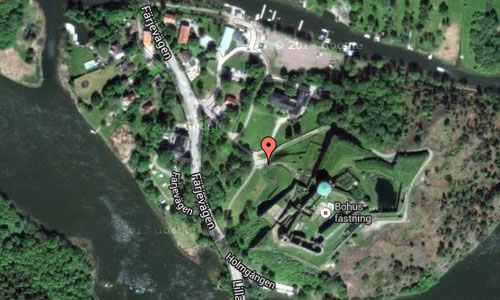
Bohus fästning Maps

More information on www.bohusfastning.com and wikipedia.org

Historic Volvo Photography Locations Overview

Restaurant Sturehof on Stureplan in Stockholm 🇸🇪

April 3rd, 2012

Volvo Photo Locations Part 52

Historic Volvo Photography Locations Overview

1969 - Volvo 164 at Restaurant Sturehof on Stureplan in Stockholm, Sweden 🇸🇪.
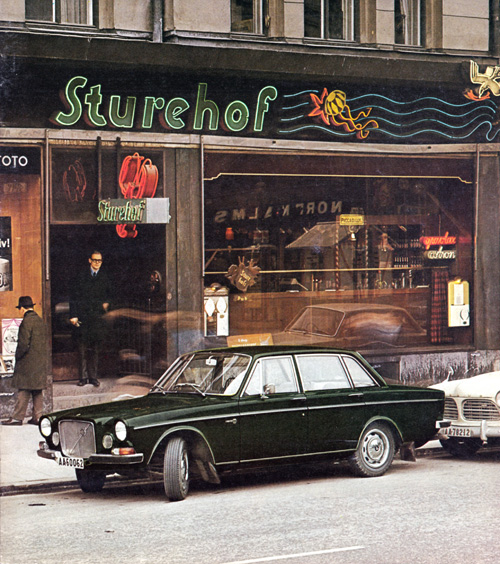
1969 – Volvo 164 at Restaurant Sturehof on Stureplan in Stockholm, Sweden 🇸🇪.
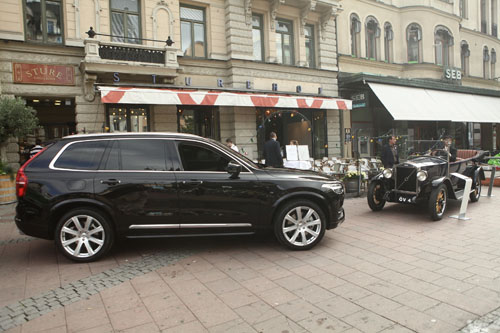
2014 - Volvo XC90 and Volvo ÖV4

2014 – Volvo XC90 and Volvo ÖV4 at Restaurant Sturehof on Stureplan in Stockholm, Sweden 🇸🇪.
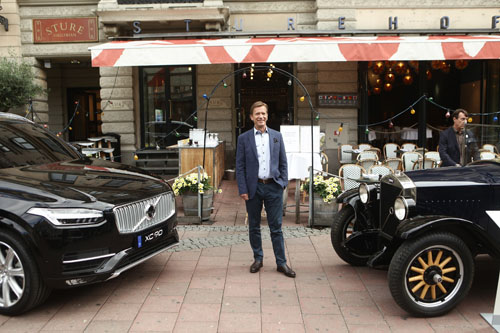
2014 - Volvo XC90 and Volvo ÖV4

2014 – Volvo XC90 and Volvo ÖV4 at Restaurant Sturehof on Stureplan in Stockholm, Sweden 🇸🇪.
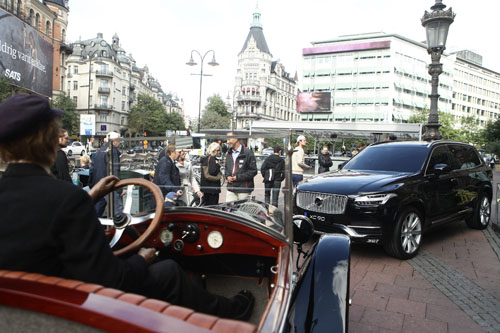
2014 - Volvo XC90 and Volvo ÖV4

2014 – Volvo XC90 and Volvo ÖV4 at Restaurant Sturehof on Stureplan in Stockholm, Sweden 🇸🇪.
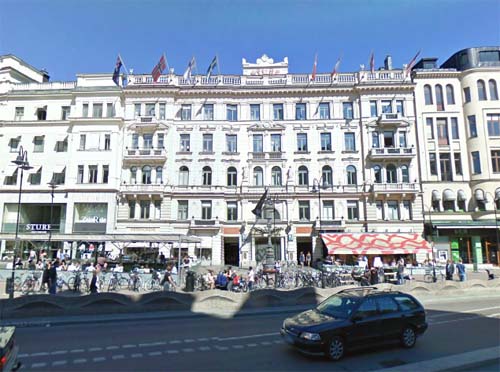
2012 - Restaurant Sturehof on Stureplan in Stockholm (Google StreetView)

Restaurant Sturehof is a dynamic and generous scene where we serve classical food of finest quality, with focus on seafood. Sturehof is a high class restaurant, without being luxurious, available for a wide range of people.

Steeped in tradition, Sturehof is at the same time a modern restaurant classic on par with famous brasseries in New York and Paris. Sturehof is also a stage for art exhibitions, concerts and artist performances. Our audience is a glorious mix of ages, origins, professions, and interests – in every conceivable way.

Stureplan in Stockholm is a high-end public square in central Stockholm, between Norrmalm and Östermalm. The square connects the major streets Kungsgatan, Birger Jarlsgatan and Sturegatan. The buildings around the square house offices of banks and other financial institutions, as well as several corporate headquarters.

Some of the country’s most famous and expensive restaurants and bars are located in the area around Stureplan. Some examples are Sturehof, Spy Bar, Riche, Laroy, Hell’s Kitchen, East and Sturecompagniet. Exclusive fashion houses with shops in the area include Versace, Hugo Boss, Gucci, and LV.
Here you also find the Sturegallerian mall and the Scandic Anglais hotel, part of the Scandic Hotels chain.

In Sweden, Stureplan has also become a well-known symbol for exclusivity since the major refurbishments during the 1980s. Known as an area with many expensive, luxurious bars and restaurants, it is considered a playground for upper-class youth, celebrities, young business executives and the hipper, more recent members of the Swedish Royal Family.

For Volvo fans, Restaurant Sturehof on Stureplan has a special meaning. It was here on july 25 in 1924 where Volvo founders Assar Gabrielsson and Gustav Larson decided to start together Volvo, over a plate of lobsters (kräftskiva)….

In 2014, Volvo wrote the following press release about this Volvo Photo Location:

The crabs, Sturehof and the creation of Volvo

A restaurant at Stureplan in Stockholm and Swedish crayfish came to form two important components in the creation of a Swedish world industry.
Today is 90 years since Assar Gabrielsson and Gustaf Larson decided to start Volvo over a plate of crayfish at the Sturehof restaurant.

The year was 1924. In the summer, J Edgar Hoover had been appointed the first head of the FBI and 20-year-old Johnny Weissmuller had won three gold medals in swimming at the Paris Olympics. A few years later he would become Tarzan with the whole world.
For the inhabitants of Stockholm, however, the visit of the American silent film stars Mary Pickford and Douglas Fairbanks had attracted more attention.
In August, the engineer Gustaf Larson passed by the Sturehof restaurant at Stureplan and saw that they had freshly caught crayfish on the menu. At one table he spotted a familiar face. It was Assar Gabrielsson, who also went there for the crayfish or kräftorna.

Their meeting was the start of Volvo.
Gabrielsson and Larson were former colleagues at SKF, the Swedish Kullager Fabriken. 33-year-old Gabrielsson was the economist who was head of SKF’s sales company in France. Larson, who was three years older, was the engineer who also worked with engine construction at Morris in England.
When they met over the crayfish at Sturehof, the conversation turned to cars. At that time, nearly 15,000 cars were imported to Sweden per year, most of them from the USA. Couldn’t Sweden have its own production?

The two entrepreneurs stated that there were four basic conditions in place to start a Swedish car company:
– In the 1920s, Sweden was established as an industrial country with international companies such as SKF, ASEA, Bofors and Husqvarna. There was a fleet of machines that could easily be converted for mass production of car parts
– The wages of the Swedish workers were low in an international comparison
– Domestic access to very high quality steel
– There was a need for cars that were adapted to the bad Swedish roads, which the American competitors with their soft suspension were not

Gabrielsson and Larson concluded a verbal agreement at Sturehof and a month later the work had begun. The nursery in Larson’s floor at Rådmansgatan 59 in Stockholm was transformed into a design office, where he, together with some young technologists from the Institute of Technology, created the first proposals.
In the summer of 1925, Larson and his technicians were finished with the chassis drawings. Gabrielsson sought financiers for the project, but they were difficult to find. He therefore decided to finance the first test series of ten cars with his own saved money.
A year later, however, Gabrielsson had managed to convince SKF to step in as a financier. Factory premises at Hisingen in Gothenburg were also made available to the new company.

The Volvo had started rolling.
On the morning of April 14, 1927, the first car came out of the factory gate. The car was officially called ÖV4 (Open Carriage 4) but colloquially it was called “Jakob”. The world’s first Volvo was born.

Restaurant Sturehof was established in 1897 and has since then been well known for its seafood. Generations of Swedes have, like Gabrielsson and Larson, enjoyed crayfish in the historic premises.
And, if snaps were involved, took a Volvo taxi home.
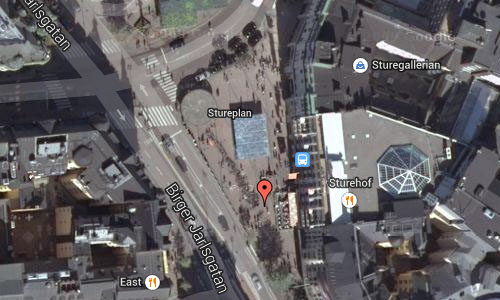
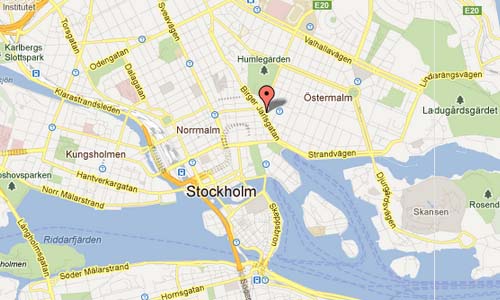
Stureplan in Stockholm Maps2

More information on www.sturehof.com.

Historic Volvo Photography Locations Overview

Drottningholms slott in Stockholm 🇸🇪

April 3rd, 2012

Volvo Photo Locations Part 92
Historic Volvo Photography Locations Overview

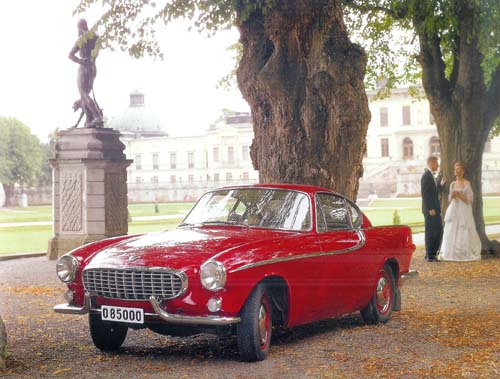
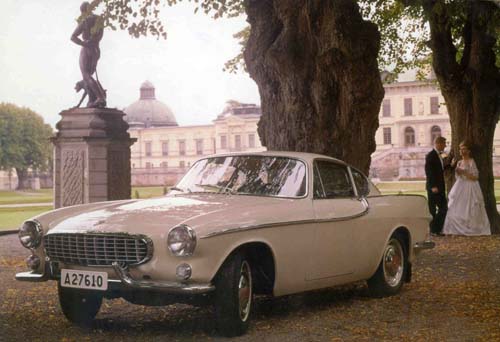
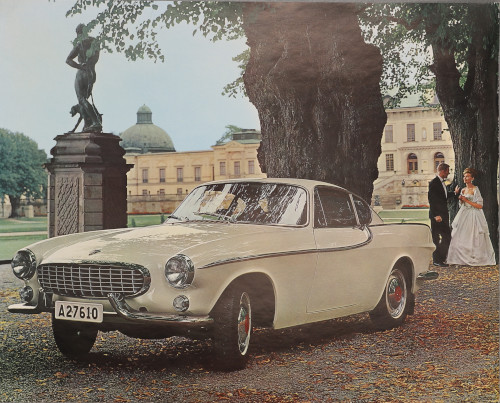
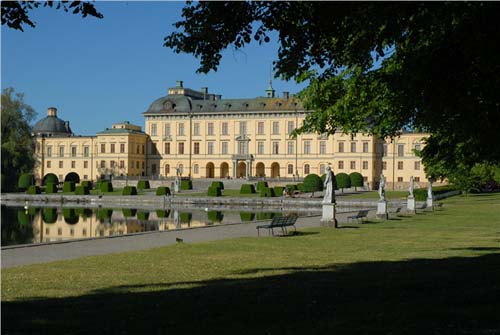
1962 – Volvo P1800 at Drottningholms slott in Stockholm, Sweden 🇸🇪.

1962 – Volvo P1800 at Drottningholms slott in Stockholm, Sweden 🇸🇪.

1962 – Volvo P1800 at Drottningholms slott in Stockholm, Sweden 🇸🇪.

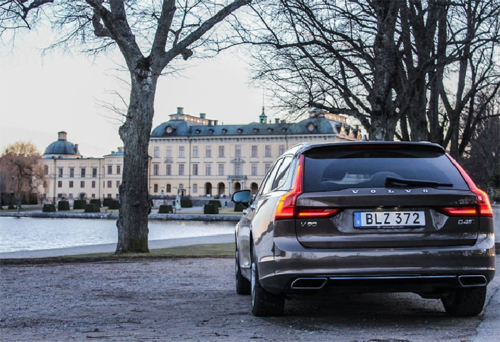
2017 – Volvo V90 at Drottningholms slott in Stockholm, Sweden 🇸🇪.
(Photography by Joel Sandberg for Högsta Växeln)

2012 – Drottningholms slott in Stockholm

The Drottningholms slott (or Drottningholm Palace) is the private residence of the Swedish royal family. It is located in Drottningholm. It is built on the island Lovön (in Ekerö Municipality of Stockholm County), and is one of Sweden’s Royal Palaces. It was originally built in the late 16th century. It served as a residence of the Swedish royal court for most of the 18th century. Apart from being the private residence of the Swedish royal family, the palace is a popular tourist attraction.
The palace is a UNESCO World Heritage Site, mainly because of the Drottningholm Palace Theatre and the Chinese Pavilion at Drottningholm. It was added to the list in 1991. The UNESCO comments were: “The Royal Domain of Drottningholm stands on an island in Lake Mälar in a suburb of Stockholm. With its palace, perfectly preserved theatre (built in 1766), Chinese pavilion and gardens, it is the finest example of an 18th-century northern European royal residence inspired by the Palace of Versailles.”

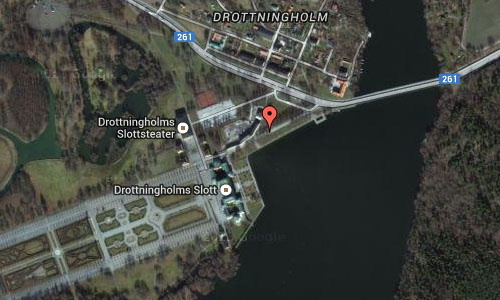
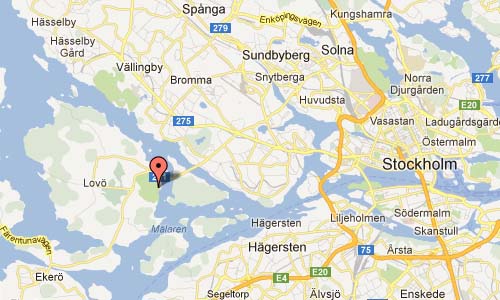
drottningholm maps

More information on wikipedia.org and www.kungahuset.se

Historic Volvo Photography Locations Overview

Sveavägen in Stockholm 🇸🇪

April 3rd, 2012

Volvo Photo Locations Part 91
Historic Volvo Photography Locations Overview

1962 – Volvo P1800

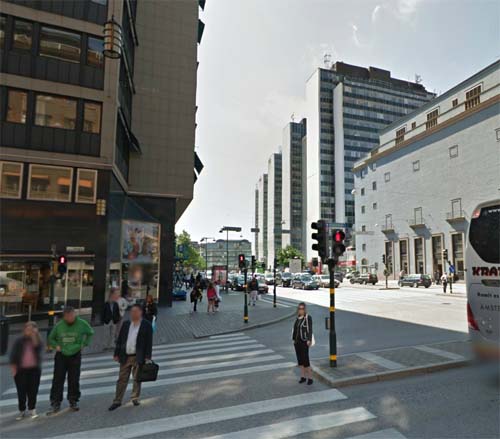
2012 – The corner of Kungsgatan and Sveavägen in Stockholm (Google Streetview)

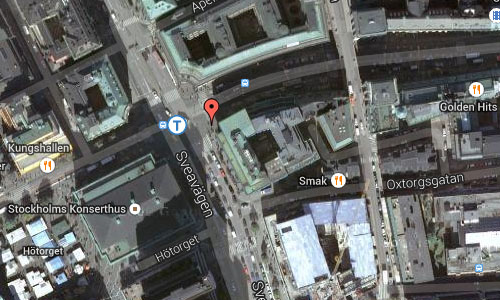
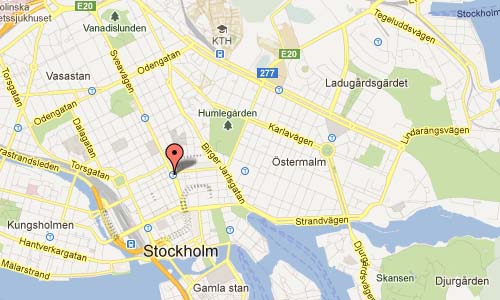
Sveavägen is a major street in Vasastan and Norrmalm in Stockholm, Sweden. The street starts at Sergels torg in the city center and goes north out of the city towards the Haga Park. It is today often known as the busiest road in Sweden.

sveavagen stockholm maps2

More information on sv.wikipedia.org

Historic Volvo Photography Locations Overview

Skårsgatan in Göteborg

April 3rd, 2012

Volvo Photo Locations Part 90
Historic Volvo Photography Locations Overview

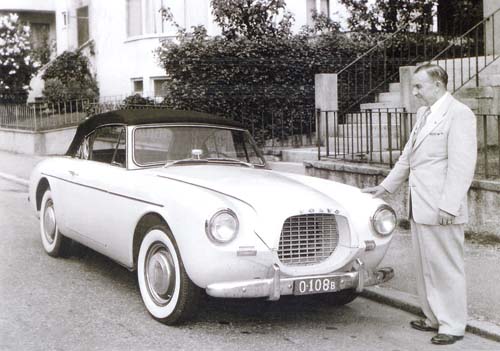
1957 – Volvo P1900 (source)

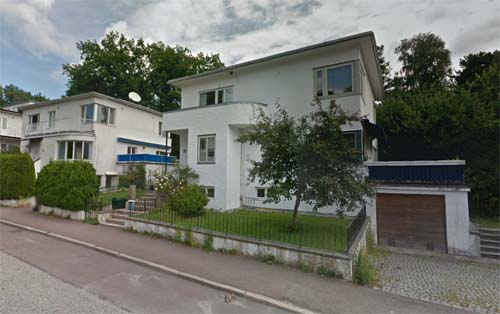
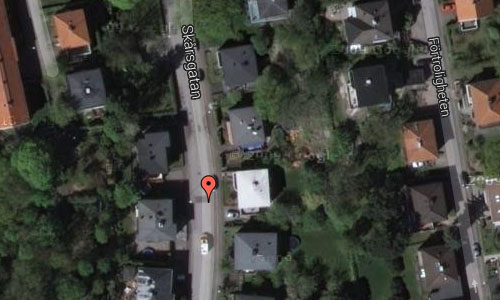
2012 – Skårsgatan in Örgryte, Göteborg

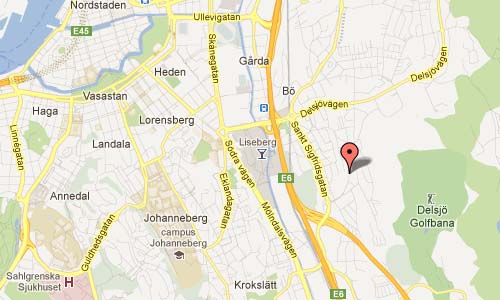
Skårsgatan is a street in the city district Örgryte in Göteborg, on the east side of the E6 motorway. In 1922 the kommun Örgrytte merged with the city Göteborg. The area is characterized by many luxurious villas.

In this street on number 70, the villa pictured above, lived Helmer Pettersson, project manager of the Volvo P1800 project which resulted in the P1800 car. Pettersson is pictured here with the predecessor of the P1800, the P1900 or Volvo Sport. Pettersson’s son, Pelle Pettersson has later been famous as the designer of the P1800 car.

Helmer Pettersson started working for Volvo’s development department in 1942. His first assignment was to construct a wood-burner, which was named Volvo HP 1. The next major task he received was in 1943 when Pettersson had proposed to the then managing director Assar Gabrielsson that Volvo would need a smaller car for the post-war market. Together with the project manager and engineer Eric Jern and Axel Roos, they draw a small passenger car, later to be known as the PV 444. The rest is history…

Pettersson was also the designer of the “HP-hytten” of plywood, used for several models, including the Volvo L420 Snabbe truck that he developed in 1951. Later in 1953, as an consultant, he created the ‘gangster hat’ an accesory to the front window for the PV 444. Earnings from this project went to the study of his son Pelle Petterson’s at the Pratt Institute in New York.

Helmer Pettersson was a long time employee at Volvo, where he also was very important as a project manager in the development of the Volvo P1800, where his son, Pelle Petterson was given the opportunity to design with Italian designers in Turin. In 1956 Pettersson ended his employment at Volvo and went on to become their own consultant. He became “volvo retired” in 1961, and ran his own design firm called Modern Design with his son Pelle Pettersson.

skärsgatan goteborg maps2

More information on wikipedia.org Helmer_Pettersson, wikipedia.org Pelle_Petterson and www.pellepetterson.se

Historic Volvo Photography Locations Overview

Direktörsvillan at Trädgårdsföreningen in Göteborg 🇸🇪

April 2nd, 2012

Volvo Photo Locations Part 115
Historic Volvo Photography Locations Overview

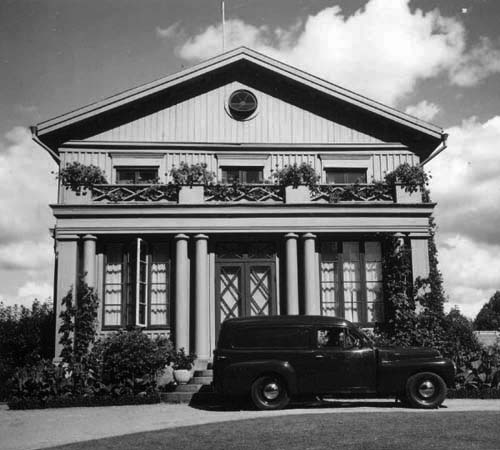
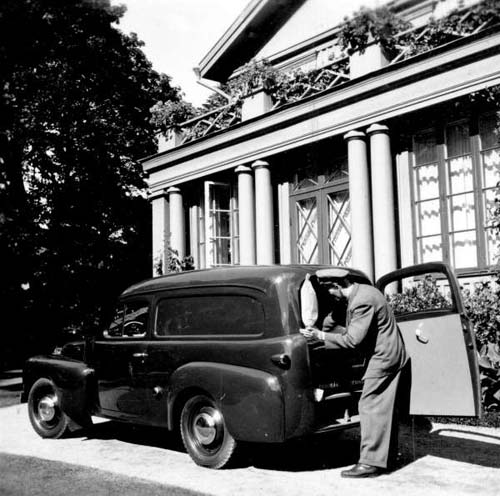
1954 - Volvo PV445

1950 – Volvo PV445 by ASJ (AB Svenska Järnvägsverkstäder) at Direktörsvillan in Trädgårdsföreningen in Göteborg, Sweden 🇸🇪.

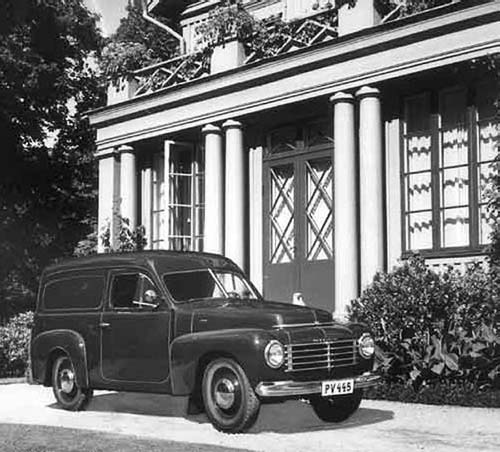
1954 - Volvo P445

1950 – Volvo P445 by ASJ (AB Svenska Järnvägsverkstäder) at Direktörsvillan in Trädgårdsföreningen in Göteborg, Sweden 🇸🇪.

1954 - Volvo P445

1950 – Volvo P445 by ASJ (AB Svenska Järnvägsverkstäder) at Direktörsvillan in Trädgårdsföreningen in Göteborg, Sweden 🇸🇪.

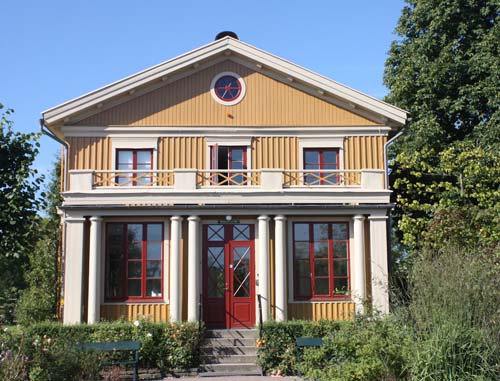
2012 - Direktörsvillan on Trädgårdsföreningen in Göteborg

2012 – Direktörsvillan in Trädgårdsföreningen in Göteborg

Direktörsvilla (or Director villa) is today the oldest surviving building in the Trädgårdsföreningen in Göteborg (or Göteborg Horticultural Society). It was built in 1847 by the city architect Loren Wilhelm Brandenburg as home for the chief gardener. The building also contained upstairs the first seed shop of the Trädgårdsföreningen.

The building has also for a long time been used as the association’s director of housing – hence today’s nicknamed “Direktörs villa”. After that, the building has also been used by Hortikulturens Vänner and today is the official name of the house Hortikulturens hus.

Today the hall contains a meeting place for various organisations, but can also be rented by the public for parties and weddings.

Trädgårdsföreningen is a park and horticultural garden in central Gothenburg, Sweden. It is located next to Kungsportsavenyn. The park was founded in 1842 by the Swedish king Carl XIV Johan and on initiative of the amateur botanist Henric Elof von Normann. In the park there is an acclaimed rose garden with some 4,000 roses of 1,900 species. The rose garden has been awarded three stars in the Guide Michelin. There is also a 19th century palm house, greenhouses, sculptures, a restaurant and cafés.

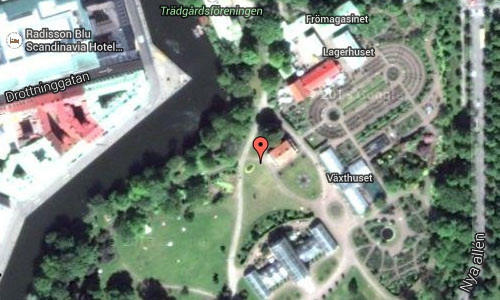
Trädgårdsföreningen Göteborg Maps2

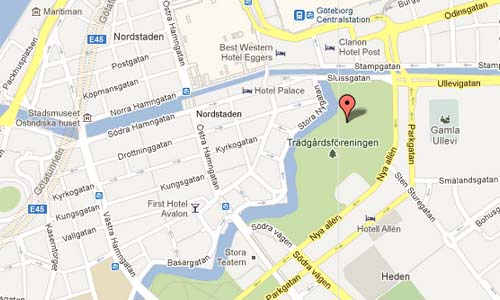
Trädgårdsföreningen in Göteborg2

More information on www.tradgardsforeningen.se

Historic Volvo Photography Locations Overview

Basarbron in Göteborg

April 2nd, 2012

Volvo Photo Locations Part 114
Historic Volvo Photography Locations Overview

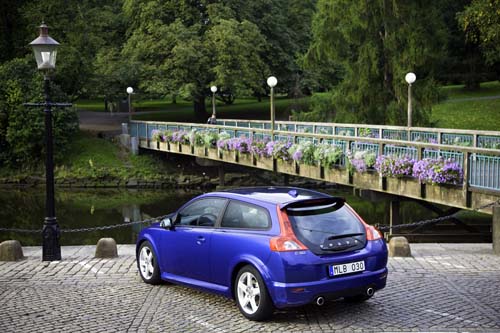
2009 - Volvo C30

2009 – Volvo C30

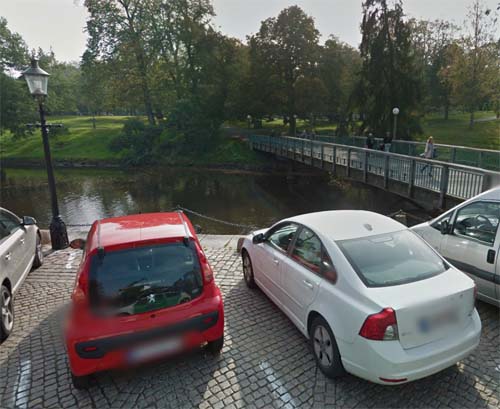
2012 - Basarbron near Basargatan in Göteborg (Google Streetview)

2012 – Basarbron near Basargatan in Göteborg (Google Streetview)

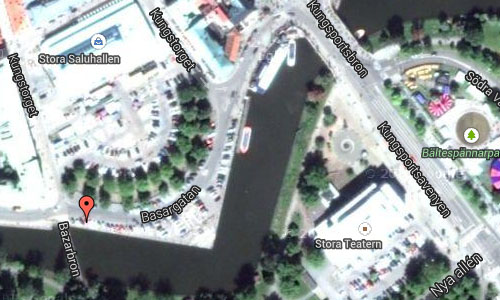
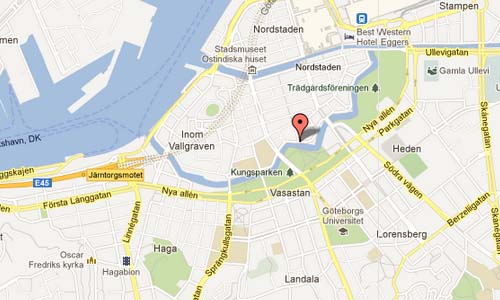
Basarbron (or Basar Bridge) is a bridge over the Vallgraven in Göteborg, which connects Kungstorget with Kungsparken.

The bridge was built in 1857 and named in 1883 after the bazaar building that was on Kungstorget during the years 1850-1966. It was originally a wooden bridge on wooden piles, which were replaced by a new bridge in 1988.

basarbron i maps2

basargatan basarbron gbg

More information on sv.wikipedia.org and Göteborgs Stadsmuseum

Historic Volvo Photography Locations Overview

Bergbana torget in Åre 🇸🇪

April 2nd, 2012

Volvo Photo Locations Part 113
Historic Volvo Photography Locations Overview

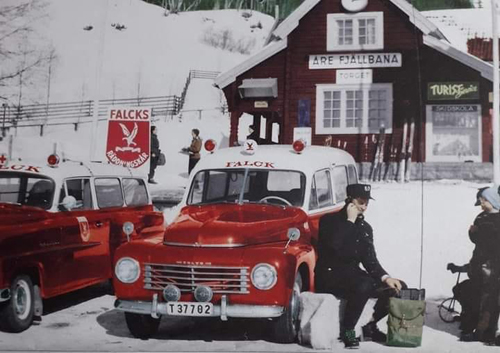
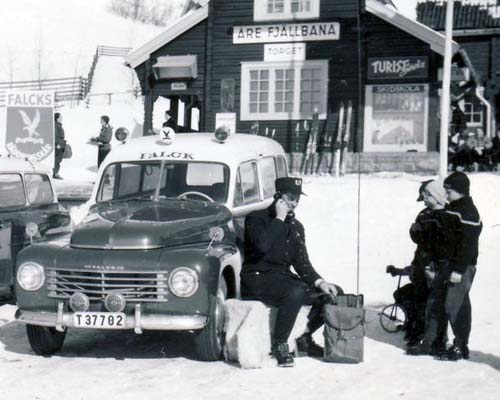
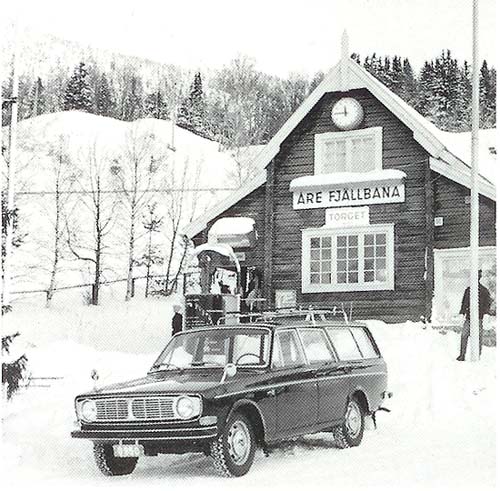
1956 – Volvo Duett PV 445 at Bergbana torget in Åre Sweden

1956 - Volvo Duett PV 445

1956 – Volvo Duett PV 445 at Bergbana torget in Åre Sweden

1956 – Volvo PV445 Duett

1956 – Volvo PV445 Duett at Bergbana torget in Åre Sweden

1969 - Volvo 145

1969 – Volvo 145 at Bergbana torget in Åre Sweden

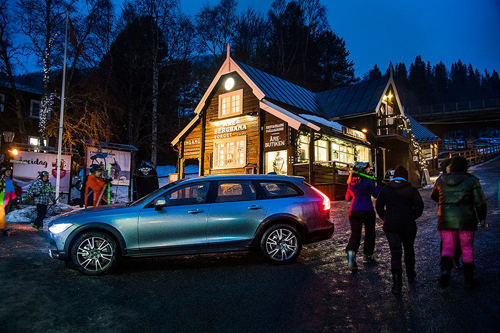
2017 – Volvo V90 Cross Country at Bergbana torget in Åre Sweden

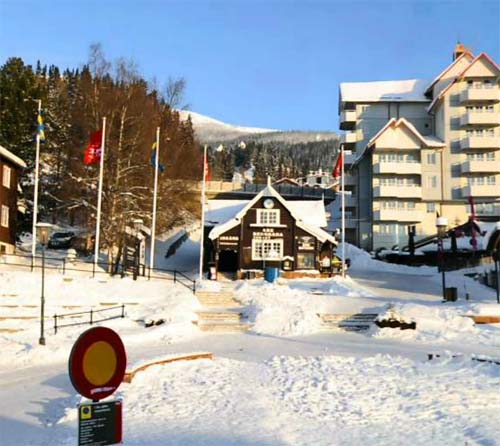
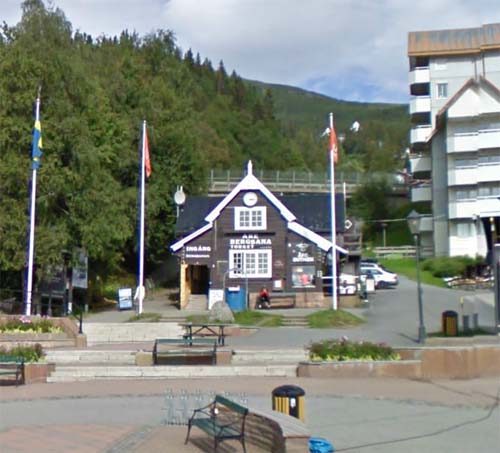
2012 - Bergbana Torget in Åre (Eniro Gatuvy)

2012 – Bergbana Torget in Åre (Eniro Gatuvy)

2012 - Bergbana Torget in Åre (Google Streetview)

2012 – Bergbana Torget in Åre (Google Streetview)

Åre Bergbana is a funicular railway located in Åre, Sweden. It is 790 metres long and runs between the town square at 398 metres and Fjällgården at 556 metres. The funicular was built as the first fixed link up to the mountain by Von Roll from 1908 to 1910 at a cost of 230,000 SEK and was inaugurated 7 March 1910.

Åre Bergbana has the status of byggnadsminne (listed building) since 22 August 2008. This includes the funicular itself, the two station buildings, a park and the so called Grottan (The Cave) — the street going from the town square station to the old railway station.

Taking advantage of the Åreskutan fell, Åre is the major center for alpine skiing in Sweden with more than 30 modern ski-lifts. It hosted the Alpine World Championships in 1954 and 2007, and the annual Jon Olsson Invitational freeskiing competition, ending in 2007. On March 9–10 2012 the Freestyle FIS World Cup was held in “slalombacken” close to the village centre.

Åre would also have been the secondary site for the alpine events of Östersund in its bid for the organization of the XXII Olympic Winter Games, the 2014 Winter Olympics.

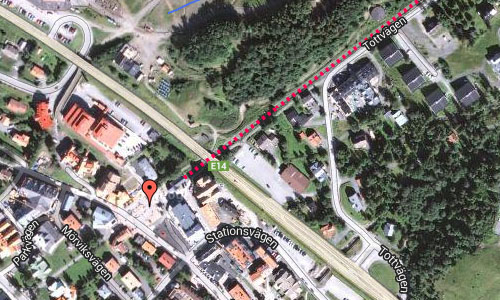
Bergsbana Åre Maps2

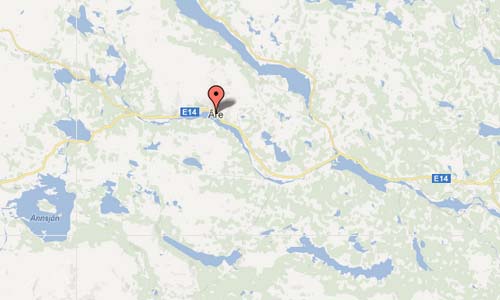
åre2 map

More information on www.skistar.com, lansstyrelsen.se and www.are360.com

Historic Volvo Photography Locations Overview

Klevenvägen parking in Smögen 🇸🇪

March 11th, 2012

Volvo Photo Locations Part 51
Historic Volvo Photography Locations Overview

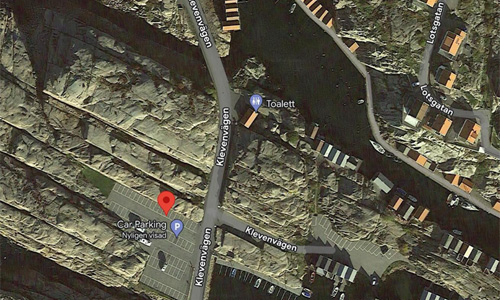
2006 - Volvo XC90 on Klevenvägen parking in Smögen 🇸🇪.

2012 - Klevenvägen parking in Smögen (Google StreetView)

2007 – Volvo C70 Cabrio at car parking near Smögenbryggan on Klevenvägen in Smögen in Sotenäs Municipality, Sweden 🇸🇪.

2007 – Volvo C70 Cabrio at car parking near Smögenbryggan on Klevenvägen in Smögen in Sotenäs Municipality, Sweden 🇸🇪.

2007 – Volvo C70 Cabrio at car parking near Smögenbryggan on Klevenvägen in Smögen in Sotenäs Municipality, Sweden 🇸🇪.

2007 – Volvo C70 Cabrio at car parking near Smögenbryggan on Klevenvägen in Smögen in Sotenäs Municipality, Sweden 🇸🇪.

2008 – Volvo V50 R-Design T5 at parking near Smögenbryggan on Klevenvägen in Smögen, Sotenäs Municipality, Sweden 🇸🇪.

2008 – Volvo V50 R-Design T5 at Klevenvägen parking near Smögenbryggan on Klevenvägen in Smögen, Sotenäs Municipality, Sweden 🇸🇪.

2025 – Volvo XC70 Plug-in Hybrid at Klevenvägen parking near Smögenbryggan on Klevenvägen in Smögen, Sotenäs Municipality, Sweden 🇸🇪.

2025 – Volvo XC70 Plug-in Hybrid at Klevenvägen parking near Smögenbryggan on Klevenvägen in Smögen, Sotenäs Municipality, Sweden 🇸🇪.

Parking near Smögenbryggan on Klevenvägen in Smögen, Sotenäs Municipality, Sweden (Google Streetview).

Parking near Smögenbryggan on Klevenvägen in Smögen, Sotenäs Municipality, Sweden (Google Streetview).

Smögen is mentioned for the first time towards the end of the 16th Century. The name of the community has varied over the years; amongst other names, from “Smögit”, “Smöenn”, “Smöget” and “Smygesund”.

The name has probably come from the Swedish word “smyghål”, which translates as “sneak-hole” or “nook”, referring to the narrow inlet between the Smögen island and where the harbour lies. Around the 17th Century, the island Hasselön was populated, and through the years this community has grown together with Smögen, and is today considered a part of the Smögen community.

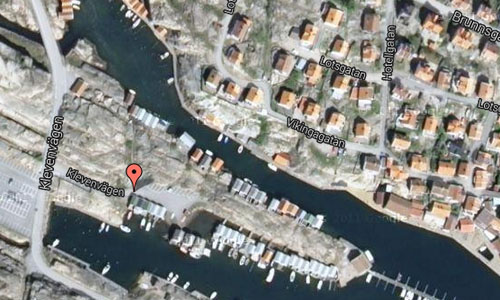
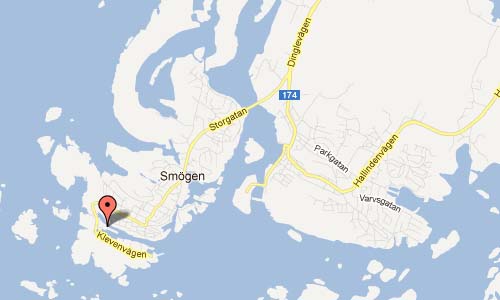
Kleven in Smögen Maps 02

More information on www.vastsverige.com, sv.wikipedia.org and www.smogenbryggan.se.

Historic Volvo Photography Locations Overview